AI UGC Generator vs Traditional UGC Video Platforms
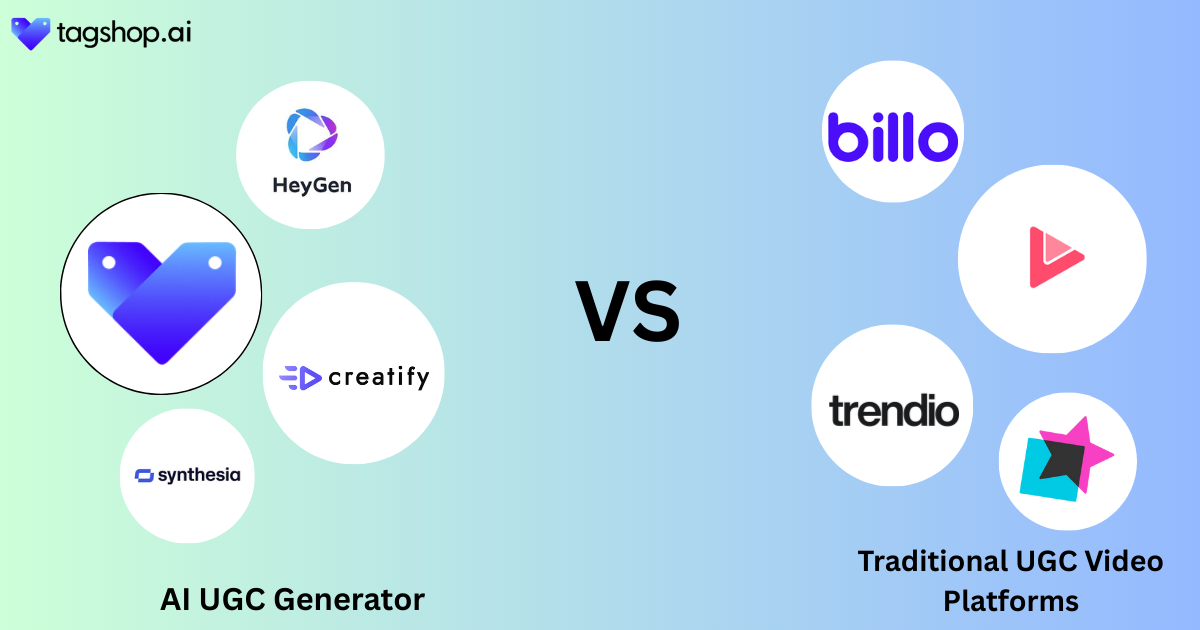
UGC is still the highest converting ad format on the planet. Real customers holding your product, talking straight to the camera, messy bedroom background, cracked phone screen – that stuff prints money. The problem is getting enough of it fast and cheap. However, we have two types of tools ruling the market: AI UGC platforms and traditional UGC platforms. This guide compares AI UGC platforms vs traditional UGC platforms on speed, cost, quality, and scale so you know exactly which one fits your 2026 goals.
Learning About Each UGC Video Platform In Brief
Traditional UGC Platforms
These platforms act as marketplaces that pair brands with real people willing to film videos on their phones. Marketers post a detailed brief with product details, pay range, and deadlines. Creators apply, get selected, shoot in their own homes, and send raw files back. The whole process feels authentic because it is. Common examples include Billo, Vocal Video, Trend.io, and Insense. Brands love the genuine energy but hate the waiting and coordination.
Workflow:
You write the brief, creators pitch, you pick favorites, they film using your guidelines, send files for review, you request revisions if needed, then approve finals. Turnaround can take days or weeks, depending on the creator’s availability and revision rounds. The human touch makes it powerful, but the back-and-forth eats time.
Billo lets you book creators by niche and price. Vocal Video focuses on customer testimonials with easy recording links. Trend.io matches brands with micro-influencers for quick shoots. Insense handles full campaigns from creator discovery to payment. All rely on real people, real phones, real homes for that unpolished UGC magic.
AI-Generated UGC Platforms
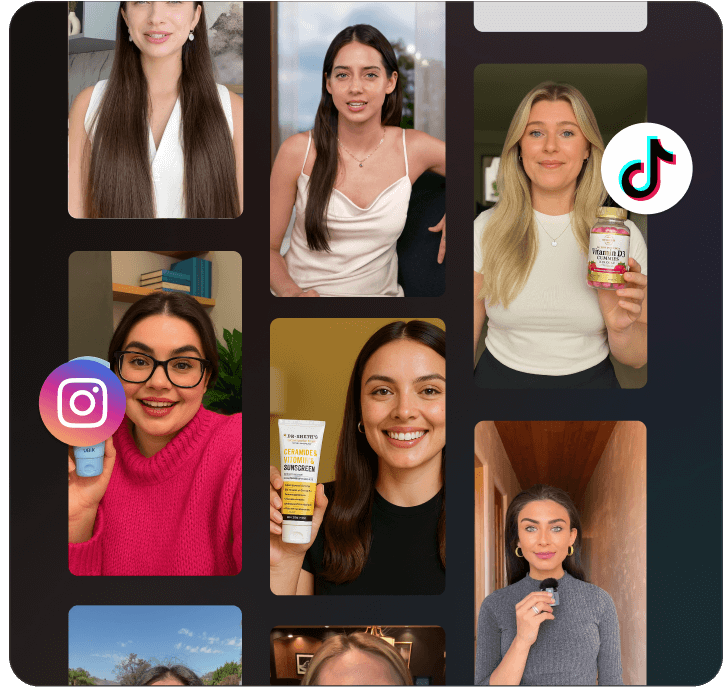
These tools skip humans and build UGC-style videos from scratch using artificial intelligence. You type a script or drop a product link, pick an avatar that looks like a regular customer, choose a voice, and the AI creates a finished clip that feels phone-recorded. Leading options are Tagshop AI, HeyGen, Creatify, and Synthesia.
Workflow:
The workflow of the AI UGC platform is simple: paste a product link or write a short script, select an avatar and voice, click generate, review the clip, make quick tweaks if needed, then export. The whole thing takes minutes instead of days.
Brands need dozens of fresh creatives every week to feed TikTok, Reels, and Meta ads. Waiting on creators no longer works. AI delivers the same raw UGC look instantly, at a fraction of the cost, with unlimited variations. The algorithm rewards consistency, and AI makes daily posting possible without burning budget or time.
Core Differences: AI UGC platforms vs traditional UGC platforms
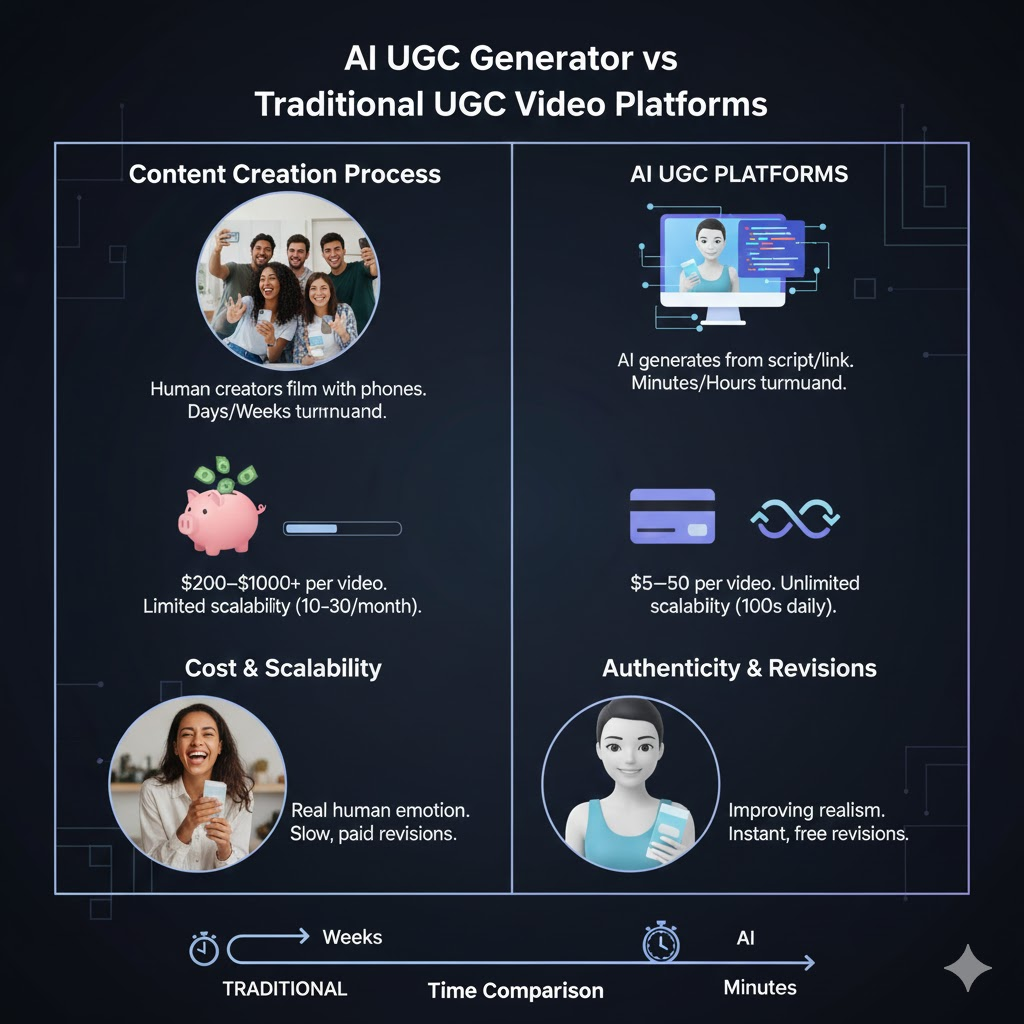
| Aspect | Traditional UGC Platforms | AI UGC Platforms |
| Content Creation Process | Human creators film on phones after a brief selection | AI generates from script/link, no humans involved |
| Speed of production | Days to weeks per clip due to coordination | Minutes per clip, fully automated |
| Cost Structure | $200–$5,000+ per video + paid revisions | $5–$50 per clip or flat subscription |
| ROI comparison | High trust but low volume limits scale | More volume + testing drives higher blended ROAS |
| Authenticity & Realism | Real human emotions, unpredictable charm | Improving avatars, feels close but lacks raw spark |
| Perceived trust from audiences | Highest – viewers know it’s a real person | Strong when UGC-style, but some detect “too clean.” |
| Scalability & Volume | 10–30 clips/month max without exploding budget | Hundreds daily, no limits |
| Batch creation possibilities | Manual briefs for each clip | Duplicate and regenerate 50+ variations at once |
| Turnaround Time | 3 days to 4 weeks per video | 20 seconds to 5 minutes per clip |
| Control & Customization | Creative flair, but hard to enforce guidelines | Pixel-perfect control over every element |
| Revisions, scripts, voiceovers, styles | Slow, paid, creator-dependent | Instant, free, one-click swaps |
| Consistency in Brand Messaging | Varies bythe creator’s interpretation | Exact same tone, look, message every time |
| Human unpredictability | Can add magic or go off-brand | No surprises – perfect repeatability |
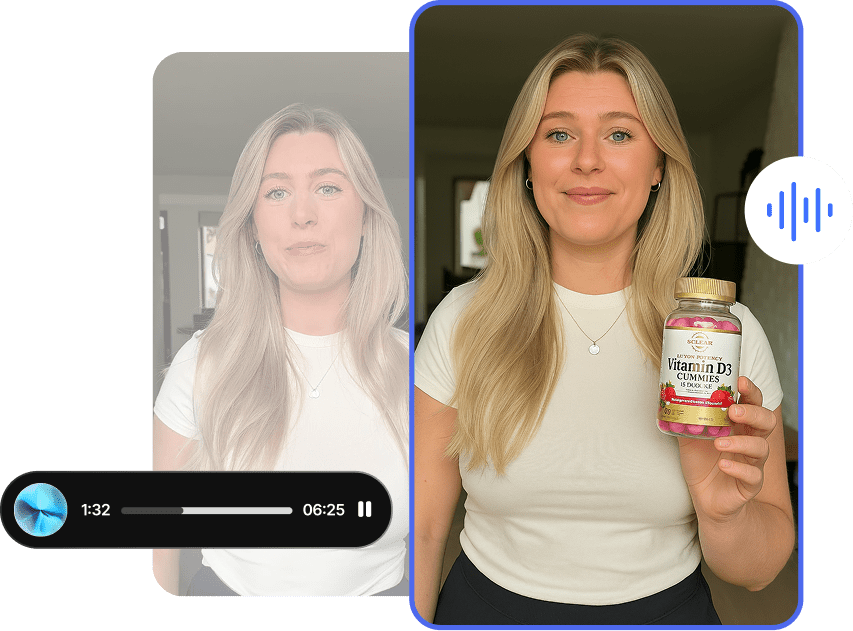
Strengths of Traditional UGC Video Platforms

Now we are all aware of the differences between AI UGC platform vs traditional UGC platform, let’s learn about them in more detail. Here are some of the strengths of traditional UGC video platforms
Human touch & emotional connection
Real creators bring genuine emotion that AI still struggles to match. A laugh at their own clumsiness, a pause when they get excited, or the way their eyes light up when the product actually works – these little moments create instant connection.
Diverse content styles
Every creator has their own vibe, accent, home setup, and filming style. One might shoot in a tiny apartment kitchen, another in a sunny backyard. This variety keeps feeds fresh and prevents ad fatigue. Brands get a mix of energies, looks, and voices that feel like a real community talking about the product, not a factory line of identical clips.
Real product experience
Creators actually open the box, use the item, taste the food, and wear the clothes. Viewers see real reactions, real textures, real spills or successes. This hands-on proof sells harder than any scripted demo. Brands in physical products (gadgets, cosmetics, apparel) trust human UGC because the product is literally in real hands on camera.
High relatability
The person on screen looks like the viewer’s friend or neighbor. Same messy hair, same casual clothes, same phone held sideways. Relatability turns “nice ad” into “I need this now.” Brands targeting everyday consumers win big with human UGC because viewers see themselves in the creator and trust the recommendation more.
Ideal for testimonial-focused ads
Nothing beats a real customer saying, This changed my routine” with genuine excitement. Human UGC is perfect for social proof campaigns, review-style ads, and “why I switched” stories. Brands that build on trust and word-of-mouth keep traditional UGC as the hero creative because authenticity still converts better than anything else when emotion is the main driver.
Limitations of Traditional UGC Platforms
While it has such great positives, it also has some limitations. Here are some of the limitations of traditional UGC platforms
High costs
Paying creators $200 to $5,000 per video adds up fast. Add platform fees, usage rights, and revision charges, and one campaign eats a huge chunk of the budget. Brands that need 50 clips a month either blow the budget or cut volume..
Delays & dependency on creators
Creators have day jobs, kids, or just disappear mid-project. A simple revision can take days or weeks while your launch date creeps closer. Brands lose momentum waiting on someone else’s schedule. AI eliminates the middleman – clips generate instantly without emails, excuses, or “sorry I was sick.”
Limited scalability
Most brands max at 10–30 human clips per month without breaking budget or timeline. Launching in new markets or testing dozens of hooks becomes impossible. AI scales to hundreds of videos daily with the same spend. Brands that want to dominate feeds choose AI for volume.
Inconsistent quality
One creator nails the brief, the next sends vertical when you asked horizontal, or forgets the CTA. Lighting, audio, and energy vary wildly. Brands spend hours chasing fixes. AI delivers the exact same technical quality, framing, and style every single time.
Multiple revision cycles
Human creators often need 2–5 rounds: wrong angle, missed line, bad audio. Each cycle costs time and extra fees. Brands lose launch windows by fixing simple things. AI revisions happen in seconds with one click – change a word, regenerate, done. No back-and-forth, no waiting.
Strengths of AI UGC Platforms
Now, let’s look at the other side of the coin and learn about the positives that AI-driven UGC video platforms carry.
Instant content creation
Brands drop a product link or script and get a finished UGC-style video in minutes. No scheduling shoots, no waiting for creators to reply. The tool handles script, avatar, voice, captions, and music automatically. Marketers launch campaigns the same day a trend hits instead of next week. This speed lets teams stay agile and capitalize on viral moments before they fade.
Extremely scalable
One template becomes hundreds of videos. Change the hook, avatar, background, or language and regenerate instantly. Brands run 50+ creatives for a single product across platforms without adding headcount. High-volume e-commerce and dropshipping thrive on this – every SKU gets its own ad batch without budget explosion.
Cost-effective
Subscription or low per-video pricing replaces $200–$5,000 creator fees. Unlimited clips mean the cost per ad drops to pennies. Brands’ shift saved money into media spend and testing. Small teams and solopreneurs access professional-looking ads that used to require big budgets.
Easy revisions
Change one line of script, swap voice tone, adjust pacing – regenerate in seconds for free. No back-and-forth emails or extra fees. Brands iterate until the ad feels perfect without burning time or money on endless revision rounds.
Ideal for ad variations, product explainers, and multi-platform content
Duplicate projects to test hooks, CTAs, avatars, or formats. Create TikTok hooks, YouTube explainers, and Instagram Reels from the same base. Brands optimize for each platform’s algorithm and audience without starting from scratch every time.
Consistency in messaging and tone
Every video uses the same avatar, voice, colors, and style guide. No off-brand surprises or creator interpretation drift. Brands maintain perfect alignment across hundreds of ads, building recognition and trust faster.
Ability to experiment with scripts, hooks, CTAs
Generate fifty hook variations, test which stops thumbs best, then scale winners. Brands discover high-converting messaging through data instead of guesswork. This experimentation edge turns average campaigns into profitable ones.
Limitations of AI UGC Platforms
AI-driven UGC platforms also have certain limitations. Here are some of the notable ones.
May lack emotional depth
AI avatars deliver lines well but miss the unpredictable spark of human emotion – a genuine laugh, tear, or pause that hits viewers in the gut. Brands in emotional niches like luxury or wellness sometimes find that AI feels flat compared to real creators who bring personal stories and raw feelings.
Authenticity challenges in some niches
Food, beauty, or fitness ads often need real hands touching, tasting, or sweating with the product. Viewers spot “too perfect” AI quickly in these categories. Brands that rely on tactile proof struggle until AI improves real-life interaction.
AI avatars are still improving in realism.
Current avatars look great in short clips but can glitch on complex expressions or fast movements. Subtle things like eye contact or natural blinks aren’t always perfect. Brands pushing premium positioning wait for the next update to avoid uncanny-valley reactions.
Limited real-life product handling
AI can’t yet show actual hands opening boxes, pouring liquids, or wearing clothes in unpredictable ways. Stock footage helps, but it’s not the same as a creator fumbling the lid or spilling a drop. Brands selling physical experiences remain traditional until AI catches up.
Cost Comparison Table: Traditional UGC Platforms vs AI UGC Platfroms
| Feature | Traditional UGC Platforms | AI UGC Platforms |
| Cost per video | $200–$1,000+ | $5–$50 |
| Time | Days/Weeks | Minutes/Hours |
| Revisions | Slow + Paid | Instant + Free |
| Scalability | Limited | Unlimited |
| Languages | Limited | 100+ |
Conclusion
The battle between an AI UGC platfroms and a traditional UGC platform comes down to what your brand needs right now. Traditional UGC brings unmatched human emotion and relatability that still wins hearts in emotional niches. AI UGC delivers speed, scale, cost savings, and perfect control that traditional simply can’t match at volume. Their future is an AI, and now it’s the best time to jump onto this bandwagon.
Written by:

Rohan Singh is an AI-forward content specialist with 5+ years of experience creating creative, trend-led content for digital-first brands. He blends industry insights, AI-powered research, and content intelligence to produce engaging, relevant narratives aligned with evolving marketing trends. Constantly exploring new AI tools, he ensures his work stays innovative, impactful, and built for how audiences consume content today.