What is AI UGC: A Complete Guide
AI is no longer just about captions or generating an image! It’s now creating human-like videos that feel personal, casual, and surprisingly real. Ya really! We are talking about AI UGC, where artificial intelligence creates content that looks and feels like it came from everyday users. From relatable testimonial style videos to social posts, AI is slightly stealing the spotlight. And the best part? Brands are loving it because it’s fast, scalable, and way more budget-friendly.
Read this blog to understand everything about AI UGC and how it really works.
What Is AI UGC?
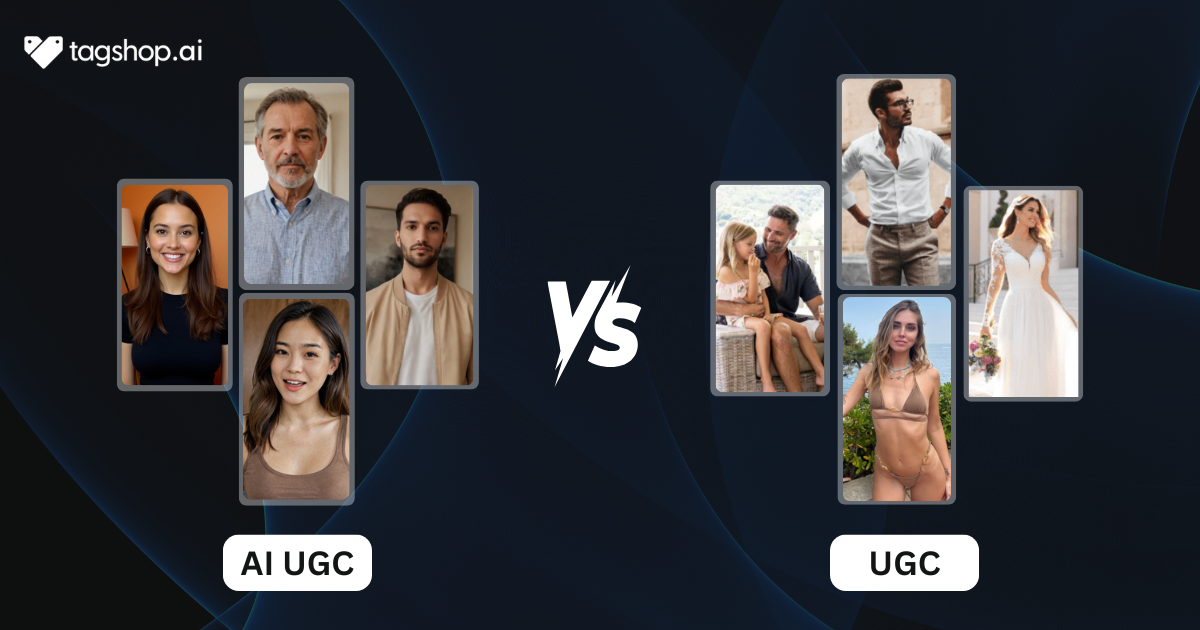
AI UGC is basically the content created by artificial intelligence but designed to look like it was made by real people. It can be reviews, short videos, testimonials, and more, pretty much the same type of content that everyday users post online. The big idea here is simple: instead of waiting for customers to create content or asking creators to create content, brands can now generate it using AI UGC generators. And honestly, it’s getting very hard sometimes to tell the difference between the two.
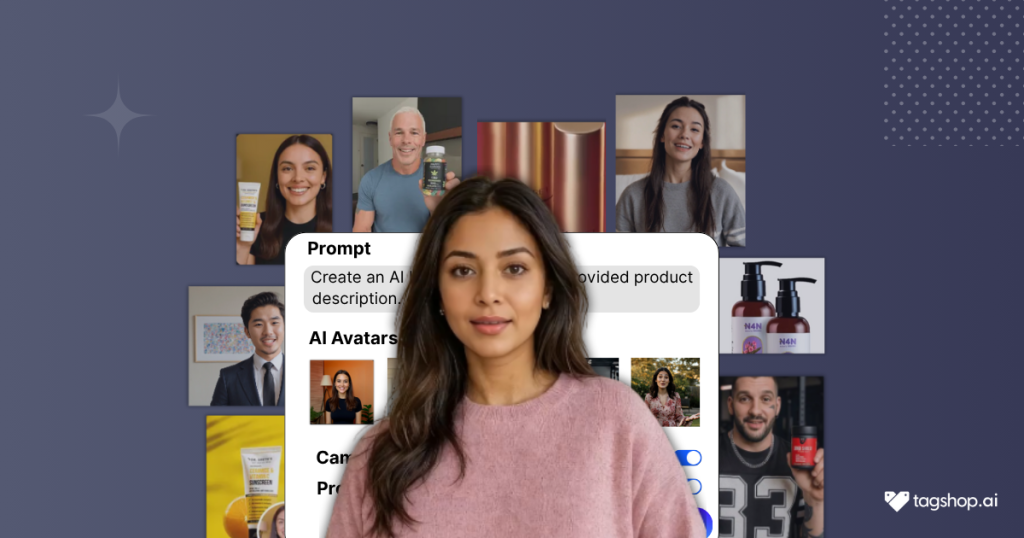
What makes AI UGC different from traditional UGC is that one comes from real human experiences, while the other is powered by AI to mimic those experiences (the essence is the same). AI studies tons (like, tons) of real content to understand the tone, emotions, storytelling styles, and everything human. Then it recreates that ‘human touch’ at scale.
Here are some examples of AI UGC in real life:
- AI generates product reviews that sound like genuine customer feedback.
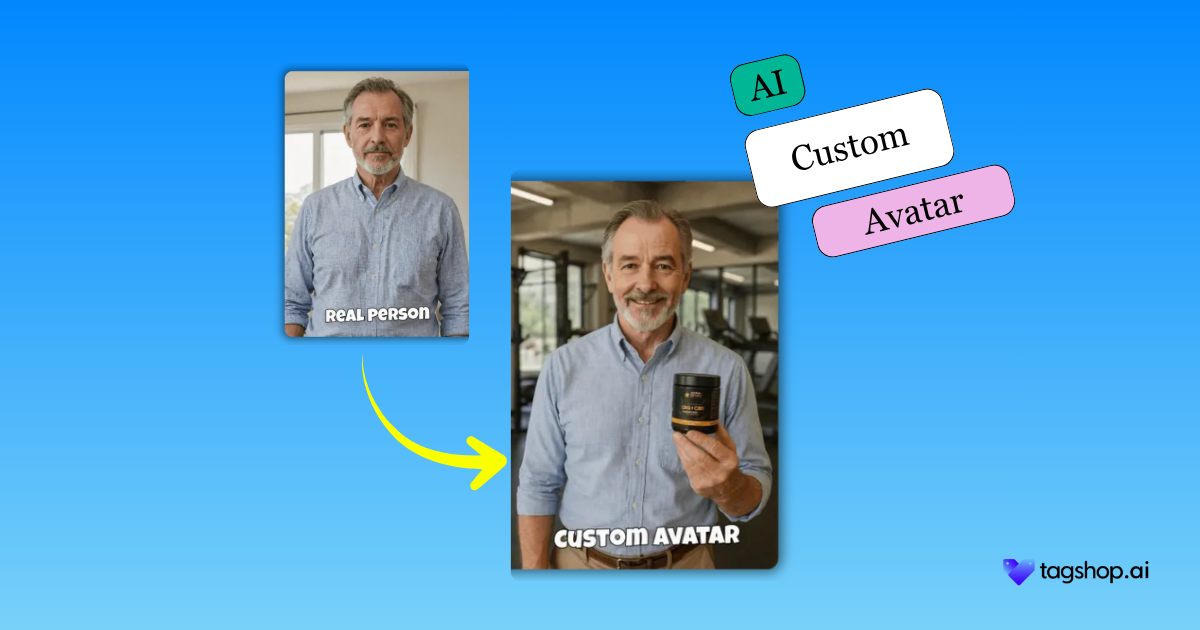
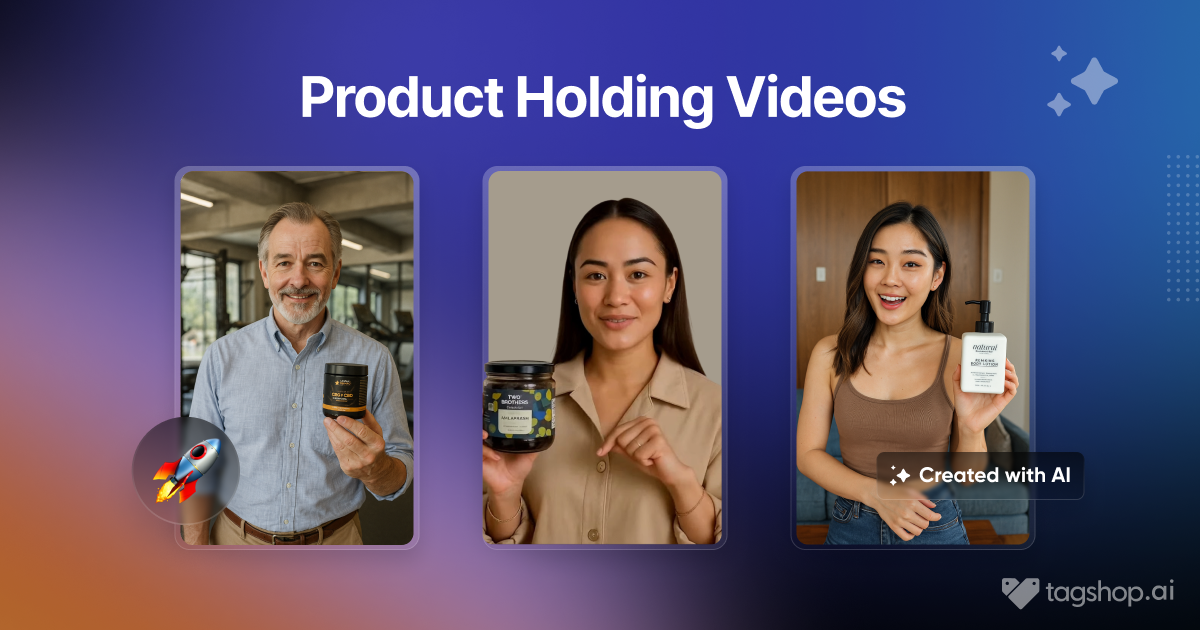
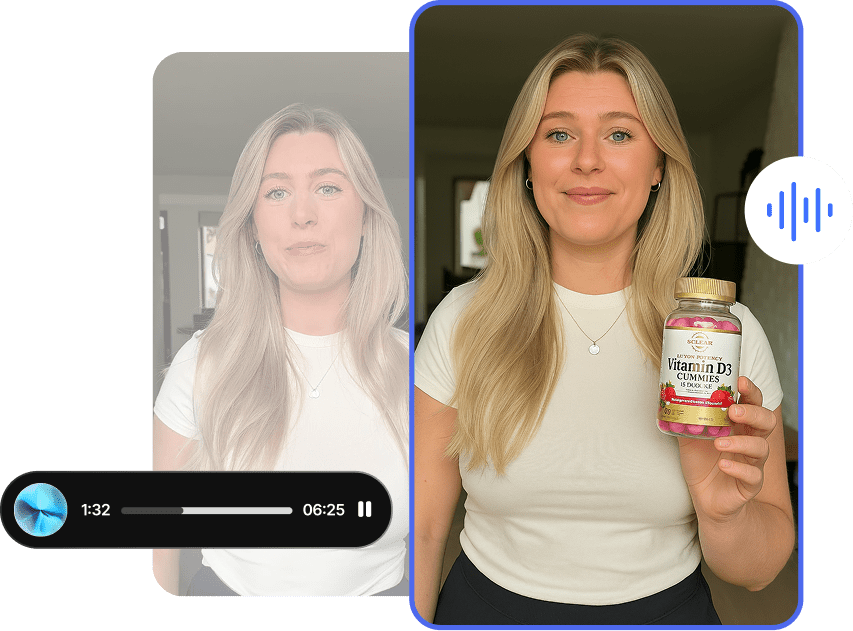
- Lifelike avatars with realistic personalities promoting the brand
- AI product shots that capture human attention
- Automated testimonial-style videos with real voice-overs
How to Create AI UGC using Tagshop AI
Below is the simple step-by-step procedure to create AI UGC videos using tools like Tagshop AI:
Step 1 – Create a Free Account on Tagshop AI
- Go to Tagshop AI and log in or create your free account.
- You will see a new dashboard with the following options: Avatar video, link to video, asset generator, AI video creation, AI twin, and avatar style studio.
- Let’s select the recommended option, i.e., avatar video.

Step 2 – Choose Your AI Avatar
- You will see a number of realistic avatars. Select the one that best matches your brand requirements.
- Add the following: Video title, Script, Aspect Ratio, voiceover, and subtitles.
- To generate a script using AI: Click on generate with AI, enter the prompt, select language and script type, and hit enter. You will see that in just a few seconds, Tagshop AI will generate a script as per your needs.
- Once done, click on submit.

Step 3 – Edit the Video and Render
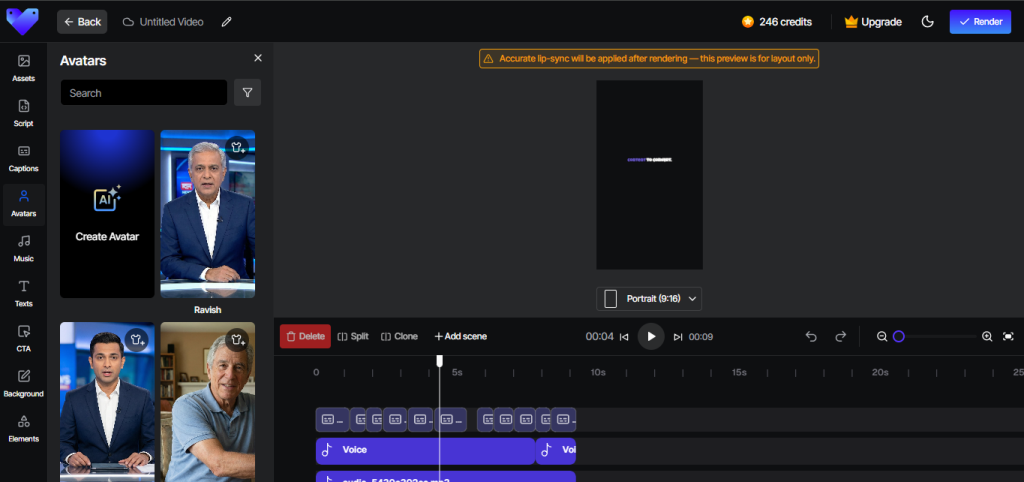
- After that, you will be redirected to the video editor of Tagshop AI.
- Here, you can edit the video by adding assets, B-roll, hooks, scenes, transitions, voice-overs, CTAs, and more.
- Once done, click on ‘Render’ on the top right.
- In just a few minutes, your video is rendered, and you can download it and use it wherever you want.
The Most Popular Types of AI UGC Today
Below are some of the most popular types of AI UGC that you must try today:
1. Text-based AI UGC
Text-based AI UGC is one of the most widely used forms of AI UGC.
Here are some examples of the same:
- Reviews and Testimonials: AI can generate human-like reviews and testimonials that appear to come from real customers. Brands can easily generate product features, pros and cons, and write scripts using AI UGC, meaning a major relief onthe pockets and the overall deadline pressure.
- Comments and posts: AI can effectively write comments and craft a UGC style posts for community engagement and social media posts.
- Social media captions and scripts: Social media captions can be easily written by AI tools. Additionally, scripts for your social media and video ads can be effectively generated by the same.
2. Image-based AI UGC
AI has increasingly become capable of generating image-based AI UGC, generating realistic images that are difficult to distinguish. You can effectively generate:
- Lifestyle images: AI UGC tools now showcase product usage in everyday settings without traditional shooting. It can convey the essence of the product in a way that feels real and genuine.
- Custom illustrations and cartoons: AI can produce graphics and illustrations, useful for creating engagement on your online channels.
3. Video-based AI UGC
Video-based AI UGC is best for building engagement across major online platforms such as Meta, YouTube, and TikTok:
Some of the examples of video-based AI UGC include:
- Lifelike AI Avatars: AI UGC tools use realistic AI avatars to deliver the video outcomes with advanced lip sync and multi-language support.
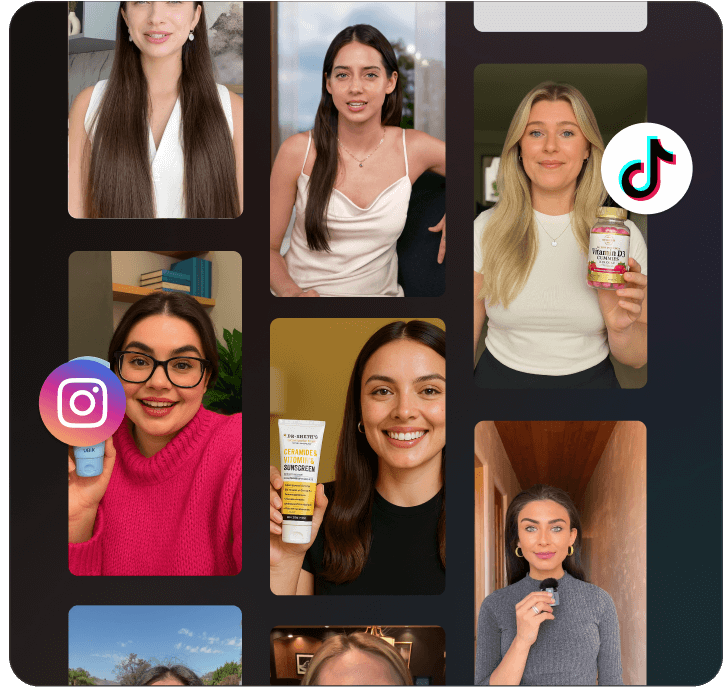
- Short-form videos: Brands can easily create short-form videos for their TikTok and Instagram campaigns, completely ready to publish without any manual efforts.
Why Brands are Turning to AI UGC?
These are some of the reasons why brands are turning to AI UGC:
1. Content Scalability
One of the biggest reasons brands are turning to AI UGC is scalability. Modern marketing requires a constant stream of content for social media, landing pages, and paid ads. You simply can’t post and wait for the results without analysing or A/B testing. Companies implementing AI-driven content strategies are seeing a 20% average increase in marketing ROI.
Additionally, collaborating with creators to meet this content scalability is becoming increasingly complex, leading to inconsistency. That’s why AI tools are used to generate large volumes of content in a short time, making it easier for brands to run multiple campaigns without any manual workload.
2. Budget Friendly
Hiring creators, video editors, photographers, and copywriters can quickly increase budgets. While creator collaboration is a powerful tool for engagement, they are not always affordable for every brand.
AI UGC tools can quickly reduce production costs by at least by 40% by automating all the content creation processes. Brands can effectively create lifelike videos, ads, and take product shots much more cost-effectively than traditional methods. This can make a huge cost difference!
3. Fast Content Generation
In modern marketing, speed and trend matter. Any brand that misses it may miss the engagement opportunities and conversions too. Traditional content creation can take a day, sometimes even weeks, before it’s ready to publish. AI, on the other hand, can whip up a trendy video in just a few hours. This fast turnaround time (around 30x faster) leads to quick testing, improvement, and results as compared to the traditional method.
4. Brand Consistency
When working with creators and multiple online channels, maintaining brand consistency becomes challenging. Different social media platforms have different formats and styles, which, let’s be honest, can be a headache to create.
AI tools make it easier; they can quickly adapt content to different formats and aspect ratios, helping your messaging stay consistent across campaigns.
5. Multi-Language Support
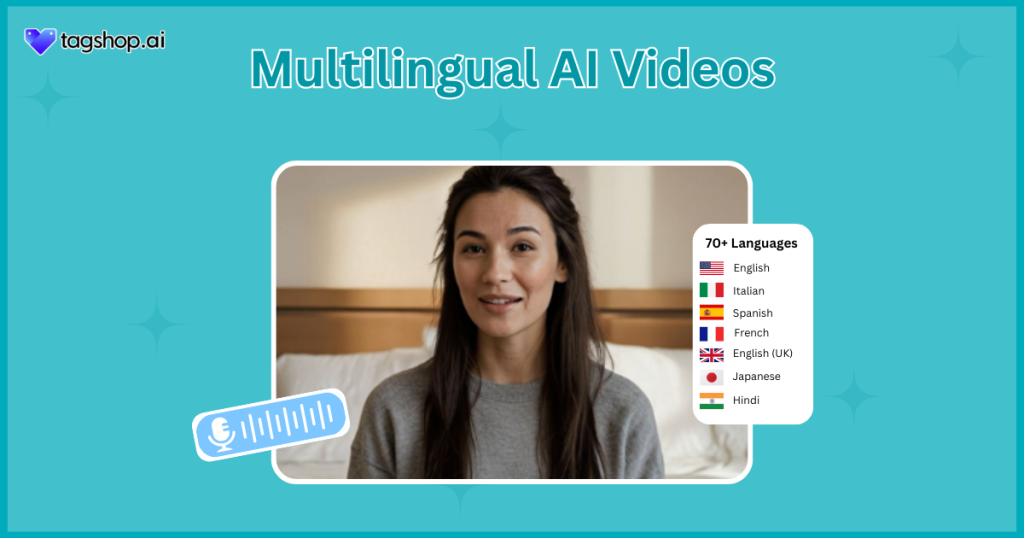
Global brands often need to adapt campaigns for different languages and regions. Translating and localizing content each time can be time-consuming and expensive. But with AI UGC tools, which make it easier for brands to localize videos, it is possible to expand reach globally without rebuilding campaigns from scratch.
Challenges Come with Using AI UGC
AI UGC is amazing, no doubt, but it’s not all rainbows and unicorns. There are some challenges you definitely need to keep in mind:
1. Trust and Authenticity
UGC works because it feels real. That’s the whole point, right?
AI can create reviews, testimonials, and even full videos. But if people realize it’s not from an actual person, they might feel misled. This might hamper your brand image, making it feel inauthentic. That’s why it is important to disclose everything to build long-term trust.
2. Transparency Challenge
Now comes the big question: should you disclose AI-generated content?
Of Course, yes.
It is especially important in industries like healthcare or finance, where credibility matters a lot. Not being transparent can backfire quickly. It doesn’t break trust; it actually builds it.
3. Too Generic Content
AI is fast. Almost too fast sometimes.
You can generate content in minutes, but it may start sounding repetitive or a little bland. And when everyone’s using similar prompts and tools, brands begin to sound the same.
And in today’s competitive market, creativity matters more than we think.
4. Follow the Guidelines
Social media platforms have started to take AI-generated content pretty seriously.
They’ve introduced rules to stay compliant, so ignoring them isn’t really an option anymore.
It is always recommended to follow the platform policies, disclose AI use where required, and ensure compliance.
Best Practices for Using AI UGC
If you want to effectively use AI UGC for your brand, then follow these best practices to get the best outcomes:
1. Be Transparent
Audiences value honesty more than perfection. Ensure that whenever you use AI-generated content, you reveal it to the audience to build long-term trust. A simple disclosure goes a long way.
2. Human Must Review It
AI is fast, but not flawless; it still requires human input. Always have a human review of scripts, visuals, and messaging before publishing any content. Sometimes AI can sound slightly off, and you don’t want to go that live by accident, right?
3. Always Customize
Generic content won’t convert. Ensure that you always customize your AI results based on your potential audience’s behaviour patterns. The more specific you get, the more natural it feels.
4. Avoid Over-Automation
Just because you can automate everything doesn’t mean you should. A balanced mix of real UGC and AI UGC usually performs better.
5. Follow Platform Guidelines
Each platform has guidelines around AI-generated content, disclosures, and ads. Make sure you’re staying compliant, because getting flagged or restricted can mess up campaigns pretty quickly.
AI UGC vs Traditional UGC: Comparison
| Factor | AI UGC | Traditional UGC |
| Cost | Lower and budget-friendly | High production cost and creator fee |
| Quality | Consistent and high-quality outputs, but sometimes repetitive | Varied and natural |
| Authenticity | Not Authentic | Genuine and authentic with real-life experiences |
| Emotional Resonance | Can mimic emotions using patterns | Real emotional depth |
| Scalability | Highly scalable and fast | Limited by time and availability |
| Best For | A/B testing, ads, and generating high-volume templates | Storytelling and trust-building campaigns |
| Hybrid Approach | AI can support, humans can refine | Best balance of scale + authenticity |
Real Ways Brands are Using AI UGC
Below are some of the most impactful ways AI UGC is actually making a difference for brands:
1. E-commerce and Product Marketing
In e-commerce, AI UGC is great for creating product demos, unboxing videos, and explainer videos. Instead of spending large chunks of money on studio shoots or waiting for creators, brands can generate realistic content in no time using AI tools. It’s fast, cheaper, and relatable.
2. Social Media Campaigns
Social media trends change fast, way faster than ever before. AI UGC helps brands to stay on that trend before they disappear. These tools can quickly produce short-form reels and hooks, letting marketers test faster and stay aligned with the trend.
3. Influencer Marketing Alternatives
Influencer marketing works, but it’s not always affordable for every brand. For brands that hire influencers, it often means missing deadlines, getting tired of multiple content revisions, and dealing with creator backoffs. Using AI UGC tools for the same offers a more controlled alternative, allowing brands to create influencer-style content without delays or high costs.
4. SaaS and App Onboarding Content
For SaaS products and mobile apps, first impressions matter, like really matter. AI UGC can be effectively used to create onboarding content and product walkthroughs that feel relatable. This saves significant time for the user who shoots product onboarding videos and makes onboarding feel simple.
The Future of AI UGC
The future of AI UGC might include the following:
- More Realistic Content: AI-generated videos, voices, and images will feel almost indistinguishable from real users.
- Hyper Personalization: Brands will tailor the AI UGC content as per their target audience, enhancing the personalization that actually grabs their attention.
- AI creators as brand ambassadors: AI avatars might act as long-term brand ambassadors, enhancing the brand consistency.
Final Note
AI UGC is totally changing the game for how brands create and share content. It’s faster, more flexible, and often affordable. From generating social media posts to product demos and testimonials, it helps brands connect with audiences in a way that feels real and genuine. If you are just getting started, we kinda recommend you use Tagshop AI. It has all the amazing features and requirements that you need to get started.
Frequently Asked Questions
AI UGC refers to user-style content generated using artificial intelligence instead of real customers. Unlike traditional UGC, it’s created through tools and automation rather than actual user submissions.
It’s created using AI tools that generate scripts, visuals, voiceovers, or avatars based on prompts. These tools simulate real user experiences in a structured, scalable way.
Brands adopting AI UGC instead of relying solely on human creators, because it’s faster, more scalable, and often more cost-effective.
Product demos, testimonial-style videos, reviews, short-form social clips, and explainer content.
Basically, anything that mimics user-created content but is AI-assisted.
Yes, if done thoughtfully and transparently. But overdoing it or hiding disclosure can hurt credibility.
Speed, scalability, cost efficiency, and easy personalization. It also helps brands run multiple campaigns without manual effort.
Transparency, copyright issues, and potential misuse of likeness or voice. If audiences feel misled, trust can drop quickly.
Most platforms allow it, but require proper disclosure in certain cases. Rules are evolving, so brands need to stay updated.
AI UGC is legal, but it must comply with copyright and advertising laws.
When transparent, it can maintain trust and even enhance engagement. When hidden or misleading, it can damage brand credibility.
When emotional storytelling and genuine lived experiences matter most, some campaigns simply benefit more from real human voices.
Not entirely. It can supplement them, but human creativity and influence still hold strong value.
Track engagement, CTR, conversions, and audience retention. Compare results against human-created content to see what performs better.
Tools like Tagshop AI integrated AI marketing suites make it easier to produce, customize, and manage campaigns without starting from scratch every single time.
More realism, deeper personalization, and stricter transparency standards. The real focus will be on balancing automation with authenticity.
Written by:

Wagisha Adishree is an AI-driven SEO content writer who transforms data, algorithms, and marketing insights into high-impact narratives. She combines human creativity with AI-powered strategies to create content that ranks, converts, and connects. Naturally curious and sharp-witted, she enjoys exploring AI newsletters, decoding Pinterest trend signals, and drawing inspiration from football culture.