How to Create AI UGC Videos for Travel & Hospitality Brands
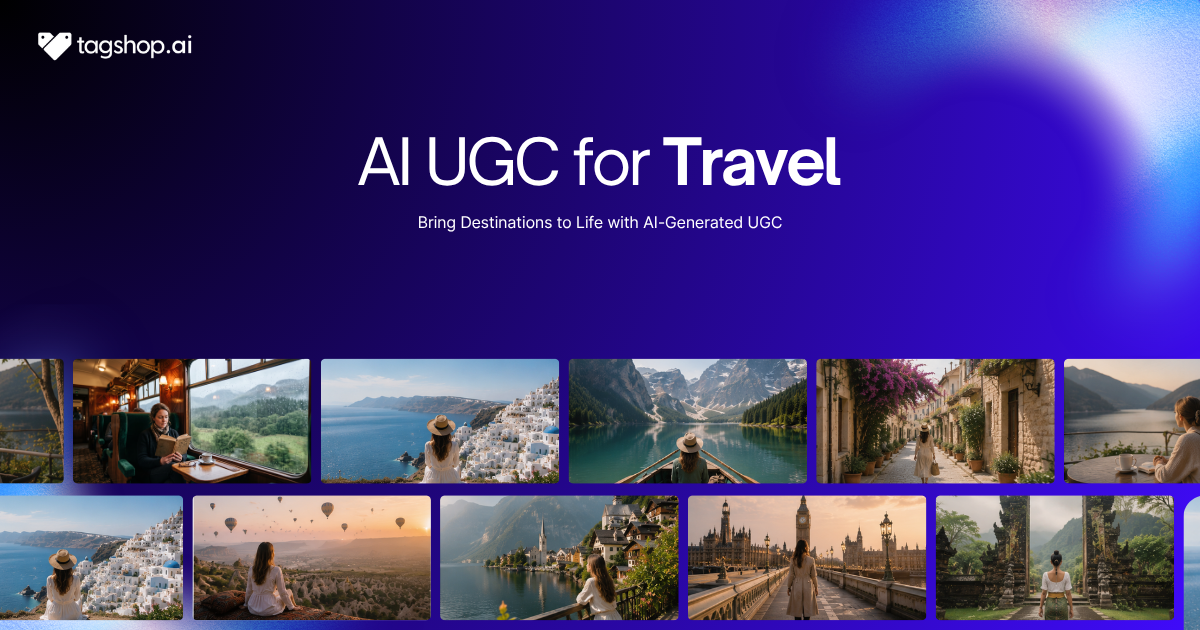







68% of travel bookings today are influenced by social content, and that’s not a marketing buzzword; it’s one of the most heavily peer-reviewed questions in tourism marketing research: does content from someone who feels like a real traveler actually change where people book? Multiple studies say yes, and the reason why is more specific and more useful than “people trust real people.”
TL;DR: Travel is one of the most heavily researched categories for user-generated content‘s effect on buyer behavior; studies on UGC and tourist visit intention, destination image, and hotel choice consistently show a real, measurable lift, and 68% of travel bookings today are already influenced by social media content. AI UGC for travel brands allows the same destination-imagery-driven content at scale, without the cost of sending a crew on location for every destination, season, and language. Ground it in real footage of the actual destination or product, and this is one of the highest-converting categories for this format, not a risky edge case.
Every Travel Brand Hits the Same Wall
Talk to anyone running content for a travel brand, a booking platform, a hotel group, a tour operator, a travel accessories brand, and you’ll hear the same three things:
- “Shooting on location is expensive, and we can’t send a crew to every destination we sell.”
- “Our content calendar needs to match every season, every destination, every audience, and one hero video can’t do that.”
- “Our customers are global, and localising content for every market usually means starting over from scratch.”
AI UGC addresses all three directly, and it does so in a category where the underlying psychology has actually been studied in depth.
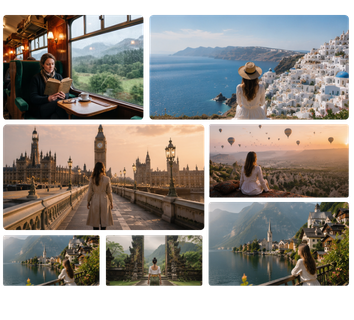
The Research Behind Why This Works So Well for Travel
This is the part most content on this topic skips, and it’s the part that actually matters. A 2023 study published in Tourism Management, one of the field’s leading journals, by Xu and colleagues examined the structural relationship between user-generated content, destination image, and tourist loyalty behavior, and found a clear, direct pathway: UGC shapes destination image, which in turn drives loyalty and return-visit intention.
A more recent 2025 study published in MDPI explicitly builds on that finding, showing that user-generated content stimulates what researchers call destination imagery, essentially the mental picture a potential traveler forms of actually being there, and that this imagined-experience effect is a major driver of visit intention.
A study on user-generated videos found that the aesthetics and credibility of AI UGC videos positively influence what’s called eTrust, and that eTrust is what actually motivates electronic word-of-mouth and destination choice intentions, not production polish on its own.
Earlier foundational work, including a widely cited study by Nguyen and colleagues on UGC’s impact on travel destination selection, and Del Chiappa’s research on UGC’s influence on tourists’ hotel choices, all point the same direction: content that reads as coming from a real traveler’s experience carries more weight in the actual decision than brand-produced material, specifically because of the mental “imagining myself there” effect it creates.
Here’s why that matters for AI UGC specifically: none of this research requires the traveler in the video to be verifiably real for the destination-imagery effect to fire. The mechanism is about the format, a genuine-feeling personal account, not a verified identity. AI UGC is built to produce exactly that format, at a volume and cost no destination marketing team could match with real creators sent to every location.
The Numbers: Why Travel Is Built for This Format
The behavioral research above is backed by current market data. 68% of travel bookings today are influenced by social media content, and video ads specifically increase travel booking intent by 54%. On TikTok alone, 32% of users report booking a stay they first saw on the platform, and 84% of users watch travel content monthly, with viewers who search travel content on TikTok 2.6 times more likely to book an experience as a result.
Travel marketing conversion rates otherwise sit in a fairly narrow 0.2% to 4% band depending on channel, which makes any format shown to reliably move visit intention and destination imagery a meaningful lever, not a marginal one.
Getting the Authenticity Right
The research above is consistent on one point: the effect depends on the content reading as a genuine, personal account of a place or experience, not a generic brand advertisement. The practical takeaway is straightforward and works in your favor: ground every generation in real footage or real images of the actual destination, property, or product, and lean into a specific, personal-feeling account (a specific detail about the view, the room, the local food) rather than generic praise. That’s not just the safer approach, it’s the exact mechanism the destination-imagery research says drives the effect in the first place.
Inside the Workflow: From Destination to Localised Ad
Using Tagshop AI’s Video Agent 2.0 as the practical reference:
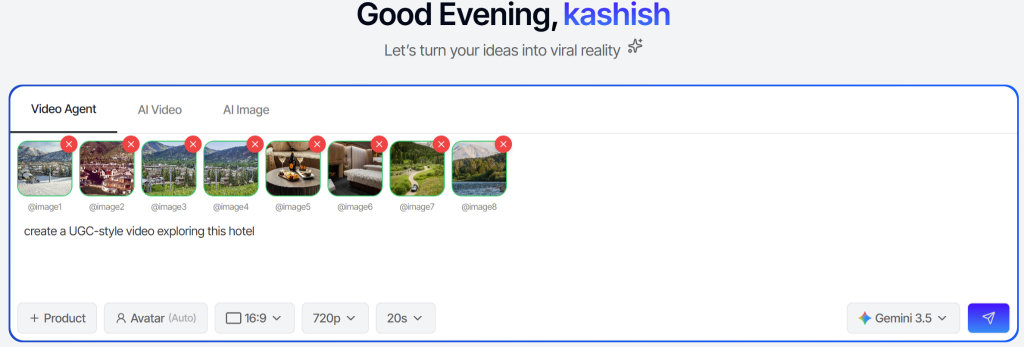
Step 1: Give it your idea, or your destination image
Type the plain-language goal, something like “create a UGC-style video of a traveler discovering [destination/hotel/tour],” and add real photos or footage of the actual place or product. Set your format and, for travel specifically, plan for multiple language versions from the start, since this is one of the biggest practical advantages of the format for a global audience.
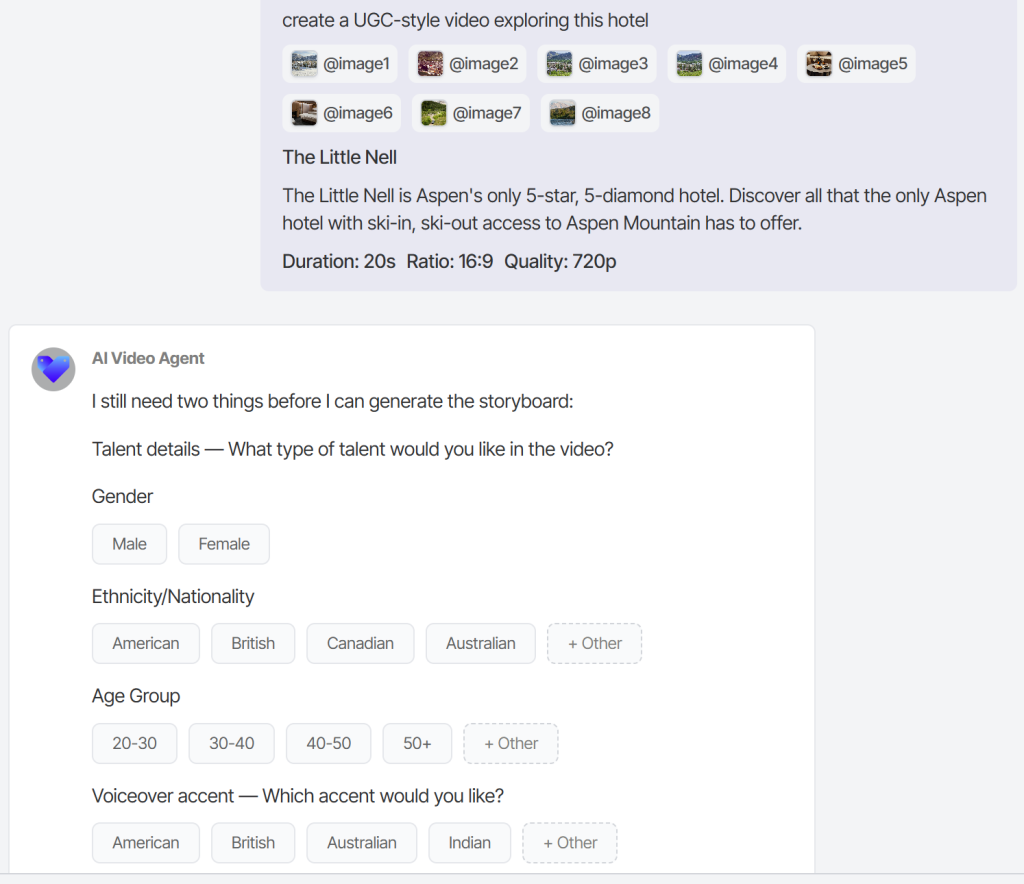
Step 2: Answer the follow-ups, then review the storyboard for specificity.
The Agent asks about audience and tone; push for a specific, personal-feeling account rather than a generic “amazing destination” framing, since that specificity is what actually drives the destination-imagery effect the research points to. Review the storyboard to make sure it reflects the real place or product accurately.
Step 3: Generate, Localize, and Post
Generate the video, then produce dubbed or localized versions for each target market. One documented internal case: a travel brand generating AI-dubbed videos across 10 languages for global markets saw engagement increase by 25%, without re-shooting a single scene for each market.
Steal These Prompts for Your Next Travel Ad
1. The first-arrival reaction
“Create a UGC-style video of a traveler arriving at [destination/hotel] for the first time. Capture their genuine first reaction and focus on one memorable sensory detail, such as the view, atmosphere, local food, or surroundings. Make the experience feel personal and aspirational rather than like a traditional advertisement.”
2. The hotel room reveal
“Create a natural UGC-style video where a traveler gives a first-person tour of their room at [hotel/resort]. Highlight 3 specific details they genuinely appreciate, such as the view, bed, bathroom, amenities, or location. Keep the delivery conversational and realistic, as if sharing the experience with a friend.”
3. The honest travel review
“Create a UGC-style travel review of [hotel/destination/tour]. Highlight the best parts of the experience while mentioning one small, honest trade-off. Use specific details instead of generic phrases like ‘amazing’ or ‘beautiful’ to make the review feel credible and trustworthy.”
4. The ‘worth the trip?’ hook
“Create a UGC-style video answering the question: ‘Is [destination/hotel/tour] actually worth the trip?’ Start with a strong hook, then show specific experiences that justify the recommendation. End with a concise reason why a traveler should consider visiting.”
5. The hidden-gem angle
“Create a UGC-style video where a traveler reveals [destination/hotel/local experience] as a hidden gem. Focus on one or two specific things that make the experience different from typical tourist recommendations. Make the creator sound like they are sharing a discovery with a friend.”
6. The itinerary-in-a-minute
“Create a fast-paced UGC-style travel video showing how to spend 24 hours at [destination]. Include [3–5] specific places, activities, foods, or experiences, with a natural creator-style narration. Make every scene useful and visually engaging for someone planning their trip.”
Conclusion: The Future of Travel Content Is AI-Powered
AI UGC videos give travel and hospitality brands a faster way to create authentic, engaging, and scalable travel content. Instead of relying on expensive shoots for every destination or market, brands can turn real destination, hotel, tour, and product assets into personalized videos for different audiences and languages.
The key is authenticity. Use real visuals, specific experiences, and storytelling that helps travelers imagine themselves there.
So, is AI UGC good for travel marketing? Yes, when it feels relevant, credible, and genuinely useful to the traveler. For hotels, resorts, travel agencies, tour operators, and destination marketers, AI UGC can make it easier to create more content, localize campaigns, and reach travelers during the discovery stage.
The brands that combine real travel experiences with AI-powered content creation will be better positioned to capture attention and turn inspiration into bookings.
Frequently Asked Questions
It’s backed by peer-reviewed research, not just marketing claims. Multiple tourism marketing studies, including a widely cited 2023 study in Tourism Management, have found that UGC shapes destination image and directly influences tourist loyalty and visit intention, and current market data shows 68% of travel bookings are already influenced by social media content.
The research on this points to the format, not the verified identity, as the actual driver. Studies on user-generated video specifically found that aesthetics and credibility drive something researchers call eTrust, which is what motivates word-of-mouth and destination choice, not confirmation that a specific individual is real. AI UGC can produce that same credible, personal-feeling format at scale.
Tagshop AI’s Video Agent can generate dubbed and localised versions of the same video across multiple languages without re-shooting; one documented case involved a travel brand producing AI-dubbed content across 10 languages and seeing a 25% engagement increase as a result.
Ground every generation in real footage or real images of the actual destination or property, and prompt for a specific, personal-feeling detail rather than generic praise. This directly mirrors what the destination-imagery research identifies as the actual mechanism behind why UGC-style content influences travel decisions in the first place.
Yes, video ads increase travel booking intent by 54%, and platforms built around video discovery, like TikTok, show even stronger effects: 32% of users have booked a stay they discovered there, and viewers are 2.6 times more likely to book after searching travel content on the platform.
Written by:

Prakash Rawat is a digital marketer at Tagshop AI with 6+ years of experience across SEO, performance marketing, and AI-powered growth tools. He specializes in applying AI-driven strategies to optimize visibility, accelerate scalable growth, and drive adoption of next-generation marketing technologies.
 Add Tagshop.ai as a preferred source in Google Search






 Introducing

 Wan 3.0 is now live on Tagshop AI