What Is AI UGC? Examples, Benefits & Best Tools in 2026
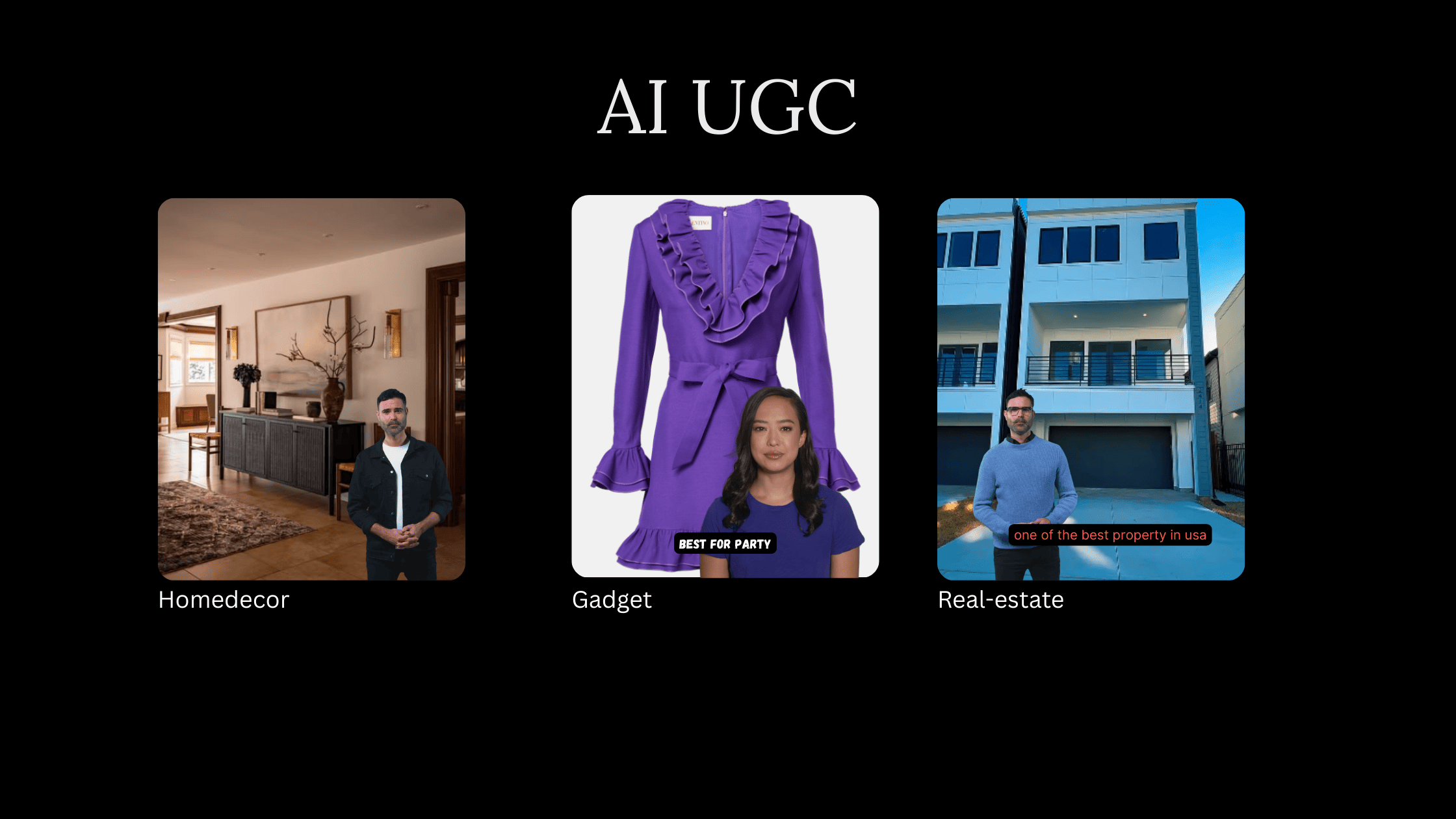







User-generated content has been the backbone of social proof for over a decade. Real customers sharing real experiences with products built more trust than any polished brand campaign could. But producing UGC at scale has always been slow, expensive, and unpredictable.
That is where AI UGC enters the picture.
AI UGC is one of the fastest-growing categories in digital marketing right now, and it is also one of the most misunderstood. Some marketers treat it as a replacement for human creators. Others dismiss it as inauthentic. The reality sits somewhere in between, and understanding it properly is the difference between using it well and wasting budget on it.
This guide breaks down what AI UGC actually means, what it looks like in practice, and why brands are adopting it so quickly.
What is AI UGC?
AI UGC refers to user-generated-style content that is created, enhanced, or scaled using artificial intelligence. The content is designed to look and feel like authentic content from a real customer or creator — the casual selfie-style video, the handheld product demo, the honest-sounding voiceover — but AI plays a significant role in producing it.
It is important to be precise here, because AI UGC is not one single thing. It exists on a spectrum:
Fully AI-generated UGC. An AI avatar or synthetic presenter delivers a script on camera. No human creator was filmed. Tools in this category generate realistic digital humans who can speak any script in any language, in a style that mimics organic creator content.
AI-assisted UGC. A real creator films the content, but AI handles parts of the workflow — writing the script, generating hook variations, editing the footage, adding captions, or localizing the video into other languages.
AI-scaled UGC. A brand takes one piece of real creator content and uses AI to produce dozens of variations: different hooks, different CTAs, different aspect ratios, different languages. One filming session becomes an entire testing library.
The common thread is that AI compresses the time and cost between “we need creator-style content” and “we have creator-style content ready to publish.”
How AI UGC Differs From Traditional UGC
Traditional UGC is organic by definition. A customer buys a product, likes it, and posts about it. Brands later formalized this into creator programs, where they pay creators to produce UGC-style ads. Either way, a human is on camera, and a human controls the production timeline.
That model works, but it has friction baked in. Sourcing creators takes time. Briefing them takes time. Waiting for delivery takes weeks. Revisions take longer. And if a video flops in testing, the whole cycle starts again.
AI UGC removes most of that friction. Scripts can be generated in minutes. Avatar videos can be produced the same day. Variations can be spun up on demand. The trade-off is that the content is no longer a genuine customer expression — it is manufactured to feel like one.
Examples of AI UGC in Practice
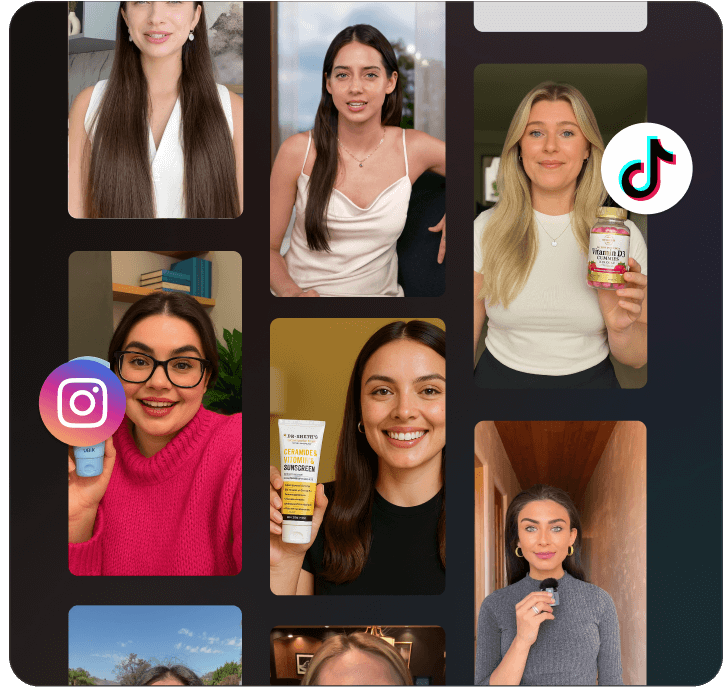
1. AI avatar testimonial ads. A DTC skincare brand wants testimonial-style video ads but has no creator pipeline. Using an AI avatar platform, they generate a series of videos where realistic digital presenters talk through the product’s benefits in a casual, face-to-camera style. Each video uses a different hook: one opens with a skin problem, another with a before-and-after claim, another with a question. The brand tests all of them on Meta within a week.
2. AI-generated product demo scripts. An e-commerce brand works with real creators but struggles with inconsistent briefs. They feed their product page, customer reviews, and two top-performing competitor ads into an AI tool, which generates structured scripts with timed hooks, talking points, and CTAs. Creators film from these scripts, and the output quality becomes far more consistent.
3. Multilingual localization. A brand has one winning UGC ad in English. Instead of hiring creators in five markets, they use AI dubbing and lip-sync tools to localize the same video into Spanish, German, French, and Japanese — with the original creator’s voice cloned and matched to translated audio. One asset becomes five market-ready ads.
4. Hook and variation testing. A performance marketing team takes a single 45-second creator video and uses AI editing tools to cut it into fifteen variations: different opening three seconds, different captions, different end cards. They test the batch, find two winners, and scale spend on those.
5. AI-written review summaries and social proof content. Brands also use AI to mine thousands of real customer reviews and turn recurring themes into UGC-style content angles — the exact phrases customers use become the hooks in new videos.
The Benefits of AI UGC
1. Speed
The traditional UGC cycle — source, brief, film, deliver, revise — takes two to four weeks per batch. AI UGC compresses that to hours or days. For paid social, where creative fatigue sets in fast and trends move weekly, that speed is a genuine competitive advantage. You can respond to a trend while it is still a trend.
2. Cost Efficiency
Creator content typically costs anywhere from $150 to $1,000+ per video, before usage rights. AI-generated or AI-scaled content brings the per-asset cost down dramatically, especially for testing. Brands no longer have to choose between testing ten concepts and staying on budget — they can do both, then invest creator budget in the concepts that prove themselves.
3. Volume for Creative Testing
Modern ad platforms reward creative volume. Meta and TikTok algorithms perform better when fed many variations to optimize across. AI UGC makes it practical to maintain a constant pipeline of fresh creative instead of stretching three videos across a quarter.
4. Consistency and Control
Human creators interpret briefs differently, and quality varies. With AI-assisted scripting and production, brands control the message, the structure, and the timing of every element — the hook lands at second one, the product appears at second four, the CTA arrives on cue. That structural control aligns closely with how performance ads are actually optimized.
5. Localization at Scale
Expanding into new markets used to mean rebuilding the creative pipeline in every language. AI translation, dubbing, and lip-sync tools let brands take proven creative and localize it convincingly, opening international testing without international production costs.
6. Lower Barrier for Small Brands
Perhaps the most underrated benefit: AI UGC gives small brands access to a content format that was previously gated by budget. A two-person e-commerce team can now produce creator-style ad content that competes visually with brands spending ten times more.
The Caveats Worth Knowing
Authenticity is the entire point of UGC. If audiences detect that a “customer” is synthetic, trust can drop sharply — and audiences are getting better at detecting it. AI UGC works best when it is either disclosed, genuinely indistinguishable, or used in formats where the audience cares more about information than identity.
Disclosure rules are tightening. Platforms like TikTok and Meta now require labeling of AI-generated or significantly AI-altered content in many contexts, and regulators are moving in the same direction. Brands using fully synthetic presenters should build disclosure into their workflow rather than treating it as optional.
AI cannot manufacture genuine experience. A real customer describing how a product solved their problem carries information that no script can fully replicate. The strongest programs use AI to scale and test, while keeping real customer voices at the core of the message.
Conclusion
AI UGC is not a gimmick, and it is not a replacement for authentic customer content. It is a production and testing layer that removes the slowest, most expensive parts of the UGC workflow.
The brands using it well follow a simple pattern: real customer insight feeds the message, AI handles the volume and variation, and performance data decides what survives. Used that way, AI UGC does not dilute authenticity — it helps brands find their most authentic-feeling message faster.
The format will keep evolving as the tools improve. The principle will not: content that feels real wins, and AI is simply changing how efficiently brands can get there.
Frequently Asked Questions
AI UGC is faster, cheaper, and more scalable than traditional UGC. Yet, in certain niches, traditional UGC may still feel more emotionally authentic.
Yes, but brands should follow advertising disclosure guidelines and ensure proper consent when using cloned voices or AI-generated likenesses.
Many brands use AI UGC to improve CTR, test multiple creatives quickly, and reduce production costs for paid campaigns.
Yes, AI UGC helps small businesses create professional, high-quality ad creatives without hiring production teams or influencers.
Written by:

Rohan Singh is an AI-forward content specialist with 5+ years of experience creating creative, trend-led content for digital-first brands. He blends industry insights, AI-powered research, and content intelligence to produce engaging, relevant narratives aligned with evolving marketing trends. Constantly exploring new AI tools, he ensures his work stays innovative, impactful, and built for how audiences consume content today.
 Add Tagshop.ai as a preferred source in Google Search




 Introducing

 Wan 3.0 is now live on Tagshop AI