How to Create AI UGC Videos for Real Estate (Step-by-Step Guide)








TL;DR: Listings with video get roughly 403% more inquiries than listings without, and homes marketed with video sell up to 31% faster with 20 to 25% less time on market. Most agents and brokers know this. What they don’t have is the budget or time to shoot video for every single listing, every price point, every audience. AI UGC ads close that gap: UGC-style videos, explainer content, and AI-guided property tours generated straight from a listing link, in minutes instead of a multi-day shoot. But real estate carries a trust risk home decor doesn’t: misrepresent a property and you’re not just losing a sale, you’re inviting a Fair Housing complaint or a furious buyer at the door. This post covers both halves: how to actually produce this content, and where the line is that you don’t cross.
Every Real Estate Marketer Hits the Same Wall
Talk to enough agents, brokers, and real estate marketing teams and the same three frustrations come up:
- “Professional video shoots are expensive and slow, and I’ve got listings coming and going every week.”
- “My listing looks exactly like every other listing in the feed. Buyers scroll right past it.”
- “I can’t produce a proper video for every property. Only the expensive ones get the full treatment.”
Underneath all three is the same math problem as home decor: one polished asset can’t cover an inventory that changes weekly, with buyers who range from first-time homeowners to investors to relocating families, each one needing a different story told about the same four walls.
Why One Listing Video Isn’t Enough Anymore
A single walkthrough video assumes every buyer wants the same thing highlighted. They don’t:
- A young couple wants to see the primary bedroom light and the kitchen flow.
- An investor wants the numbers: square footage, rental comps, location advantages.
- A relocating family wants the neighborhood, schools, and commute, not just the living room.
Traditional real estate video production means picking one story and hoping it lands with everyone. That’s also why the engagement gap is so stark: virtual tours increase listing engagement by roughly 87% compared to static photos alone, but most agents still only produce one version of that tour, for one audience, because a full video shoot per persona was never realistic on a per-listing budget.
The Trust Line Real Estate Can’t Cross (And How to Stay on the Right Side of It)
This is the part most “AI Video for real estate” posts skip, and it’s the part that actually matters.
Search Reddit for how the industry talks about this, and you’ll find real anger. One thread asking “should estate agents use AI to advertise a property” pulled over 1,900 votes, with the top response flatly stating it should be illegal and classed as false advertising. Another thread from real estate professionals themselves was titled, bluntly, “Realtors, I am begging you to stop with the virtual staging,” pointing out that several states legally require disclosure when staging is virtual, not physical.
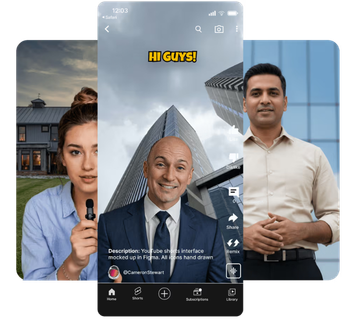
The distinction that actually matters here: altering the physical reality of a listing (walls, layout, structural features, virtually “renovating” a room that hasn’t been renovated) is a different category from producing creator-style marketing content about a real, unaltered listing. A UGC-style video where a virtual presenter walks through real photos and real floor plans, explains real amenities, and tells a story about a real property is marketing content. Virtually restaging a room to look renovated when it isn’t, without disclosure, is where agents get into actual legal and ethical trouble, and it’s also where buyer trust breaks permanently. Several state real estate boards already require a visible “virtually staged” disclosure on altered images specifically because of this.
The rule of thumb: AI UGC ads for real estate should sell the story of a real property. They should never quietly edit the property itself.
What AI UGC Actually Fixes (And Where It Still Needs You)
Once that line is clear, the actual opportunity is significant. AI UGC removes the production bottleneck between “we have a new listing” and “we have a video for it,” which means:
- Every listing can get a video, not just the flagship ones.
- The same property can get an explainer video for first-time buyers, a lifestyle-driven ad for social, and an investor-focused cut, without three separate shoots.
- Multi-market or relocation-focused brokerages can localize the same listing into multiple languages without re-filming anything.
What it doesn’t remove is judgment. Deciding which story a specific listing should tell, and making sure the content never misrepresents what a buyer will actually walk into, is still a human call.
Inside the Workflow: From Property Link to Live Ad
Using Tagshop AI’s AI video agent as the practical reference:
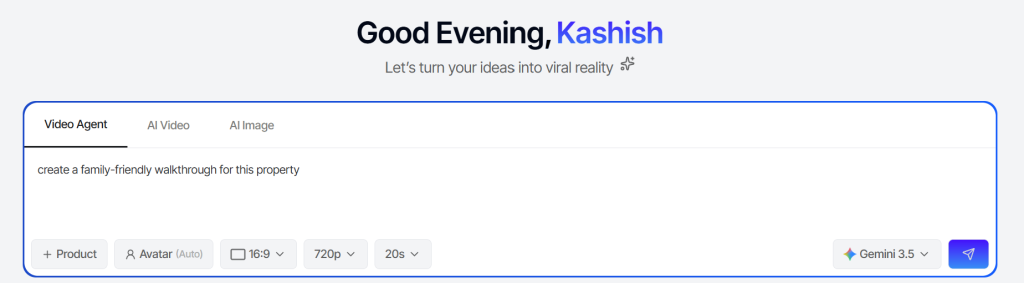
Step 1: Give it your idea and your listing.
Type what you want in plain language, something like “turn this listing into an investor-focused ad” or “create a family-friendly walkthrough for this property.” Paste the listing link (or upload photos and floor plans) and it pulls the details in automatically. Set your aspect ratio, resolution, and length, anywhere from 4 seconds to a full 60, real estate content usually benefits from the longer end so a room or neighborhood context has time to land.
Step 2: Answer the follow-ups, then review the storyboard.
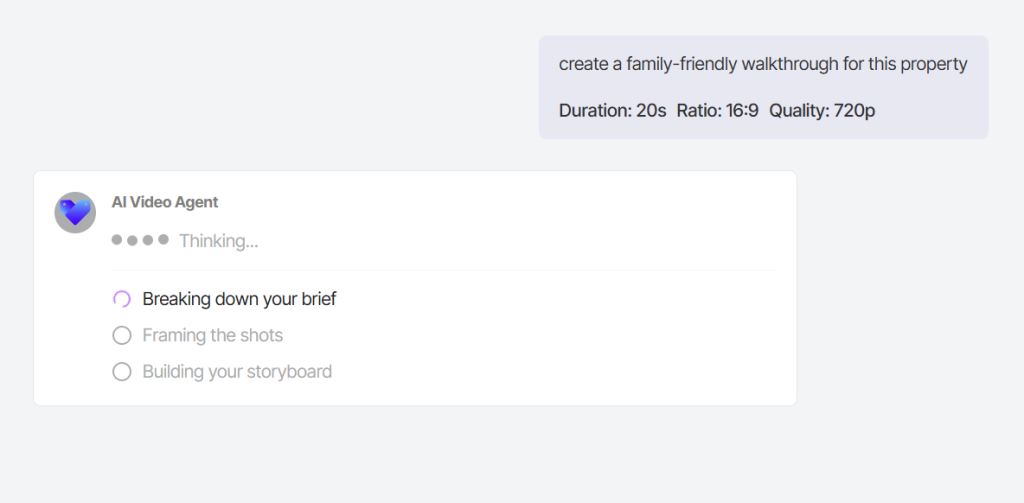
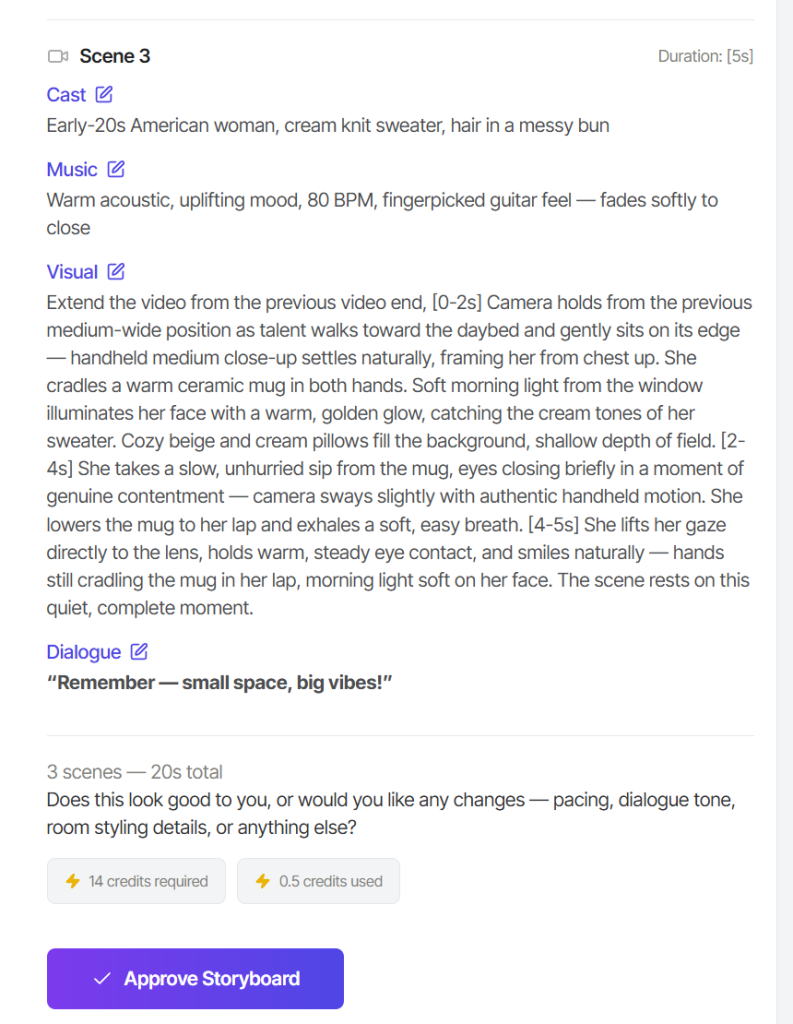
The Agent asks about your audience and the message you want to land (investor numbers vs. family lifestyle vs. relocation story), answer plainly, like you’re briefing an actual agent. Then review the scene-by-scene storyboard before anything renders.
This is the step where you catch anything that could misrepresent the actual property, wrong framing, an implied feature that isn’t real, and fix it directly: “make this feel more like an honest walkthrough” or “cut the staged shot in scene 3.”
Step 3: Generate, fine-tune, and post.
Generate the video once the storyboard is right, regenerate just the one scene that’s not landing if needed, then push it to Meta, TikTok, or wherever the campaign lives.
Steal These Prompts for Your Next Real Estate Ad
The buyer-persona hook:
“Create a UGC-style video where the creator walks through [property] speaking directly to [first-time buyers / young professionals / relocating families], highlighting [specific features] that matter most to that buyer, in a warm, conversational tone, not a formal real estate voiceover.”
The honest walkthrough hook:
“Create a video of a creator giving a genuinely honest first reaction to [property], mentioning one realistic tradeoff (e.g., smaller closet, busier street) alongside the standout features, to build credibility instead of sounding like a sales pitch.”
The investor-numbers hook:
“Create a short, fast-paced UGC-style video for [property] framed around the numbers an investor cares about: price per square foot, comparable rental rates in the area, and proximity to transit or business districts.”
The neighborhood-story hook:
“Create a video that starts outside [property], showing the neighborhood, walkable amenities, and commute context, before moving inside to the property itself, framed as ‘here’s the life that comes with this home,’ not just the home.”
5 Rules for Real Estate AI UGC That Builds Trust, Not Complaints
- Never let AI content imply a permanent change that isn’t real. If a room is virtually staged, say so. If it isn’t renovated, don’t generate content implying it is.
- Match the story to the buyer, not the brochure. The same listing should sound different to a first-time buyer than to an investor; that’s a strength of this format, not a shortcut to skip.
- Keep the presenter’s tone honest, including small tradeoffs. The Reddit backlash against AI real estate content is almost always about content that feels like it’s hiding something. A quick, genuine “this street does get some traffic noise” builds more trust than a flawless script.
- Use AI avatars for scale, not to replace the agent’s actual voice and expertise. Buyers still want to know a real person is behind the listing. Let the AI content do the reach; let the agent do the relationship.
- Treat every video as a variant to test, not a final asset. Run the same property through two or three persona-specific cuts and let inquiry and click data tell you which story is actually working, rather than guessing which one “should” perform.
The Real 10x Isn’t More Listings. It’s This.
The math is already public: video listings get roughly 403% more inquiries, sell up to 31% faster, and spend 20 to 25% less time on market, while virtual staging alone cuts presentation costs by 90%+ compared to physical staging. None of that requires cutting corners on honesty.
The brokerages and agents who win with AI UGC aren’t the ones producing the most videos, they’re the ones producing a video for every single listing instead of just the flagship ones, each one telling the specific story a specific buyer actually needs to hear, without ever needing to explain later why the property didn’t look like the ad.
Frequently Asked Questions
Yes, using AI to create marketing videos, explainer content, or AI-guided tours based on real, unaltered listing photos is legal. Where it becomes a legal problem is when AI is used to virtually alter the physical property itself (adding renovations that don’t exist, changing structural features) without disclosure, since several state real estate boards classify that as misrepresentation.
Virtual staging edits the images of the property itself, adding furniture or decor to an empty or existing room. AI UGC ads are marketing content built around the real property, a creator-style video, explainer, or AI avatar tour that presents real photos and real details in an engaging format. Staging changes what the buyer sees of the property; UGC ads change how the story is told.
Disclosure requirements currently focus on virtual staging specifically (several states require a visible “virtually staged” label on altered listing images), not on AI-generated marketing videos that use real, unaltered content. Requirements vary by state and are evolving, so check your local real estate board’s current guidance before publishing.
Traditional physical staging typically runs $1,500 to $5,000+ per listing, and can run into tens of thousands annually for agents staging many listings a year. AI virtual staging runs roughly $10 to $150 per image, a cost reduction of 90% or more.
They can scale reach, not replace the relationship. AI avatars are effective for giving every listing a guided tour experience, especially across languages for relocation or international buyers, but buyers still want a real agent’s expertise and accountability behind the transaction itself.
There’s no single answer, it depends on the buyer. Property listing videos work well as the primary asset; explainer videos perform better for complex layouts or amenities; shorter, social-first ad cuts drive top-of-funnel inquiries. The highest-performing approach is producing more than one format per listing and letting inquiry data show which is working for that specific property and audience.
Written by:

Kashish Vaswani is a Content Strategist at Tagshop AI, specializing in AI-powered marketing, UGC advertising, and eCommerce content. She creates actionable guides, industry insights, and product-focused resources that help brands, marketers, and creators leverage AI to produce high-converting video ads and scale their content strategy with confidence.
 Add Tagshop.ai as a preferred source in Google Search







 Introducing

 Wan 3.0 is now live on Tagshop AI