AI UGC Video Ads: What Actually Works (A Marketer’s Guide)
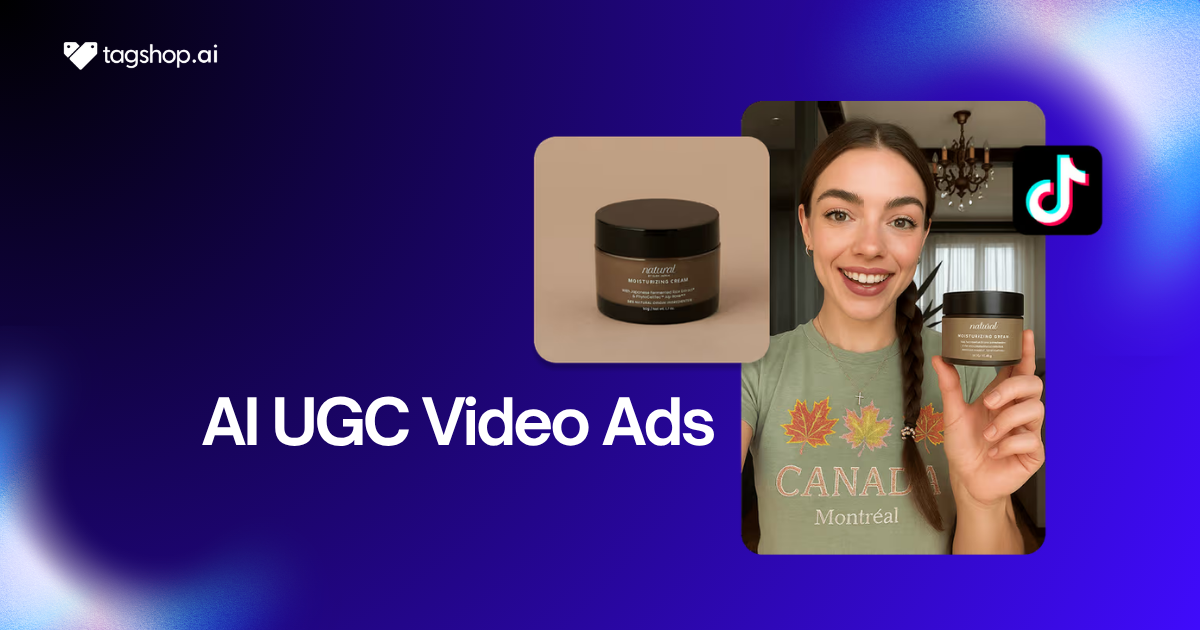







In 2026, Motion analyzed $1.29 billion in Meta ad spend across more than 578,000 creatives. About 5% of those ads became winners.
That number is the whole story of AI UGC video ads, and it is not the story most people tell. The usual pitch is that AI creative looks real enough to fool anyone. The data says the opposite matters more: since roughly 19 out of 20 creatives fail, the brand that wins is the one that can afford to test the most hypotheses before the budget runs out. AI UGC video ads are not valuable because each video is better; they are valuable because they drop the cost of a wrong guess close to zero.
Everything useful about this format follows from that. Here is what actually works, backed by the numbers, with the parts that are still unproven called out as unproven.
TL;DR
- Only about 5% of Meta ad creatives become winners. The volume of tested ideas, not polish, is the lever.
- AI UGC’s real edge is cost per tested hypothesis. It lets you test 20 angles for the price of one filmed video.
- The performance picture is mixed: studies show AI UGC winning on cost efficiency and CTR, human UGC often holding higher absolute conversion on trust-heavy buys.
- The best hooks name one specific, verifiable detail. Generic hooks die in the first two seconds.
- Every platform allows AI UGC but now requires disclosure, and fabricated testimonials break the FTC’s rule (16 CFR Part 465, effective October 2024).
AI UGC Video Ads Explained, In Brief
An AI UGC video ad is a user-generated-style clip made by AI instead of a filmed creator: the casual, talking-to-camera format, with a generated presenter, voice, and often a script. If you want the ground-level mechanics, we cover how to make one step by step and what an AI UGC creator actually is elsewhere. This guide is about whether and how to use them well.
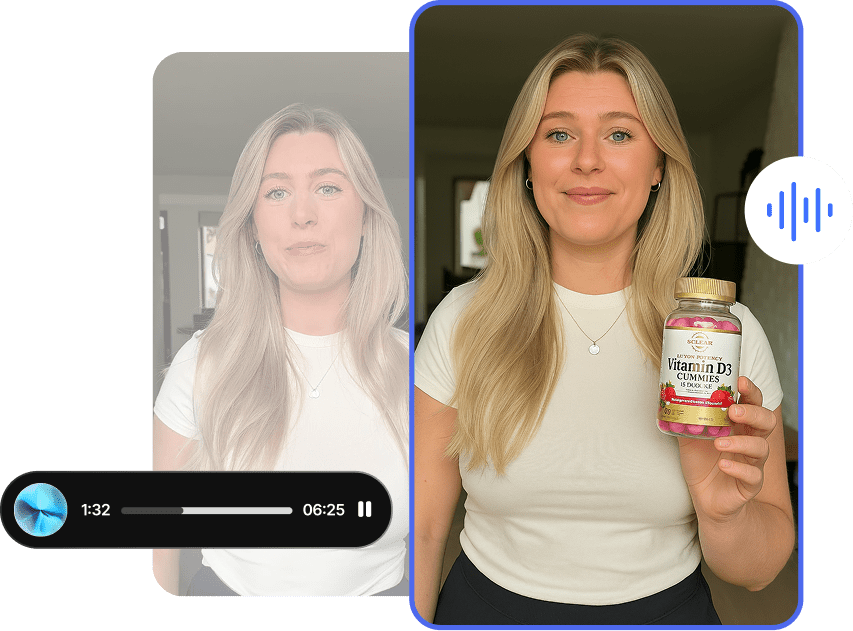
The Real Advantage: Cost Per Tested Hypothesis
Forget monthly price tags for a second. The number that decides ad accounts is the cost of testing one idea.
A creative hypothesis is a single testable angle: one hook, one promise, one reason to buy. To reliably find winners, media-buying benchmarks in 2026 put a mid-spend DTC account at roughly 15 to 25 new creatives a month, because the hit rate is low and most ideas miss. Motion’s 2026 report, drawn from that $1.29 billion in spend, found only about 5% of ads become real winners, with the rate climbing at higher spend tiers.
Now put the two production routes against that reality. A filmed UGC video costs $100 to $500 and takes a week. Testing 20 hypotheses that way runs $2,000 to $10,000 and eats a month. With AI clips at a few dollars each, the same 20 hypotheses cost less than a single creator video and land in an afternoon.
That is the advantage, stated plainly. AI UGC does not make your average ad better. It makes being wrong cheap, so you can be wrong nineteen times to find the one ad that pays for everything. If your account is starved for winning creative, that is the constraint it removes.
Must Explore – AI Video Templates for Finance Sector
What the Performance Data Actually Shows
Here is where I have to be careful, because the honest answer is that the evidence is mixed and some of it is vendor-published. Read it as directional, not settled.
A few real signals point in AI’s favor on efficiency. A 2026 analysis by Digital Applied found AI-generated ads achieved roughly 12% higher click-through than human-created ads shown to the same audiences. 2026 figures claim AI ad variations beat human-designed ones in A/B tests about 68% of the time, though that comes from an AI ad company, so weight it accordingly. And a widely shared $100,000 controlled test reported AI UGC hitting 2.8x ROAS against 2.3x for human UGC, with the person running it noting the edge came from testing volume rather than any single AI video being more persuasive. That caveat matters more than the number.
The counter-signal is just as real. Superscale’s 2026 study comparing AI and traditional UGC found traditional UGC held higher absolute conversion rates, while AI won on cost efficiency and scale. This is the responsible way to state the trade-off, and it corrects a claim I would not make as a blanket rule: human UGC is not automatically better at converting. Its comparative strength is trust and lived experience, which show up most on high-consideration purchases where a real person’s credibility does the selling. On a cheap impulse buy, that edge often disappears.
So the defensible summary is: AI UGC tends to win on cost, speed, and volume, and sometimes on CTR. Human UGC tends to win on trust and the conversions that trust drives. Anyone stating it more confidently than that is guessing or selling.
How to Write a Hook that is Worth Testing
Volume only helps if the ideas are good, and the idea lives in the hook. After watching a lot of these succeed and fail, the pattern is consistent: strong hooks name one specific, verifiable detail. Weak hooks reach for an adjective. Here is the difference, with real examples and why each works.
Name the Precise Flaw it Fixes
“This is the only sports bra I don’t have to adjust mid-run.” It works because it names an exact, familiar pain instead of claiming the product is “comfortable.”
Lead with the objection the buyer already has.
“I thought forty dollars for a water bottle was ridiculous, until I stopped buying two plastic ones a week.” It works because it mirrors the doubt in the viewer’s head, so they feel understood rather than sold to.
Use a concrete number or timeframe, only if it is true.
“My scalp stopped flaking in about two weeks.” It works because specificity reads as experience. The honesty condition is not optional, and the rules section explains why.
Show the one thing a photo cannot.
“Watch what happens when I actually pour it.” It works because motion is the entire reason to run video instead of an image, so the hook should promise something static creative cannot deliver.
Must Explore: AI Video Templates for Financial Services Brands
Open on a weirdly specific true detail.
“It has a hidden zipper you cannot see, which is the whole reason the skirt fits like this.” It works because an oddly specific detail signals a real person noticed a real thing.
The through-line: a hook built on one true, specific detail reads as native to the feed. A hook built on “amazing” reads as an ad, and gets treated like one.
The AI UGC Testing Loop
Knowledge is not a system, so here is the system. This is the method that turns the cost advantage into results rather than just cheap videos.
- Write 15 to 20 hypotheses as hooks, each built on one specific, true detail, using the patterns above. This is the only step that requires real thought.
- Generate them cheaply, one product, many angles, so a wrong guess costs a few dollars, not a shoot.
- Review every hook before it renders. This is the step most people skip and the one that decides whether an ad is honest and on-message. You are approving what the creator will claim.
- Judge on cost per result and hold rate, not click-through vanity. CTR that does not convert is a trap this format often falls into.
- Kill the roughly 95% that miss, and put budget behind the few that win. The math only works if you are ruthless.
- Refresh winners before they fatigue. High performers commonly start decaying within three to seven days, so generate variations of the winning angle before the numbers slide, not after.
Step three is the quiet difference-maker, and it is where a tool either helps or hurts, which I will come back to.
When NOT to Use AI UGC
Skipping this section is how vendor content gives itself away, so here is the honest boundary. Some clear cases where AI UGC is the wrong call:
- If the ad depends on a real, un-fakeable result, a genuine before-and-after, an authentic taste reaction, use a real person. A synthetic version is both weaker and riskier.
- If your brand is built on authenticity, founder-led, handmade, community-first, a synthetic creator can quietly contradict the whole positioning.
- If the ad makes a personal claim, “I used this for six months”, it needs a real customer, not a generated one. That is a testimonial, and a fabricated one is a legal problem, not a style choice.
- If you are in a high-trust category like health or finance, lean human and get every claim substantiated first.
- If you only need one hero video, not volume, the cost advantage barely applies. A single great human video may simply be the better buy.
The Decision Rule: AI or Human?
Strip it to one line. Use AI UGC to find the hook. Use a human to build trust.
If your bottleneck is not knowing what to say, meaning you have not found the angle that converts, test with AI because the whole point is cheap iteration.
If your bottleneck is getting someone to believe a claim, especially an expensive or sensitive one, put a real person on camera. Most brands hit the first bottleneck early and the second later, which is why so many use AI to find winners and humans to scale the ones that need credibility.
The Rules: Disclosure and the One Line you Cannot Cross
AI UGC video ads are allowed on every major platform. Conditions tightened sharply in 2024 and 2026, and because these are high-stakes, they are worth stating precisely. This is a summary of public policy, not legal advice, and the pages change, so confirm before you launch.
- FTC. The Rule on the Use of consumer reviews and testimonials (16 CFR Part 465) took effect on October 21, 2024. It bans fake or deceptive reviews and testimonials, including AI-generated ones and any from someone with no actual experience with the product, and it authorizes civil penalties for knowing violations. An AI-generated presenter explaining a product is a different thing from a generated person claiming a personal experience. The second is a manufactured testimonial, and that is the line.
- Meta. Ads Manager includes an AI-disclosure control advertisers are expected to use for AI-generated or AI-edited creative, and photorealistic depictions of real people doing things they did not do are restricted.
- TikTok. Realistic AI-generated content depicting people, voices, or scenes must be labeled, a requirement TikTok moved from optional to mandatory.
- Google. Disclosure of generative-AI use in ads rolled out in July 2026, and the misrepresentation policy covers AI content, with deepfakes prohibited.
The deeper version, including the presenter-versus-testimonial distinction, is in our guide on whether you can run AI UGC as paid ads.
Where a Tool Fits in This Loop
The testing loop only works if generating and, more importantly, controlling each ad is fast. In addition, reviewing the hook before it renders is what protects you from generic scripts and from claims you did not intend to make. A tool that hides that step works against the method.
This is why a platform like Tagshop AI fits the loop. You give it your product URL or upload assets, and its Video Agent builds an editable, scene-by-scene storyboard you approve before anything renders, so you are steering the exact hook and claim rather than accepting whatever the model wrote. You pick from a range of current AI video models, generate, adjust, and publish to Meta or TikTok, with plans from $14 a month that keep the per-hypothesis cost low enough to test at the volume the 5% win rate demands. If you plan to run this loop in-house, control over the hook is what matters. Test one product through it and judge the output on your own feed.
Must Read: AI Video Templates for Food & Beverage Brands
The Bottom Line
The most useful thing to take from this is not a fact about AI UGC video ads. It is a method. Only about one in twenty creatives wins, so the game is testing more honest hypotheses per dollar than your competitors can.
AI UGC is the cheapest way anyone has found to do that, provided you write hooks on real, specific details, control what each ad claims before it renders, judge on conversion rather than clicks, and bring in a human when the sale depends on trust the format cannot manufacture. Run that loop on one product this week, and let a 5% win rate stop being a problem and start being an edge.
Frequently Asked Questions
For testing and top-of-funnel volume, yes. Studies in 2026 show AI UGC winning on cost efficiency and often click-through, while traditional UGC tends to hold higher absolute conversion on trust-heavy purchases. The reliable use is testing many angles cheaply with AI and scaling winners.
Dramatically, on a per-test basis. A filmed UGC video runs $100 to $500; AI clips cost a few dollars each. Since you typically need to test 15 to 25 angles a month to find winners, AI lets you run that testing for less than the price of a single creator video.
Yes, all three allow AI-generated ad creative, and all three now require disclosing it. Fabricated testimonials and deepfakes of real people are prohibited, and the FTC’s 16 CFR Part 465, effective October 2024, separately bans AI-generated fake testimonials.
When the ad depends on a genuine result or reaction, makes a personal claim, is built on authenticity, or is in a high-trust category like health or finance. Use AI to find the winning angle, and a human to carry the trust.
Enough to beat a low hit rate. Benchmarks in 2026 suggest roughly 15 to 25 new creatives a month for a mid-spend account to find two or three winners, since only about 5% of ads become real winners.
Sometimes, and it depends on how you execute and how honest you are. Some viewers spot and dislike obvious AI, and required disclosure means you should not hide it. A clip built on one true, specific detail tends to hold up; a fabricated personal testimonial does not, and it is against the rules.
Written by:

Prakash Rawat is a digital marketer at Tagshop AI with 6+ years of experience across SEO, performance marketing, and AI-powered growth tools. He specializes in applying AI-driven strategies to optimize visibility, accelerate scalable growth, and drive adoption of next-generation marketing technologies.
 Add Tagshop.ai as a preferred source in Google Search






 Introducing

 Wan 3.0 is now live on Tagshop AI