AI UGC Generator vs Traditional UGC Video Platforms
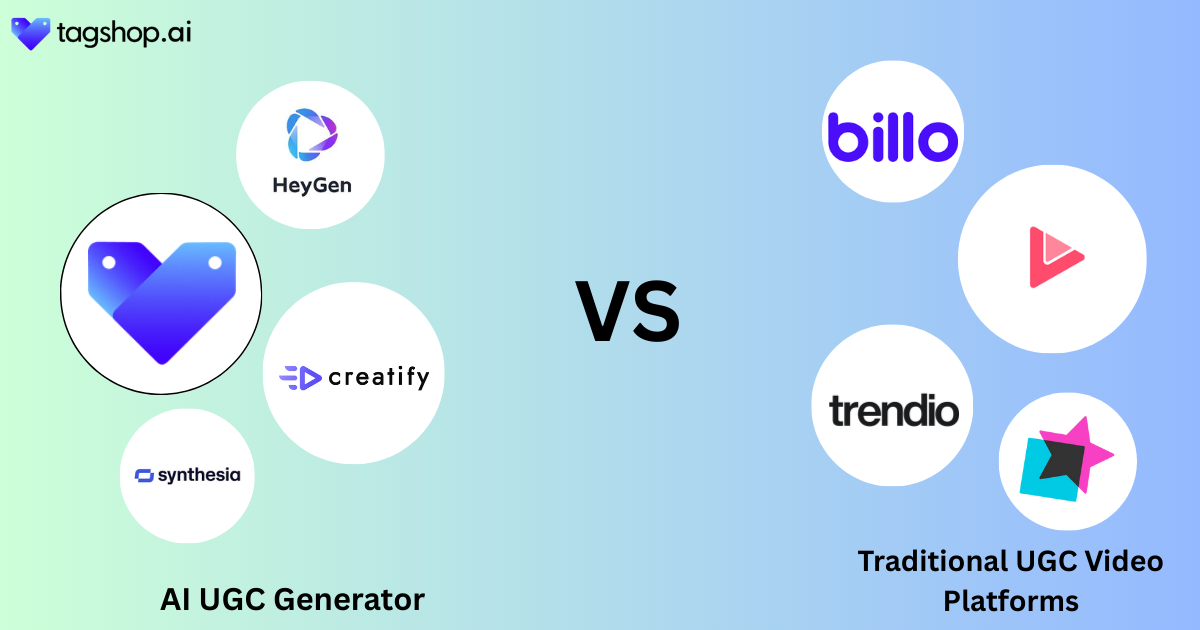







UGC is still the highest converting ad format on the planet. Real customers holding your product, talking straight to the camera, messy bedroom background, cracked phone screen – that stuff prints money. The problem is getting enough of it fast and cheap. If you’re just getting started, read our complete guide on what AI UGC is before diving into this comparison.
However, we have two types of tools ruling the market: AI UGC platforms and traditional UGC platforms. This guide compares AI UGC platforms vs traditional UGC platforms on speed, cost, quality, and scale so you know exactly which one fits your 2026 goals.
Learning About Each UGC Video Platform In Brief
Traditional UGC Platforms
These platforms act as marketplaces that pair brands with real people willing to film videos on their phones. Marketers post a detailed brief with product details, pay range, and deadlines. Creators apply, get selected, shoot in their own homes, and send raw files back. The whole process feels authentic because it is. Common examples include Billo, Vocal Video, Trend.io, and Insense. Brands love the genuine energy but hate the waiting and coordination.
Workflow: You write the brief, creators pitch, you pick favorites, they film using your guidelines, send files for review, you request revisions if needed, then approve finals. Turnaround can take days or weeks, depending on the creator’s availability and revision rounds.
Billo lets you book creators by niche and price. Vocal Video focuses on customer testimonials with easy recording links. Trend.io matches brands with micro-influencers for quick shoots. Insense handles full campaigns from creator discovery to payment.
AI-Generated UGC Platforms
These tools skip humans and build UGC-style videos from scratch using artificial intelligence. You type a script or drop a product link, pick an avatar that looks like a regular customer, choose a voice, and the AI creates a finished clip that feels phone-recorded. Leading options are Tagshop AI, HeyGen, Creatify, and Synthesia. Among these, Tagshop AI for UGC ads stands out as the platform purpose-built for performance marketers running high-volume campaigns. For a detailed breakdown of each, see our guide to the best AI UGC ad generators.
Workflow: Paste a product link or write a short script, select an avatar and voice, click generate, review the clip, make quick tweaks if needed, then export. The whole thing takes minutes instead of days.
Brands need dozens of fresh creatives every week to feed TikTok, Reels, and Meta ads. Waiting on creators no longer works. AI delivers the same raw UGC look instantly, at a fraction of the cost, with unlimited variations.
Core Differences: AI UGC platforms vs traditional UGC platforms
AspectTraditional UGC PlatformsAI UGC PlatformsContent Creation ProcessHuman creators film on phones after a brief selectionAI generates from script/link, no humans involvedSpeed of productionDays to weeks per clip due to coordinationMinutes per clip, fully automatedCost Structure$200–$5,000+ per video + paid revisions$5–$50 per clip or flat subscriptionROI comparisonHigh trust but low volume limits scaleMore volume + testing drives higher blended ROASAuthenticity & RealismReal human emotions, unpredictable charmImproving avatars, feels close but lacks raw sparkScalability & Volume10–30 clips/month max without exploding budgetHundreds daily, no limitsTurnaround Time3 days to 4 weeks per video20 seconds to 5 minutes per clipControl & CustomizationCreative flair, but hard to enforce guidelinesPixel-perfect control over every elementConsistency in Brand MessagingVaries by the creator’s interpretationExact same tone, look, message every time
Strengths of Traditional UGC Video Platforms
Human touch & emotional connection — Real creators bring genuine emotion that AI still struggles to match.
Diverse content styles — Every creator has their own vibe, accent, home setup, and filming style, keeping feeds fresh.
Real product experience — Creators actually open the box, use the item, taste the food, and wear the clothes.
High relatability — The person on screen looks like the viewer’s friend or neighbor.
Ideal for testimonial-focused ads — Nothing beats a real customer saying “This changed my routine” with genuine excitement.
Limitations of Traditional UGC Platforms
- High costs — Paying creators $200 to $5,000 per video adds up fast. Add platform fees, usage rights, and revision charges.
- Delays & dependency on creators — Creators have day jobs, kids, or just disappear mid-project. Simple revisions can take days.
- Limited scalability — Most brands max at 10–30 human clips per month without breaking budget or timeline.
- Inconsistent quality — Lighting, audio, and energy vary wildly across creators.
- Multiple revision cycles — Human creators often need 2–5 rounds. Each cycle costs time and extra fees.
Strengths of AI UGC Platforms
Instant content creation – Brands drop a product link or script and get a finished UGC-style video in minutes. Read our step-by-step guide to creating UGC-style ads with AI avatars to get started immediately.
Extremely scalable – One template becomes hundreds of videos. Change the hook, avatar, background, or language and regenerate instantly.
Cost-effective — Subscription or low per-video pricing replaces $200–$5,000 creator fees.
Easy revisions — Change one line of script, swap voice tone, adjust pacing — regenerate in seconds for free.
Consistency in messaging and tone — Every video uses the same avatar, voice, colors, and style guide.
Ability to experiment with scripts, hooks, CTAs — Generate fifty hook variations, test which stops thumbs best, then scale winners.
Limitations of AI UGC Platforms
May lack emotional depth — AI avatars deliver lines well but miss the unpredictable spark of human emotion.
Authenticity challenges in some niches — Food, beauty, or fitness ads often need real hands touching or tasting the product.
AI avatars are still improving in realism — Current avatars look great in short clips but can glitch on complex expressions.
Limited real-life product handling — AI can’t yet show actual hands opening boxes or pouring liquids naturally.
Conclusion
The battle between an AI UGC platform and a traditional UGC platform comes down to what your brand needs right now. Traditional UGC brings unmatched human emotion and relatability that still wins hearts in emotional niches. For the data behind why AI UGC is growing so fast, see our AI UGC video performance statistics. AI UGC delivers speed, scale, cost savings, and perfect control that traditional simply can’t match at volume. Their future is AI, and now it’s the best time to jump onto this bandwagon.
Frequently Asked Questions
For speed, cost, and scale, AI UGC wins significantly. AI UGC costs $1–$20 per video versus $200–$5,000 for creator-made content and can be produced in minutes. However, traditional UGC still leads in emotional authenticity, particularly in beauty, food, and luxury categories where physical product interaction matters most.
Traditional UGC costs $200–$1,000+ per video including creator fees, revisions, and usage rights. AI UGC platforms charge $23–$149/month for unlimited generations, reducing production costs by 80–90% for most brands. The savings are largest for brands producing high volumes of A/B test creative.
AI UGC limitations include less emotional depth than real human creators, difficulty showing real product handling (opening boxes, pouring liquids, touching textures), and authenticity challenges in food and beauty niches where viewers expect to see genuine physical interaction with the product.
Use AI UGC for high-volume A/B testing, multilingual campaigns across multiple markets, fast response to trending moments, consistent messaging across large product catalogs, and when budget does not allow regular creator shoots. Use real creators for luxury brand positioning, emotionally complex stories, and when physical product handling is central to the message.
Written by:

Rohan Singh is an AI-forward content specialist with 5+ years of experience creating creative, trend-led content for digital-first brands. He blends industry insights, AI-powered research, and content intelligence to produce engaging, relevant narratives aligned with evolving marketing trends. Constantly exploring new AI tools, he ensures his work stays innovative, impactful, and built for how audiences consume content today.
 Add Tagshop.ai as a preferred source in Google Search






 Introducing

 Wan 3.0 is now live on Tagshop AI