AI UGC Video Ads vs. Traditional Creator Ads: Which Wins in 2026?
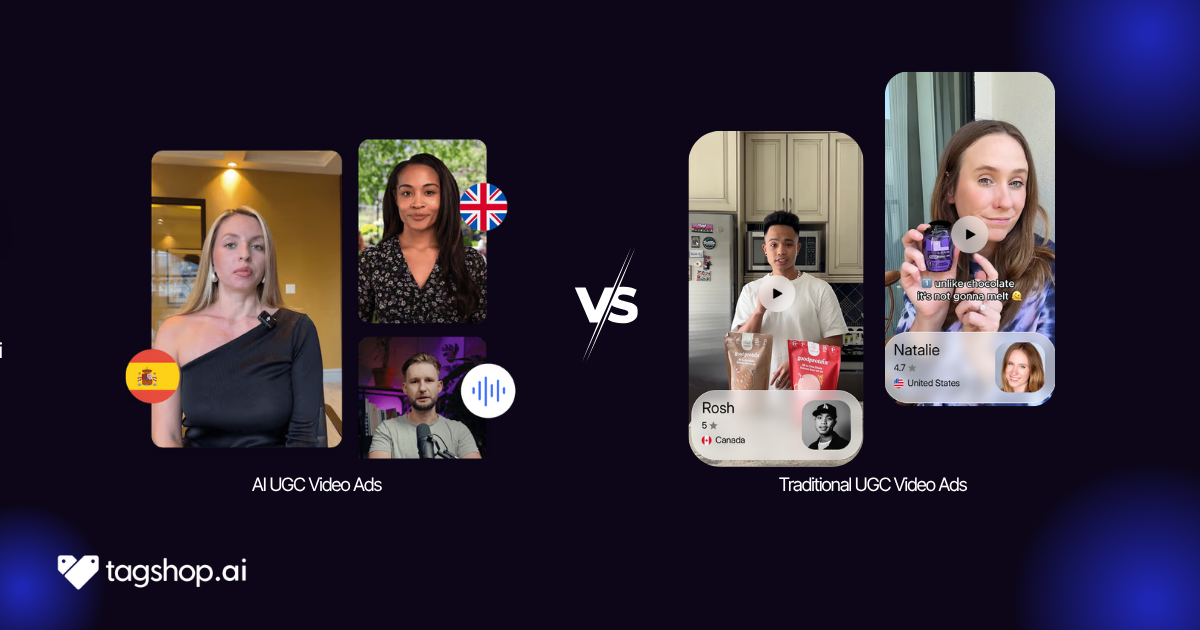







Your next best-performing UGC ad might not come from a creator.
And that still feels a little strange to say. Because isn’t a real creator the whole point of UGC? A real person. A real face. A real voice. Someone holding the product, trying it, reacting to it, saying what they actually think. That is why creator ads took off in the first place: they didn’t feel like ads. That was the idea, anyway.
But something has shifted. Today you can make a UGC-style video with an AI-generated person in a fraction of the time it takes to find a creator, negotiate a rate, ship the product, wait for the shoot, get the footage back, ask for revisions, and finally launch.
And here is where it gets interesting. If the AI version looks and sounds convincing enough, does it actually matter that there is no real creator behind it? Maybe sometimes. Maybe a lot. Or maybe we are asking the wrong question.
Because the real fight was never AI UGC versus creators. It is speed versus authenticity. Creative volume versus human experience. Testing 30 ideas fast versus putting your whole budget behind 2 or 3 creator videos and hoping one lands. And depending on what you sell, where you advertise, and what you are trying to achieve, either side can win.
So forget the tired “AI is the future” versus “nothing beats human authenticity” argument for a minute. Let’s put AI UGC video ads and traditional creator ads side by side and look at what actually happens.
The Short Answer: Which is Better?
Neither wins outright, because they solve different problems. AI UGC video ads win on cost, speed, and volume, which makes them the better tool for testing lots of hooks and scaling the ones that work. Traditional creator ads win on trust and authenticity, which still matters most for high-consideration purchases and brand hero creative. The smartest move in 2026 is to test cheap with AI UGC, find the hook that converts, and bring in a human creator for the trust-heavy angles where a real story does the selling.
TL;DR
- AI UGC ads: cheap, fast, and easy to make in volume. Best for testing hooks and scaling winners.
- Traditional creator ads: higher trust and often stronger final conversion. Best for high-consideration products and hero creative.
- Real data point: marketers report AI UGC getting strong click-through and watch time but sometimes lagging on conversion, while human UGC holds trust.
- It is not either/or. Use AI to find the hook, use humans where trust closes the sale.
- AI UGC done well, built on a real specific detail rather than a generic script, closes most of the authenticity gap.
What Each One Actually Is
AI Generated UGC Videos
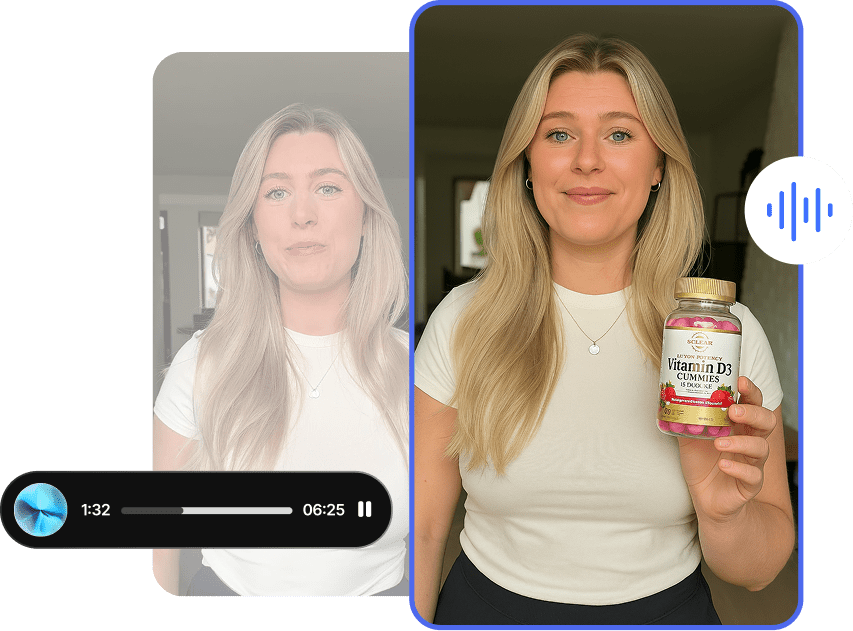
AI UGC video ads are user-generated-style clips made by an AI video generator instead of a hired person. You describe the video or paste a product, and the tool produces a clip with an AI actor, voice, and script. No filming, no creator, no shoot day.
Real Creator Generated UGC
Traditional creator ads are the original version: a real person, usually a customer or a paid UGC creator, films themselves using and talking about your product. You brief them, they shoot, they revise, you pay per video.
Both aim for the same feel, the casual, honest, someone-filmed-this-on-their-phone look that outperforms polished studio ads. They just get there in completely different ways, at completely different speeds and costs.
Let’s Compare AI UGC vs Real UGC
| Title | AI UGC Video Ads | Traditional Creator Ads |
| Cost per video | $1 to $5 (In credits) | $100 to $400 and up |
| Turnaround | Minutes | Days to weeks |
| Volume for testing | High, easy to make 10 variations | Low, usually one at a time |
| Authenticity and trust | Improving, can read generic if rushed | Highest, a real person and real story |
| Final conversion | Strong reach and watch time, can lag | Often stronger on trust-led sales |
| Control over the hook | Full, edit before it renders | Depends on the brief and the creator |
| Revisions | Instant, regenerate the weak part | Slow, another round of back-and-forth |
| Best for | Testing hooks, scaling winners, tight budgets | Hero creative, high-consideration products |
Where AI UGC Video Ads Win
Cost and speed are not close. A hired creator video runs $150 to $400 and takes days; an AI UGC video generator produces a comparable clip in minutes for the price of a few credits. That changes what testing even means.

Volume is the real advantage. With traditional UGC you test one or two angles because each one costs real money and time. With AI UGC you can spin up ten hooks in an afternoon, run them, kill the eight that flop, and pour budget into the two that work. Marketers on r/AI_UGC_Marketing describe this as making the testing phase roughly ten times more efficient, and that math is hard to argue with.
Iteration is instant. A clunky line or a weak opening is a regenerate, not a reshoot. And there are no logistics: no shipping product, no scheduling, no chasing a creator for the revision they promised last week.
Where Traditional Creator Ads Still Win
Trust is the one thing AI cannot fully manufacture yet. A real person with a real reaction carries a credibility that viewers feel, and some of them care. On r/DigitalMarketing, more than one person said that if they could tell a brand used AI to fake UGC, they would trust the brand less. That is a real cost, and it is highest for products people research before buying.

Conversion follows trust. In a widely shared r/UGCcreators thread, a marketer noted that AI ads often pull good click-through and watch time but fall off on actual conversion compared to human creators. AI can win the scroll and still lose the sale when the purchase needs genuine belief behind it.
And nuance is hard to script. A creator’s offhand aside, the specific way they light up about a product, the lived detail you did not think to ask for, these are the things that make UGC feel true. A good AI clip can get close, but a great human one still sets the bar.
The Honest Verdict
The “AI versus human” framing is mostly the wrong fight. The real split is testing versus trust. AI UGC wins the testing war on cost, speed, and volume. Human creators still win the trust war on high-consideration, belief-driven purchases. Brands doing best in 2026 stopped choosing and started sequencing: test broadly and cheaply with AI, find the hooks and angles that convert, then invest in human creators for the hero ads where a real story closes the deal.
There is also a middle ground people miss. Most of what makes AI UGC feel fake is not the render; it is a generic script no real person would say. AI UGC built on one specific, honest detail reads as native to the feed. That is the whole idea behind the Tagshop AI Video Agent: it asks about your audience and builds an editable, scene-by-scene storyboard you approve before it renders, so you steer the hook toward something true instead of shipping a generic clip. Done that way, AI UGC closes a lot of the authenticity gap that gives the format a bad name.
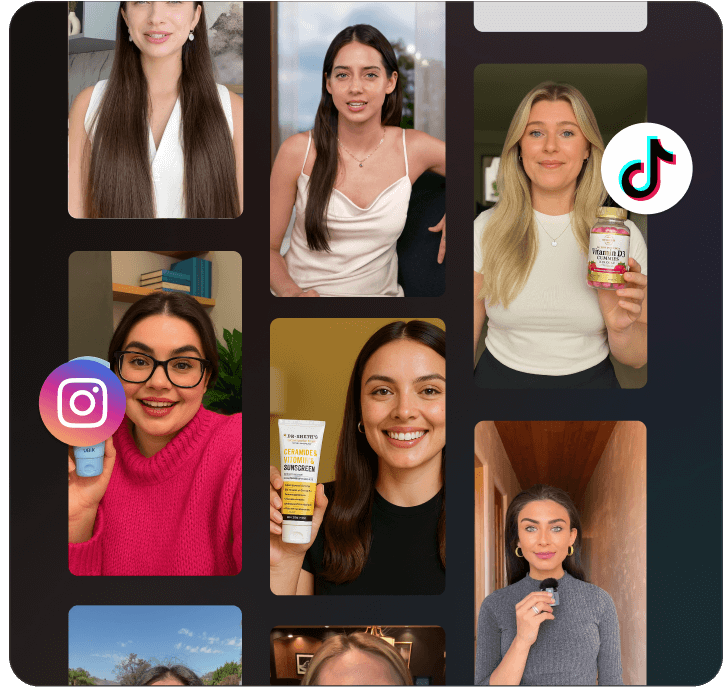
This one’s live on Tagshop AI, and it’s just one from a whole gallery of AI actors. Watch how long it holds you before you remember no real person filmed this.
What Should You Choose for Your Next Campaign?
Start with the job. If you are testing hooks, working on a tight budget, or need volume fast, AI UGC is the obvious first move. If you are selling something expensive or trust-heavy and you need the ad to carry genuine belief, budget for a human creator, or use AI to find the winning angle first and hand that brief to a creator. For most stores, the answer is both, in that order.
You Should Also Read: AI Video Ads vs Traditional Ads: Which Performs Better
The bottom line
AI UGC video ads and traditional creator ads are not really competing; they are good at different halves of the job. AI wins on cost, speed, and testing volume. Human creators win on trust and the conversions that trust unlocks. Pick based on the job in front of you, and for most brands that means testing cheap and fast with AI UGC first, then spending on human creators only where a real story earns its keep. Run one test with an AI UGC video generator this week and let the numbers, not the debate, tell you where to spend next.
Frequently Asked Questions
AI UGC ads are user-generated-style video ads created by AI instead of a human creator. An AI video generator produces the talent, voice, and script from your product or a prompt, giving you a casual, authentic-looking ad without filming or hiring anyone.
Often close on click-through and watch time, sometimes weaker on final conversion, especially for high-consideration purchases where trust drives the sale. Most teams use AI UGC to test hooks cheaply, then lean on human creators for trust-heavy hero ads.
Yes, by a wide margin. A hired UGC creator typically charges $150 to $400 per video with a multi-day turnaround, while an AI UGC video costs a few credits and renders in minutes, which is why AI is the default for high-volume testing.
Sometimes, and viewers are getting better at it. What usually gives it away is a generic hook nobody would actually say, not the visuals. A clip built around one real, specific detail reads as native, while a scripted “check out this amazing product” line reads as an ad.
Not entirely. AI is taking over the testing and volume work, but human creators still win on trust, nuance, and high-consideration conversion. The likeliest future is a split where AI handles scale, and humans handle the trust-heavy hero creative.
AI UGC, clearly. It lets a small brand test many angles for the cost of one creator video, find what works, and only then decide whether a human creative is worth the spend.
Yes, and that is the strongest approach. Use AI UGC to test broadly and identify the hooks that convert, then commission human creators for the winning angles that need a real story to close the sale.
Written by:

Neeraj is passionate about reshaping brand storytelling through AI-powered UGC videos. As the Founder he helps brands unlock authentic, creator-style video content that drives results - without the traditional time, cost, or complexity. His approach blends AI innovation with marketing performance to scale engagement efficiently.
 Add Tagshop.ai as a preferred source in Google Search






 Introducing

 Wan 3.0 is now live on Tagshop AI