How Gemini Omni Is Changing Video Ads
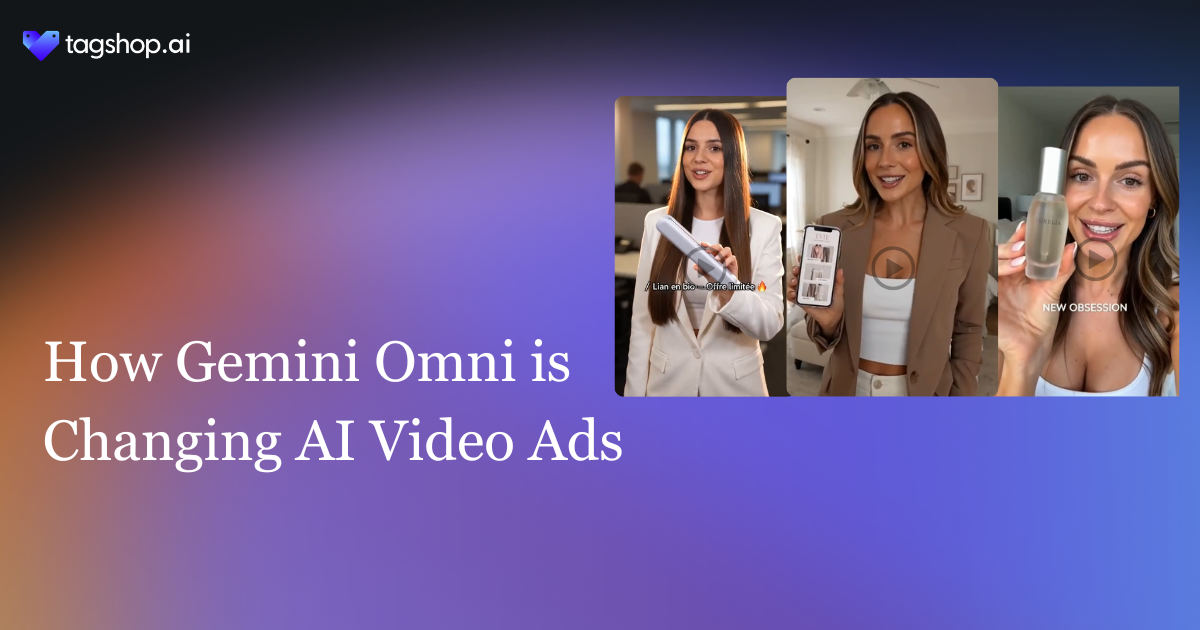







The era of producing a handful of video ads and stretching them for weeks is coming to an end.
At Google I/O, Google introduced Gemini Omni, a multimodal AI model designed to work across text, images, audio, and video simultaneously. It is positioned as a shift in how creative content is produced and tested.
Instead of building ads piece by piece, script first, then visuals, then editing, teams can now work from a mix of inputs at once. A product demo, a competitor ad, and a short brief can be combined into a single system that understands the full context and generates output accordingly.
That’s how it’s being introduced.
What matters is how it holds up in practice.
The Problem
As Demis Hassabis has pointed out in the context of newer AI systems, the goal is to close the gap between intention and output effortlessly.
That idea sounds abstract until you look at how creative work actually happens.
In practice, most of the slowdown comes from turning that physical reality thinking into something usable.
We have a direction and a clear message. But getting from that point to a finished piece still takes multiple steps: briefing, production, revisions, and approvals. Each step adds time, and the delay compounds.
By the time something is ready, the context around it has usually moved on.
So What Even Is Gemini Omni?
Gemini Omni changes the way inputs are handled.
Most creative workflows are linear. You start with a script, then build visuals around it, then adjust tone in editing. Each step depends on the previous one. If something is off, you go back and fix it.
Gemini Omni compresses that process.
Because it can process multiple formats simultaneously, it does not need everything to be translated into text first. A team can upload:
- A product walkthrough video
- Two high-performing ads from competitors
- A few notes about audience and tone
And the model works across all of it at once.
It generates outputs that reflect the relationships between those inputs.
That distinction is easy to miss until you try to brief a traditional AI tool. Writing a prompt that captures tone, pacing, visual style, and emotional intent is harder than it sounds. Most prompts end up either too vague or too rigid.
Here, the input carries more of the meaning.
Veo 3.1: The Video Engine Behind Gemini Omni
Gemini Omni sits atop a broader system developed by Google DeepMind.
One of the key components is Veo 3, a video generation model that addresses a practical limitation most earlier tools had: lack of native audio.
That detail matters more than it seems.
If you’ve ever tested silent video ads, you already know the outcome. Even with captions, they struggle to hold attention. Audio carries pacing and emotional cues that visuals alone cannot.
Veo generates both video and audio together. It also allows for more structured control. Instead of giving a single prompt and hoping for the best, you can define parts of the sequence:
- how the scene starts
- what happens midway
- how the message resolves
For example, you can specify that within the first three seconds, the subject addresses a common problem directly. At five seconds, the product is introduced. At the end, the call to action is delivered.
That level of control aligns more closely with how performance ads are actually built.
Gemini Omni connects these capabilities with a reasoning layer. It ensures that the different parts of the output, visuals, audio, timing work together rather than feeling assembled.
How Gemini Omni Changes the Video Ad Workflow
Briefing Gets Faster Because Context Travels Better
Right now, briefing an AI tool for video ads is chaotic. You write a long text prompt that explains what the product is, how the audience feels, what the visual style should be, and what the hook angle should be. You’re doing a lot of translating.
With Gemini Omni, your brief can include a reference video, a product image, and text. The model treats it all as a single input. You stop trying to describe the vibe in words. You just show it.
Script Variation at Scale Becomes Practical
Here’s a real use case. Say you’re selling a skincare product. You want to test five different hooks: a problem hook, a testimonial hook, a comparison hook, a results hook, and a curiosity hook. Each one needs a slightly different script, a different opening line, a different CTA.
With Gemini Omni handling the brief, you can generate those five scripts with the product context already baked in. You’re getting scripts that know the product, know the format, and know the audience because you showed it all of that upfront.
UGC-Style Ads Get a Serious Upgrade
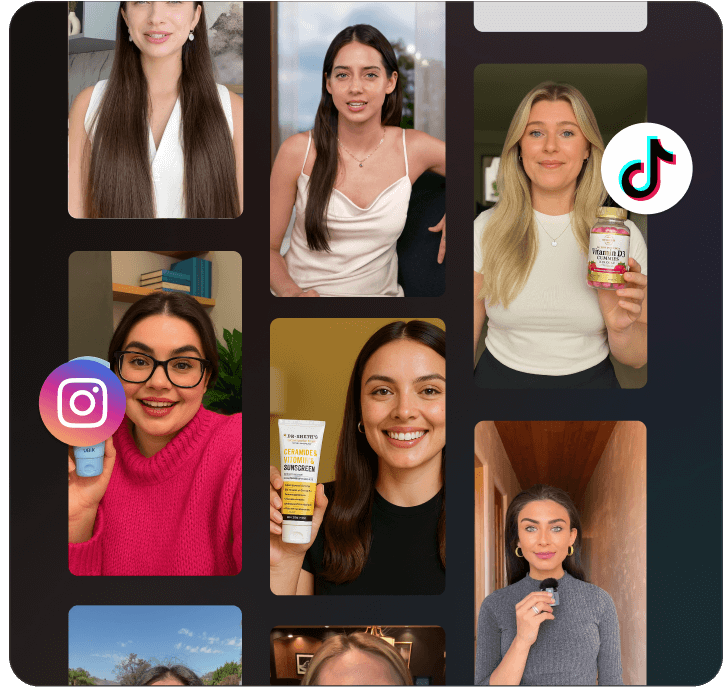
UGC video ads work because they feel real. The challenge is producing enough of them without killing your creator budget or waiting three weeks for delivery.
Gemini Omni’s ability to process video as input means you can analyze what’s working in your existing UGC library and use that to brief new content more precisely. Which hooks are landing? What pacing works? What visual structure is driving retention?
You pull that pattern out, brief new creators with it, and you’re testing smarter variations, not just more variations.
For brands where UGC is a core ad format, this is a meaningful production advantage.
Creative Testing Gets a Strategy Layer
Most creative testing is reactive. You test what you made. You learn what worked. You try to do more of it.
Gemini Omni introduces the possibility of proactive testing. You can model out hypotheses before you produce. You can review an ad concept and ask the model which variables are likely to affect performance, based on structure, hook type, and message framing. You’re not replacing testing with prediction. You’re narrowing your testing surface to the things most likely to matter.
That’s a creative strategy shift. Small brands and large ones are going to use it very differently.
What Most People Get Wrong About AI in Marketing
They treat AI as a content machine instead of a thinking partner.
The question most marketers ask is “how many ads can this generate?” The better question is “how does this help me think about ads differently?”
Gemini Omni is genuinely useful for production speed. But its bigger value is in the research and strategy phase: analyzing what’s working, understanding creative patterns, generating hypotheses, and producing structured briefs that lead to better output from both AI tools and human creators.
If you bolt it onto a broken creative process, you’ll just produce more average content faster. That’s not the goal.
The brands getting ahead are using AI to sharpen their creative thinking first, then using it to accelerate production second.
Conclusion
Gemini Omni won’t replace your creative judgment. It’s not supposed to.
What it does is reduce the gap between having a good idea and having a testable one. For most marketing teams, that gap is where time, budget, and momentum die.
The marketers who take this seriously are going to look like they have unusually good creative output and unusually fast feedback loops.
That’s the actual competitive advantage here. Not the technology. What you do with the time it gives you back.
Frequently Asked Questions
Gemini Omni is Google’s new AI model that combines reasoning capabilities with media-creation tools to generate and edit content across various formats. The first release focuses on video. You feed it text, images, audio, or existing video, and it outputs video that reasons across all of those inputs together rather than processing them separately.
Veo 3.1 is the video generation engine. It handles the actual rendering, audio, visual fidelity, and format output. Gemini Omni is the reasoning layer on top. It understands context, brief intent, and creative direction, then uses Veo’s generation capability to produce output that reflects that understanding. Together, they’re the most capable AI video stack Google has shipped publicly.
Gemini Omni Flash is available now in the Gemini app, Google Flow, and YouTube Shorts. It will roll out in Google Ads this summer. Google has been transparent that more substantial Omni updates are coming later this year, meaning the current release is an early, fast variant, not the full world-model capability Hassabis described.
It makes briefing faster, iteration cheaper, and the volume of variation more realistic for lean teams. When you combine AI video generation at the model level with purpose-built UGC ad platforms like Tagshop.ai, the whole production cycle from product URL to published ad compresses from weeks to hours.
Yes. Teams already using AI UGC tools are generating six to seven videos daily at a fraction of traditional production costs. Gemini Omni raises the quality ceiling on what AI-generated video can look and sound like. Brands that build creative testing into their workflow now will have a significant advantage as the tools improve over the next 12 months.
Written by:

Kashish Vaswani is a Content Strategist at Tagshop AI, specializing in AI-powered marketing, UGC advertising, and eCommerce content. She creates actionable guides, industry insights, and product-focused resources that help brands, marketers, and creators leverage AI to produce high-converting video ads and scale their content strategy with confidence.
 Add Tagshop.ai as a preferred source in Google Search





 Introducing

 Wan 3.0 is now live on Tagshop AI