12 Best MakeUGC Alternatives for AI Video Ads in 2026








The most common reason people leave MakeUGC is not the videos. It is the invoice that keeps arriving after they cancel. MakeUGC’s Trustpilot page is dotted with the same story: charges that continue past cancellation and refund requests that go unanswered.
One reviewer canceled three times, kept getting billed, and filed a bank chargeback to make it stop. Add a shared actor library where the same faces show up across brands, and the reasons to shop around stack up before you even reach the price. Then you reach the price. MakeUGC’s Pro plan runs $149 a month for 20 videos in 2026, which is usually the last straw rather than the first.
So we did the boring work: signed up, checked live 2026 pricing, and read what marketers are actually saying in the threads nobody links to. Below are 12 MakeUGC alternatives worth your time, ranked by fit rather than by who paid for the top spot. If you only skim one thing, read the Reddit section near the bottom. It is the least polished and the most honest part of this post.
Short answer: The Best MakeUGC Alternatives Right Now
If you want the fastest read:
- Best AI actor realism: Arcads
- Best value and all-in-one workflow: Tagshop AI
- Best for ecommerce product ads: Creatify
- Best for polished spokesperson videos: HeyGen
- Best for training and explainer content: Synthesia
- Best budget and free daily use: Vidnoz AI
The rest of the lineup covers link-to-video automation (JoggAI), mobile-first creator clips (Captions), text-to-video (InVideo AI), and three UGC-focused specialists (AutoUGC, BuzzClip, Hyper-UGC). Full breakdown, pricing, and pros and cons below.
The Problems MakeUGC Users Report Most
Before you pick a replacement, it helps to name exactly what you are trying to escape. These are the complaints that surface again and again in MakeUGC’s own reviews and Reddit threads.
- Billing that does not stop when you do. MakeUGC’s Trustpilot page includes reviewers who canceled and kept getting charged, with at least one canceling three times and filing a bank chargeback to stop it. Read the cancellation policy before the trial, not after.
- No real free plan to test with. MakeUGC has no genuine free tier. The $1 trial renews at full price, so you are effectively paying before you know whether the actors suit your product.
- A shared actor library that feels familiar. The AI actors are pooled across every account, so the “creator” fronting your ad this week may have fronted a competitor’s last week. A few reviewers also flag output that comes back off on lip-sync or reads as obviously AI.
- Support that goes quiet on billing issues. Refund and cancellation threads repeatedly mention slow or absent responses, which is the difference between a quick fix and a chargeback.
- Pricing that climbs fast at volume. At $149 a month for 20 videos on the Pro plan, the cost per clip is fine until you scale, at which point the math pushes teams to look elsewhere.
None of this means MakeUGC cannot make good video. It means the friction is real and consistent, and it should shape which alternative you trust with a card on file.
About MakeUGC AI
MakeUGC turns a written script into a short creator-style video performed by an AI actor, with voiceover, background music, and a watermark-free export. It sits firmly in the “replace the human creator” camp, which is great when you want scripted, emotion-led delivery and less great when you want to paste a product URL and walk away.
Here is where it stands in mid-2026.
| Detail | MakeUGC |
| Best for | Scripted AI actor videos with emotional delivery |
| Video method | Script-to-video with lifelike AI actors |
| AI actor library | Broad, growing, shared across users |
| Languages | Multiple, expanding |
| Watermark-free export | Yes |
| Free plan | No (paid $1 trial that renews at full price) |
| Startup plan | $49/mo, 5 videos |
| Growth plan | $69/mo, 10 videos |
| Pro plan | $149/mo, 20 videos |
| Effective cost per video | Roughly $7 to $10 |
MakeUGC Pros and Cons
Pros
- AI actors deliver believable emotion and natural voiceover
- Clean watermark-free exports on every paid tier
- Simple script-to-video flow with a low learning curve
Cons
- Pro pricing climbs fast once you scale past 20 videos a month
- No genuine free plan, only a $1 trial that renews at full price
- Creative control and scene flexibility stay limited compared with newer tools
That gap between price and flexibility is exactly what the alternatives below compete on.
The 12 Best MakeUGC Alternatives at a Glance
| Tool | Best for | Standout feature | Starting price |
| Arcads | Benchmark AI actor realism | High-converting talking-head performances | $110/mo |
| Tagshop AI | Value and all-in-one workflow | Ad Clone, AI Video Agent, URL to video | From $14/mo |
| Creatify | Ecommerce product ads | Paste a product URL, 1000+ AI actors | $39/mo (free plan) |
| HeyGen | Polished spokesperson videos | Avatar quality across 160+ languages | $29/mo (free plan) |
| Synthesia | Training and explainer content | Studio-grade avatars, 140+ languages | ~$18/mo (free plan) |
| Captions | Mobile-first creator clips | Fast short-form editing on the go | $9.99/mo |
| JoggAI | Link-to-video automation | Product URL to ad, 450+ avatars | ~$24/mo (free plan) |
| Vidnoz AI | Budget and free daily use | Large free avatar library | ~$13.50/mo (free plan) |
| InVideo AI | Text-to-video all-rounder | Prompt a full edit in one line | ~$17/mo (free plan) |
| AutoUGC | Multilingual scene-rich UGC | 29 languages, swappable scenes | $49/mo |
| BuzzClip | TikTok-style short-form | Viral hooks and templates under 60s | $41/mo |
| Hyper-UGC | Bulk performance creatives | High-volume UGC production | $27/mo |
Prices reflect live plans as of August 2026 and shift often, so confirm on each vendor’s page before you commit budget.
1. Arcads
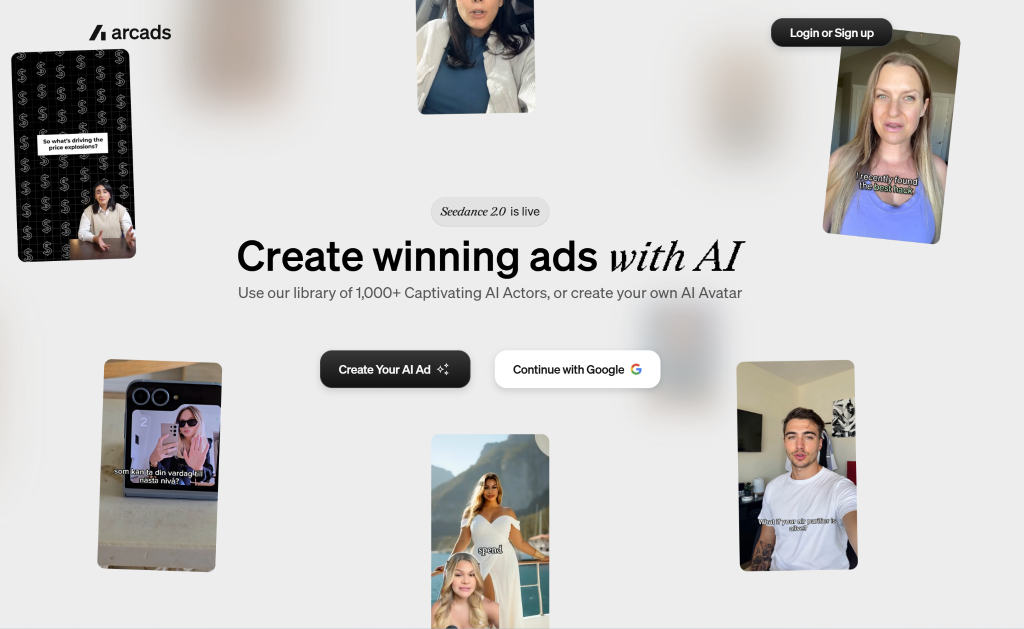
Arcads is the tool most marketers name when they talk about AI actors that do not immediately read as AI. The talking-head performances hold up in a paid feed, which is why it keeps surfacing in comparison threads and agency workflows.
The catch is cost. There is no meaningful free tier, and the Starter plan lands at $110 a month for roughly 10 videos, which works out to about $11 per clip. For high-stakes creative testing, that price can pay for itself. For volume, it stings.
Arcads vs MakeUGC:
If you compare Arcads with MakeUGC, the results are very clear. Arcads wins on raw actor realism and performance nuance. MakeUGC is cheaper per video and simpler to learn, so it suits teams that want scripted delivery without a premium price.
Pros and Cons of Arcads
Pros
- The AI actor performances are the most convincing on this list, believable enough to run in a paid feed.
- It is purpose-built for testing hooks and creative angles at speed.
- The interface is clean and stays out of your way once you know the flow.
Cons
- There is no free plan or trial, so you commit $110 before you see how it handles your product.
- Credits deplete quickly, which makes high-volume testing expensive.
- It offers little range beyond talking-head formats.
Starting price: $110/mo
Also Read: Best Arcads Alternatives in 2026
2. Tagshop AI
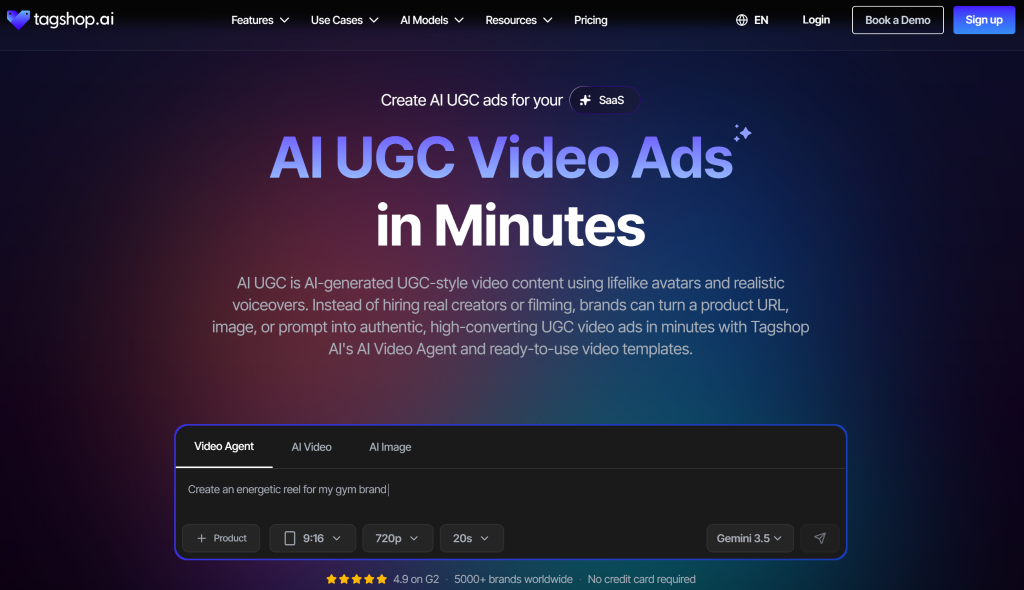
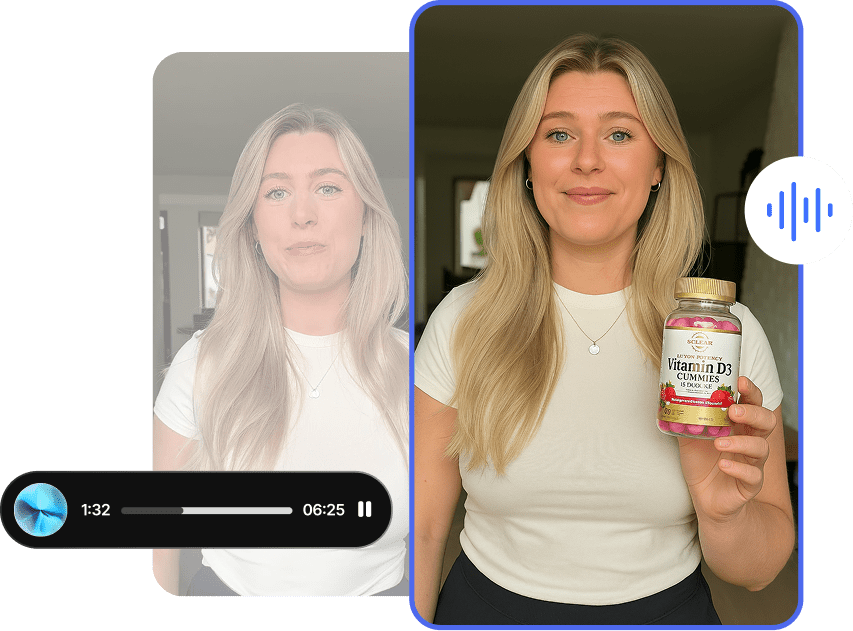
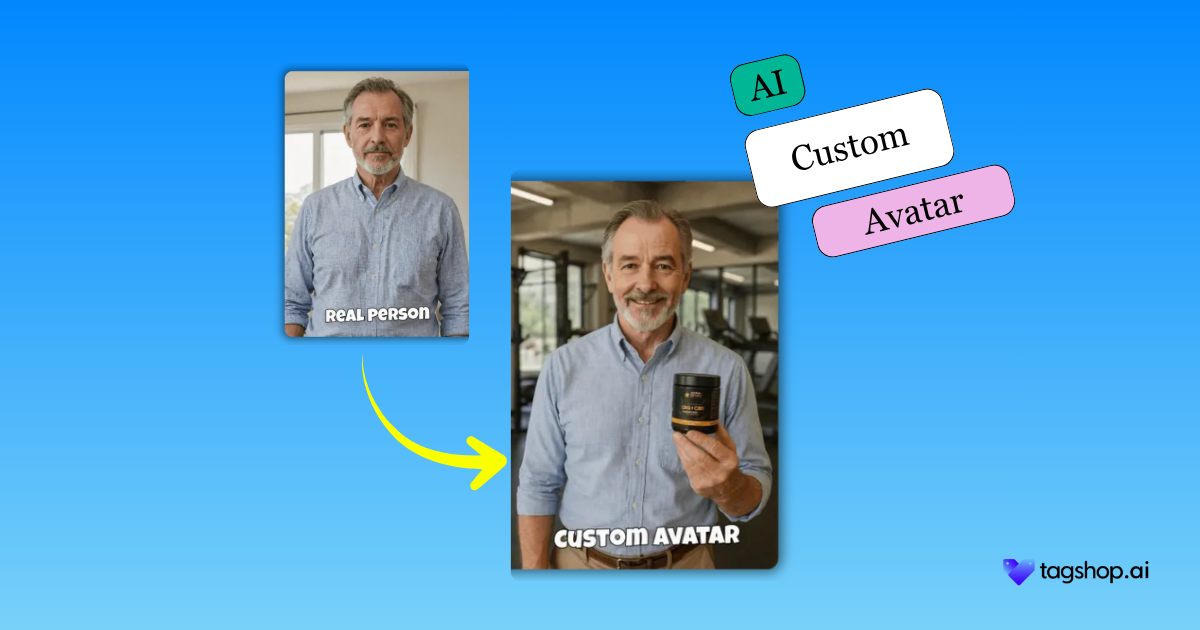
Tagshop AI is the alternative built for people who do not want to stitch five tools together to ship one ad. You paste a product URL or upload assets, pick a model, generate and edit, then publish. The output is creator-style UGC without the creator brief, the shoot, or the invoice.
It earns the number two spot for one reason: range at a fair price. Where most tools do one thing, Tagshop AI covers image and video generation, avatars, and full ad assembly in a single flow that a non-technical marketer can run in a few clicks. Plans start around $14 a month, which undercuts nearly every premium AI UGC tool on this list.
Five Tagshop AI Features Worth Switching For:
- Ad Clone: Feed it a winning ad, and Tagshop AI rebuilds that structure as a fresh, on-brand creator-style video. A human UGC creator takes days and $150 to $500 per clip. Ad Clone delivers a comparable format in minutes.
- AI Assets Generator: One place to generate product images and video across multiple AI models, so you are not paying for and learning four separate generators.
- AI Video Agent: Describe your product and the AI Video Agent handles the script, avatar, voiceover, and edits end-to-end. It even asks clarifying questions about audience and tone, then builds an editable scene-by-scene storyboard before it renders.
- URL to video: Drop in your product page URL and Tagshop AI pulls the assets and copy to build the video, no manual scripting required.
- Ready-to-Use Video Templates: A library of ad and UGC templates to skip the blank-canvas problem and match proven formats fast.
If you want the walkthrough, the AI Video Agent guide shows the full flow step by step.
Tagshop AI vs MakeUGC: MakeUGC generates scripted AI actor videos and stops there. Tagshop AI adds URL-based scripting, an image and video asset generator, a conversational AI Video Agent, and Ad Clone, so it covers more of the workflow at a lower entry price.
| Feature | MakeUGC | Tagshop AI |
| Video creation method | Script-to-video with AI actors | Idea, URL, or asset-to-video with AI models |
| Script input | Manual script | Manual, AI-generated, or URL-based |
| Ad Clone | No | Yes |
| Image generation | Yes, but not strong | Yes, built-in AI Assets Generator |
| Conversational agent | No | Yes, AI Video Agent |
| Tone customization | Basic | Advanced, matches brand voice |
| Ease of use | Moderate learning curve | 3-click process |
| Starting price | $49/mo | From $14/mo |
Real teams back this up. A content marketer at Klasio called it the fastest way she had found to build AI avatar videos, and beginner-friendly enough for a non-AI person to run. Flo Health reported a click-through rate above 2% at a cost per click of $0.20 on Tagshop AI creative. Pynt’s VP of Marketing pointed to the simplicity: easy to use, not complicated, quick to start even without an AI background.
Pros and Cons of Tagshop AI
Pros
- It has the widest feature set here, covering images, video, avatars, and full ad assembly in one place.
- It carries the lowest entry price of the premium tools, starting around $19 a month.
- The flow is genuinely simple, so a non-technical marketer can run it in a few clicks.
Cons
- Free access requires a trial signup rather than a permanent free tier.
- The newest features are still expanding their list of supported AI models.
Starting price: from $14/mo. See Tagshop AI pricing for current plans.
3. Creatify AI
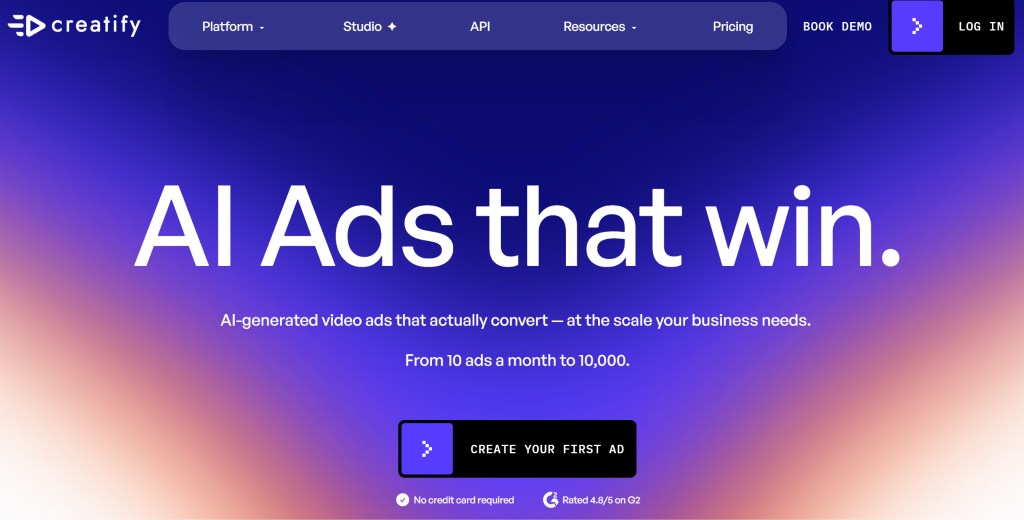
Creatify is the ecommerce pick. Paste a product URL and it pulls the assets to build a video ad, with a library of 360+ AI actors and dozens of ad templates aimed at DTC volume. The free plan gives you 10 monthly credits with watermarked output, which is enough to judge the fit before you pay.
Paid plans start at $39 a month for Starter and climb to $99 for Pro. Marketers on Reddit describe roughly a 20% hit rate on Creatify ads for Meta, with a first ad built in about 10 minutes, which is a fair benchmark for creative testing at this price.
Creatify vs MakeUGC: Creatify is built for product-led ecommerce volume and URL-based creation. MakeUGC leans into scripted AI actor storytelling with music and emotion.
Must Read: Detailed comparison of Tagshop AI vs Creatify AI
Pros and Cons of Creatify AI
Pros
- URL-to-ad creation is fast, turning a product page into a video in minutes.
- The actor library is large, with 360+ options and dozens of ad templates.
- The free plan is usable, so you can judge the output before you pay.
Cons
- Avatars can start to look repetitive once you scale up volume.
- Credits burn quickly when you are testing lots of variations.
Starting price: $39/mo (free plan available)
Also Read: Best Creatify AI Alternatives for URL to Video Ads
4. HeyGen
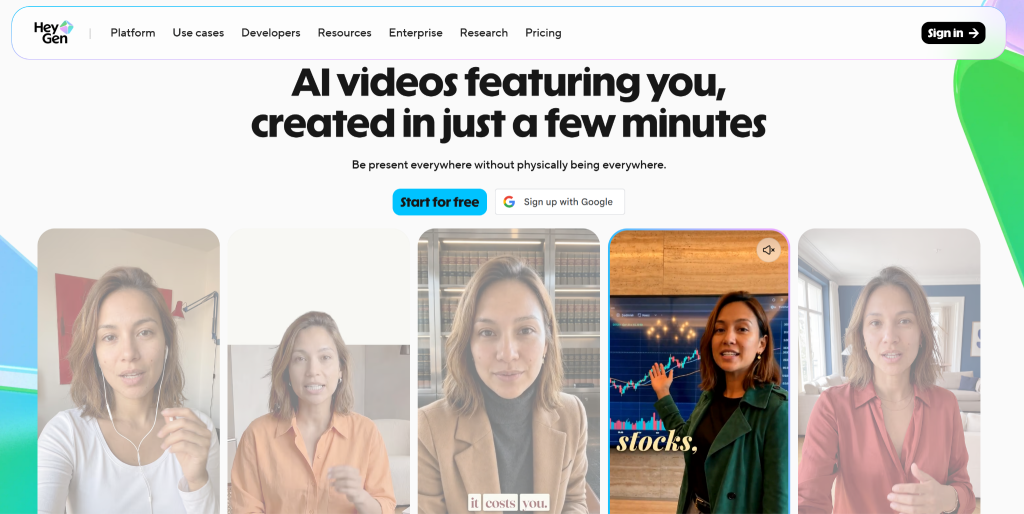
HeyGen is the spokesperson specialist. If you want a clean, professional avatar delivering a script in one of 160-plus languages, it is hard to beat, and the free plan lets you ship three watermarked videos a month before committing. The Creator plan at $29 a month opens up longer videos and more credits.
It is less of a scrappy UGC tool and more of a polished presenter tool, so it fits brand videos, product explainers, and localized content better than raw testimonial-style ads.
HeyGen vs MakeUGC: HeyGen delivers studio-grade avatar polish and deep language support. MakeUGC delivers casual, creator-style delivery that reads more like organic UGC.
Must Read: Honest Comparison of HeyGen with Arcads
Pros
- Avatar quality is excellent and holds up for polished, professional video.
- Language support runs deep, with 160-plus languages for localized campaigns.
- A real free tier lets you test before committing.
Cons
- The output can feel corporate rather than like scrappy, organic UGC.
- Credits cap how many longer videos you can produce.
Source: Reviews of Heygen on G2
Starting price: $29/mo (free plan available)
Also Read: Top Heygen Alternatives for Avatar Videos
5. Synthesia
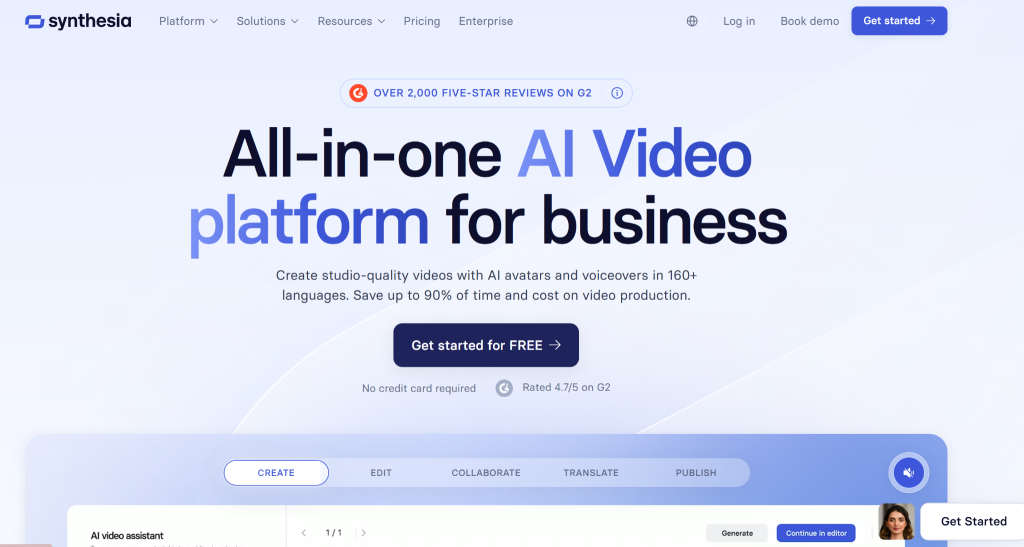
Synthesia is the enterprise-grade name here, built around studio-quality avatars and 140-plus languages. It shines for training, onboarding, and explainer content where consistency and localization matter more than scrappy authenticity. The free plan covers 10 minutes of video a month, with paid tiers starting near $18 when billed yearly.
It is the least “UGC” tool on this list, and that is the point. Reach for it when you need polished internal or educational video at scale, not when you need a testimonial that looks filmed on a phone.
Synthesia vs MakeUGC: Synthesia is for professional, studio-style video and corporate use. MakeUGC is for influencer-style ad content with emotional delivery.
Also Read: The Detailed Comparison of Synthesia with Creatify AI
Pros and Cons of Synthesia
Pros
- Avatar and voice quality are top-tier, built for professional video.
- Language support is unmatched, which suits training and localized content.
- Collaboration and editing tools are strong for teams.
Cons
- It is overkill and pricey for scrappy, testimonial-style UGC ads.
- It is light on native ad tooling compared with UGC-first platforms.
Starting price: ~$18/mo billed yearly (free plan available)
Must Read: Synthesia Alternatives for Avatar Videos
6. Captions
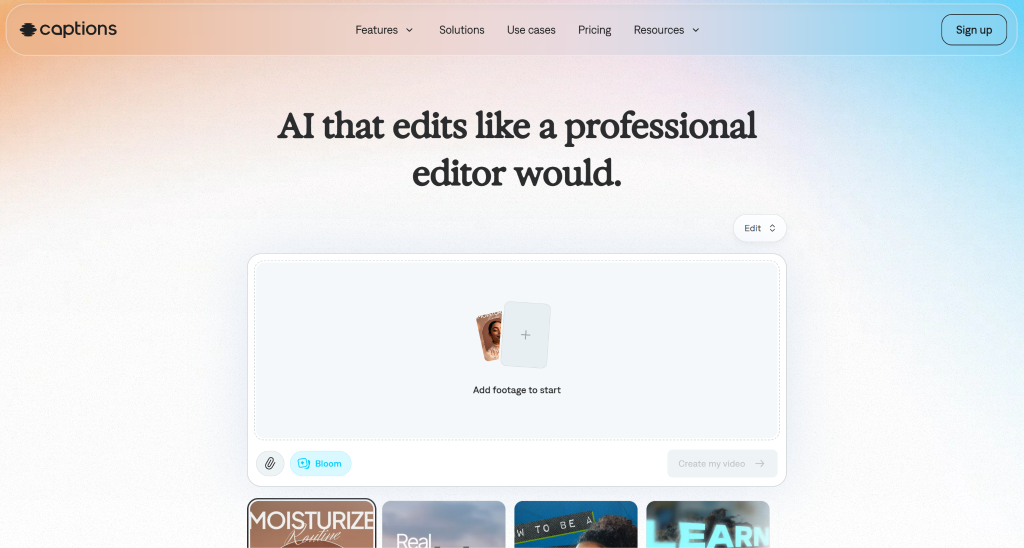
Captions is the mobile-first option, popular with creators who edit on their phone and want fast short-form output. Its Basic plan starts at $9.99 a month for 200 credits, which makes it the cheapest paid entry point on this list, with higher Scale tiers for teams pushing volume.
It leans more toward editing and quick clip creation than full AI-actor ad generation, so pair it with a stronger generator if realistic spokespeople are your priority.
Captions vs MakeUGC: Captions is built for fast, mobile creator-style clips and captions. MakeUGC focuses on scripted AI actor ads with music.
Pros and Cons of Captions
Pros
- It has the lowest paid entry price on this list at $9.99 a month.
- The workflow is fast and mobile-first, so you can edit from your phone.
- Automatic captioning is a genuine strength.
Cons
- The AI actors are less realistic than dedicated UGC tools.
- It is creatively limited if you want polished, full-actor ads.
Starting price: $9.99/mo
7. Jogg AI
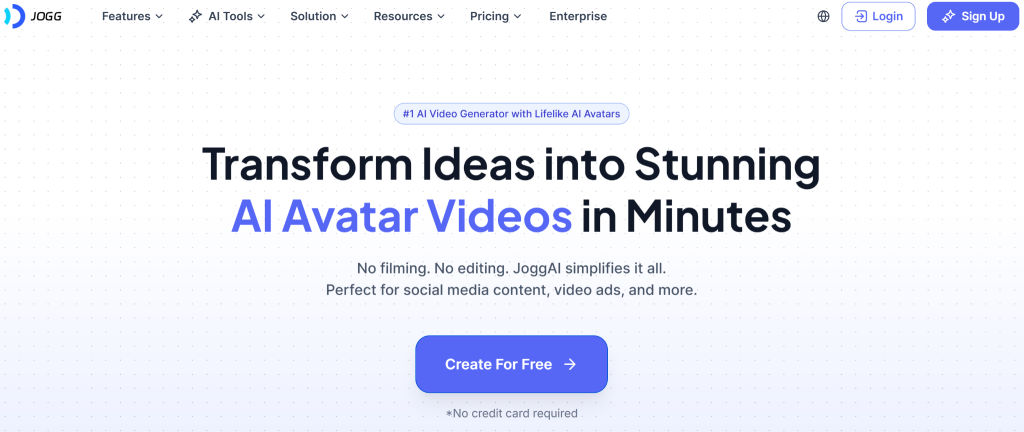
Jogg AI is the link-to-video automation play. Feed it a product URL and it generates an ad using one of 450-plus ultra-realistic avatars, with a free plan that includes a few starter credits. Paid plans open up around $24 a month.
It is a clean fit for anyone who wants product-URL automation similar to Creatify but with a different avatar roster and pricing curve worth comparing.
JoggAI vs MakeUGC: JoggAI automates URL-to-ad creation with a large avatar library. MakeUGC keeps its focus on manually scripted AI actor videos.
Pros and Cons of Jogg
Pros
- The avatar library is large, with 450-plus options to choose from.
- URL-to-video automation pulls product details for you.
- A free plan lets you test before you pay.
Cons
- Lower tiers cap your credits fairly quickly.
- Output quality varies depending on the product and page.
Source: Reviews of Jogg on G2
Starting price: ~$24/mo (free plan available)
Must Read: Jogg AI Alternatives for AI Video Ads
8. Vidnoz AI
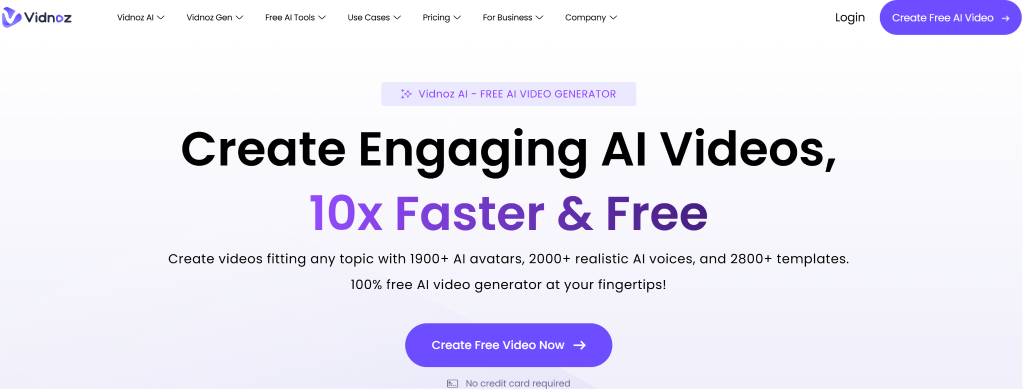
Vidnoz is the budget and free-daily option. It offers a genuinely free plan plus a big library of AI avatars and voices, with paid plans starting around $13.50 a month. If you are early-stage or just want to experiment without a card, it is the softest landing on this list.
The tradeoff is polish. Vidnoz gets you volume and free access, but the top AI actor tools still edge it on realism for high-spend paid campaigns.
Vidnoz vs MakeUGC: Vidnoz wins on free access and low cost. MakeUGC wins on emotional, creator-style actor delivery.
Pros and Cons of Vidnoz
Pros
- The free plan is genuine, with no card required to start.
- Paid pricing is low, from around $13.50 a month.
- There is a wide choice of AI avatars and voices.
Cons
- The realism ceiling is lower than the premium actor tools.
- The free tier carries a watermark and usage limits.
Starting price: ~$13.50/mo (free plan available)
9. InVideo AI
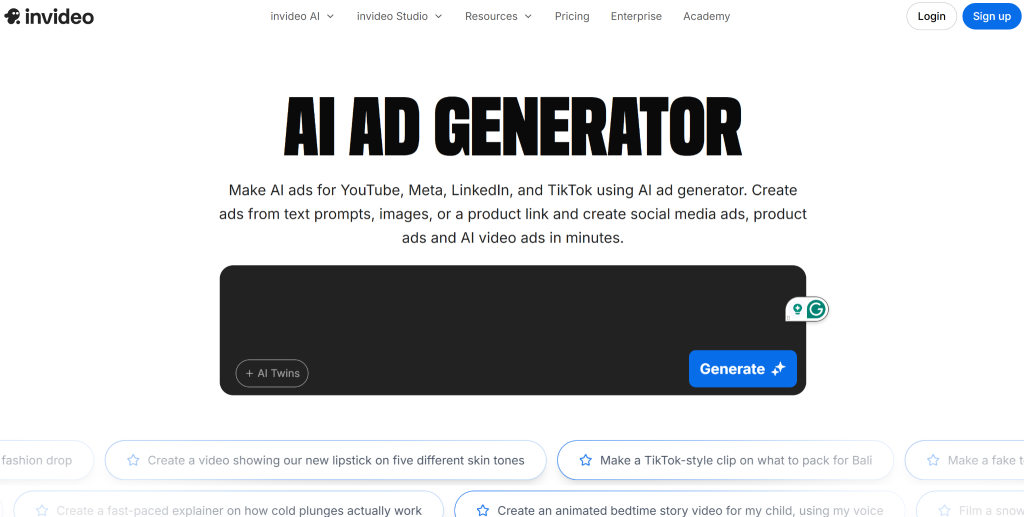
InVideo AI is the text-to-video all-rounder. Describe the video you want in a sentence and it assembles a full edit, with a free plan and Plus plans starting near $17 a month on annual billing. It is broader than pure UGC, covering everything from social clips to long-form explainers.
Use it when you want prompt-driven flexibility across formats rather than a dedicated AI-actor ad machine.
InVideo vs MakeUGC: InVideo is a flexible prompt-to-video generator across many formats. MakeUGC is a focused AI actor UGC tool.
Must Read: Let’s Compare Invideo with Synthesia
Pros and Cons of Invideo AI
Pros
- One-prompt editing is flexible, assembling a full video from a single sentence.
- The format range is broad, from short social clips to long explainers.
- Pricing is accessible, with a free plan to start.
Cons
- It is less specialized for UGC actor ads than dedicated tools.
- Output usually needs more manual cleanup before it is ad-ready.
Source: Reviews of Invideo on G2
Starting price: ~$17/mo (free plan available)
Also Read: Invideo Alternatives for AI Video Ads
10. AutoUGC
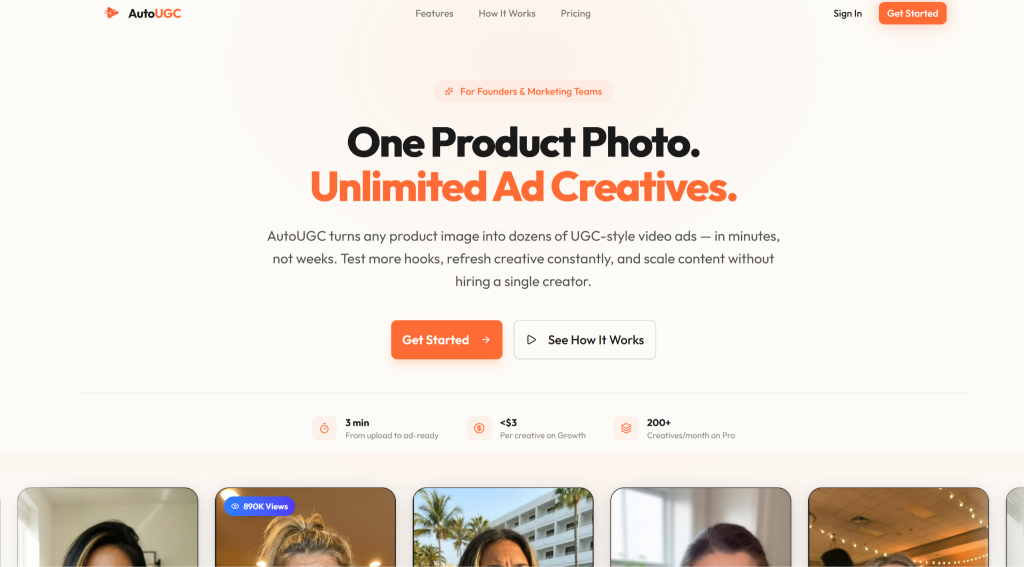
AutoUGC creates short-form UGC with hyper-realistic AI actors and voices across 29 languages, plus swappable scenes to change backgrounds without a reshoot. It also auto-generates captions, which makes it a tidy fit for teams trying to lower CPC on paid social.
AutoUGC vs MakeUGC: AutoUGC is built for multilingual, scene-rich videos that need little manual editing. MakeUGC centers on emotion-led actor delivery with music.
Pros
- Multilingual support is strong, spanning 29 languages.
- Swappable scenes change backgrounds without a reshoot.
- Automatic captions come built into every video.
Cons
- The entry price is higher than several tools here.
- The feature set is narrower than the all-in-one platforms.
Starting price: $49/mo
11. BuzzClip
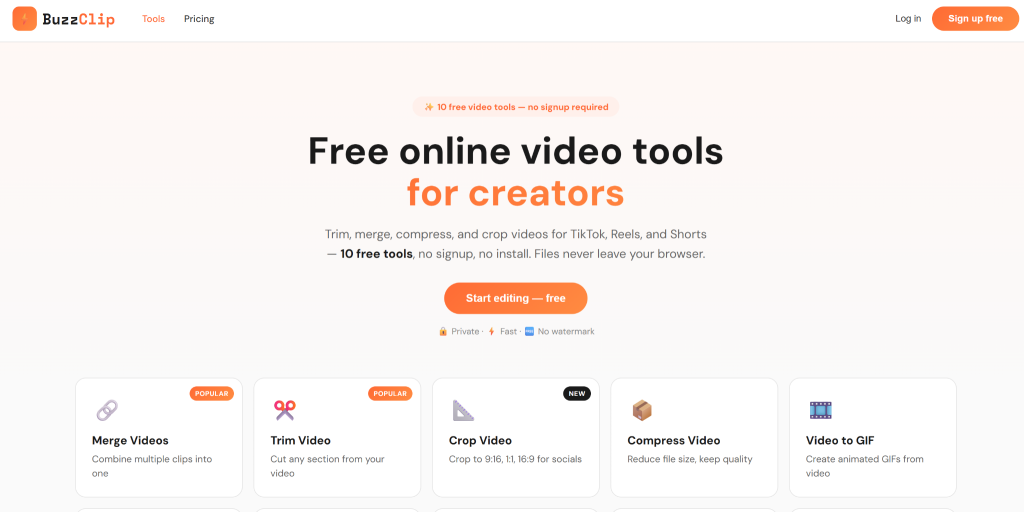
BuzzClip is the TikTok-style ads tool. It creates AI UGC clips under 60 seconds with avatars, pre-built viral hooks, and templates, so you can spin up multiple versions of a trend-riding video fast. It is made for creators and brands chasing short-form volume on TikTok and Reels.
BuzzClip vs MakeUGC: BuzzClip is optimized for fast, trend-driven short-form. MakeUGC produces scripted, lifelike actor content with music.
Pros and Cons of BuzzClip
Pros
- Short-form output is fast, tuned for TikTok and Reels.
- Ready-made viral hooks give you a running start.
- Template variety makes quick variations easy.
Cons
- It is built for short clips only, so it is not for longer ads.
- It lacks depth once you need more than a quick clip.
Starting price: $41/mo
12. Hyper-UGC
Hyper-UGC focuses on high-volume, performance-minded UGC. It helps brands produce realistic AI videos at scale without hiring creators, aimed at teams running many creatives across social platforms at once.
Hyper-UGC vs MakeUGC: Hyper-UGC is built for bulk output and campaign scale. MakeUGC offers more emotion-led, individually crafted actor videos.
Pros and Cons of Hyper-UGC
Pros
- It is built for high-volume output across many creatives at once.
- It is performance-focused, aimed at paid social testing.
- The price is competitive for teams producing at scale.
Cons
- The output has less of a hand-crafted feel than emotion-led actor tools.
- There are fewer creative controls on each individual video.
Starting price: $27/mo
What people are actually saying on Reddit
Vendor pages will tell you every tool is flawless. Reddit will not. Here is the honest signal from recent threads, useful before you spend a dollar.
- AI UGC hits creative fatigue faster than teams expect. In an r/FacebookAds thread on whether AI UGC still works, the top-voted take was blunt: fatigue arrived faster than expected because everyone is using the same tools and the same actors. The lesson is to rotate hooks and formats, not just swap tools.
- MakeUGC gets mixed reviews on output and support. An r/dropshipping thread comparing Creatify and MakeUGC drew sharp criticism of MakeUGC’s ad quality and customer service from one heavily upvoted commenter, while others defended the actor realism. Try before you commit annually.
- Creatify earns “surprisingly real” praise but a “steep for testing” caveat. Marketers in r/dropshipping said Creatify videos made them look twice, then flagged that credits burn quickly when you are testing volume. An r/advertising review after three to four months cited roughly a 20% hit rate on Meta.
- Arcads splits the room on realism versus authenticity. In an r/dropshipping thread about beauty products, the top reply was a flat “nah stick to real ugc,” even as others praised Arcads for the most convincing AI actors available.
- The “cartoon” complaint is real. A 57-answer r/indiehackers thread comparing Creatify, Arcads, and others surfaced the recurring gripe that some UGC-style output still “looks like a cartoon.” Realism is improving, but it is not universal, so preview actors before you scale.
I have tested 10+ AI UGC ad tools, so that you can create UGC style ads for your startup. Here are my top 5 picks (Pros and Cons)
by u/Kml777 in PromptEngineering
The takeaway across every thread: the tool matters less than the hook, the offer, and how often you refresh creative. That is also why an all-in-one workflow like the AI Video Agent helps, since faster iteration beats a single perfect clip.
How to choose the right MakeUGC alternative
Match the tool to the job rather than the hype.
- You run ecommerce product ads: start with Creatify or Tagshop AI for URL-to-video speed.
- You need the most convincing AI actor: Arcads, with Tagshop AI and HeyGen close behind at lower cost.
- You want everything in one place: Tagshop AI covers images, video, avatars, and Ad Clone in a single flow.
- You are on a tight budget: Vidnoz, Captions, or InVideo AI get you started cheaply.
- You make training or explainer content: Synthesia is purpose-built for it.
For a wider view of the category, the best AI UGC video generators breakdown goes deeper on formats and use cases, and the complete guide to AI UGC ads covers strategy before you pick a tool.
Final thoughts
MakeUGC is a solid tool that got expensive at the top, and that is the whole story behind this search. The good news is the alternatives have caught up and, in a few cases, pulled ahead on price, features, and workflow.
If you want the most convincing actors and have the budget, test Arcads. If you want the most tool for the least money and a workflow a non-technical marketer can run today, start with Tagshop AI. Whatever you pick, the winners on Reddit are not the people with the fanciest tool. They are the people who ship more hooks, faster.
Generate AI UGC videos with Tagshop AI Skip creator delays and high per-video costs. Start generating on-brand, high-converting AI UGC videos in minutes.
Frequently Asked Questions
It depends on the job. Arcads leads on AI actor realism, Tagshop AI offers the widest feature set at the lowest premium price, and Creatify is strongest for ecommerce product ads. Most teams shortlist two or three and test the free tiers.
Yes. HeyGen, Synthesia, Creatify, JoggAI, Vidnoz, and InVideo AI all offer free plans, though most add a watermark or limit output. Vidnoz is the most generous for genuinely free daily use.
The most common reasons are pricing that climbs quickly at scale, a shared AI actor library that starts to feel familiar, and the lack of a true free plan. Teams also want extras like URL-to-video, image generation, and ad cloning that MakeUGC does not include.
Captions has the lowest paid entry point at $9.99 a month, followed by Vidnoz around $13.50 and InVideo AI near $17. Tagshop AI starts at $19 a month and adds the widest feature set at that price.
Often yes, with a caveat. Marketers on Reddit report real results, including hit rates around 20% on Meta, but also warn that AI UGC fatigues faster when everyone uses the same actors. Rotating hooks and refreshing creative matters more than any single tool.
Tagshop AI adds URL-based scripting, a built-in AI Assets Generator for images and video, a conversational AI Video Agent, and Ad Clone for rebuilding winning ads, all at a lower entry price than MakeUGC’s Pro plan.
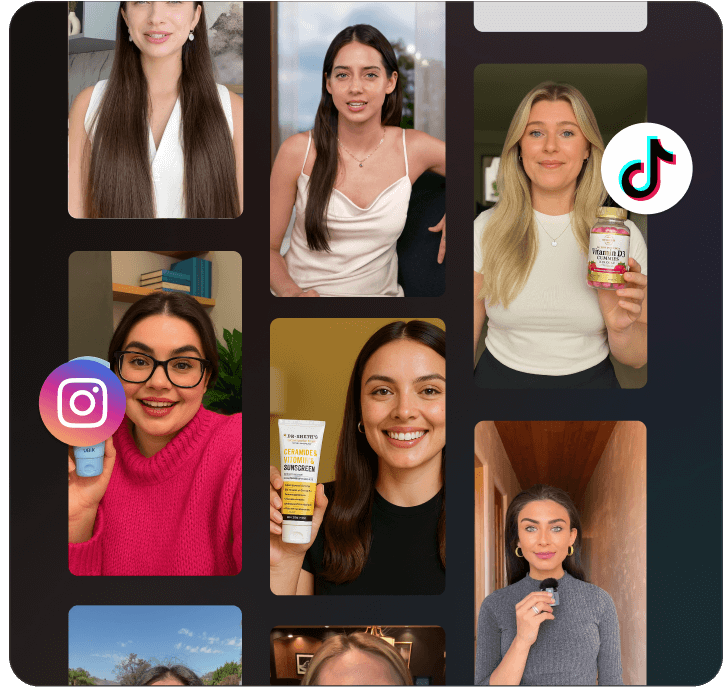
Yes. Every tool on this list generates creator-style video from a script, a prompt, or a product URL using AI avatars, so you never need to brief, film, or pay a human creator.
Written by:

Prakash Rawat is a digital marketer at Tagshop AI with 6+ years of experience across SEO, performance marketing, and AI-powered growth tools. He specializes in applying AI-driven strategies to optimize visibility, accelerate scalable growth, and drive adoption of next-generation marketing technologies.
 Add Tagshop.ai as a preferred source in Google Search





 Introducing

 Wan 3.0 is now live on Tagshop AI