11 Best AI UGC Tools for Ads That Don’t Look Fake (2026)








There are more AI UGC tools now than most marketers can keep track of, and they all pitch the same line: paste a link, get a scroll-stopping ad. Some deliver. Plenty produce videos that look exactly like AI made them, which is the one thing a UGC ad cannot afford to look like.
Someone on reddit community (r/dropshipping) admitted they spent a month building a spreadsheet to compare Arcads, HeyGen, and Creatify before picking one. That is the state of the category right now. So here is the honest version: what each tool is actually good at, what it costs in 2026, where it falls short, and which ten are worth your time.
TL:DR
There is no single best AI UGC video generator, because it depends on what you are looking for. For the most realistic AI actor library, Arcads leads, but it is the priciest. For steering the hook and reviewing the video before it renders, Tagshop AI is the strongest pick. For the cheapest way in, HeyGen and Captions both are available. For sheer volume of AI actors and languages, MakeUGC and Creatify could be your choice. Match the tool to the job, and you stop overpaying for features you will not use.
Quick Comparison of Best AI UGC Tools
| Tool | Best for | Starting price (2026) | Free Plan |
| Arcads | Most realistic AI actors | ~$110/mo | No |
| Tagshop AI | Steering the hook, storyboard review | $19/mo, free to start, credit-based | Yes |
| Creatify | Product URL to UGC video | ~$33/mo (free tier) | Yes |
| HeyGen | Avatar spokesperson videos | Free, $29/mo Creator | Yes |
| Segwise | Creative intelligence and AI ad generation | Custom | Yes |
| MakeUGC | Biggest AI creator library | ~$49/mo | Limited |
| Higgsfield | Cinematic, camera-controlled clips | ~$15/mo | Trial |
| Zeely AI | Mobile-first, builds and runs ads | ~$29.95/mo | Trial |
| Synthesia | Corporate and explainer avatars | $29/mo | Limited |
| AdCreative.ai | Ad-creative focus, static plus video | ~$39/mo | Trial |
| Captions | AI actors plus built-in editor | Free, $24.99/mo | Yes |
What People Actually Complain About
Before the list, the honest part. Across G2, Trustpilot, and Reddit, the same frustrations come up no matter which tool people name, so treat these as category-wide, not knocks on any one brand.
The first is the fake look. On r/indiehackers, a thread comparing Creatify and Arcads has a top reply saying the UGC clips look like a cartoon. Viewers are getting better at spotting AI, and a video that feels off gets scrolled.
The second is robotic delivery. Avatar tools built for corporate explainer videos often sound stiff when you push them into casual UGC, which is why some marketers say talking-head tools aren’t built for performance ads.
The third is sameness. When everyone pulls from the same avatar library and the same templates, feeds fill with near-identical ads, and creative fatigue hits fast. Marketers on r/AI_UGC_Marketing report AI UGC burning out quicker than expected for exactly this reason.
The fourth is the value gap. In a widely shared r/AskMarketing post from someone who tested every major AI ad tool with real spend, the blunt verdict on the priciest option was “best quality, worst value.” Good output does not always justify the invoice.
Keep those four in mind as you read. The tools that hold up are the ones that let you fix the hook and the specifics, not just swap the face.
Top 11 AI UGC Tools in 2026
1. Arcads
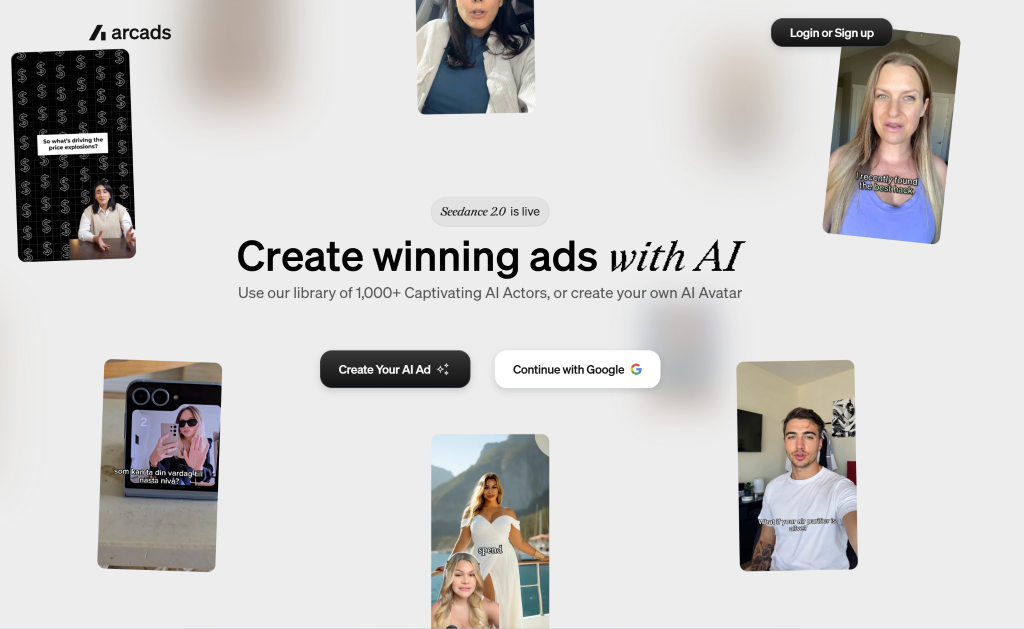
Arcads is one of the best AI UGC tools that most people mean when they say AI UGC looks real. Its actor library is the largest, and the delivery holds up in paid feeds is impressive, too.
Best for: brands that want the most lifelike AI actors and have the budget to match.
Pricing (2026): around $110/mo to start, with higher tiers climbing toward $220 and custom plans reported up to roughly $550/mo. No free tier.
Pros
- Top-tier actor realism
- Strong for DTC and ecommerce
- Big script-to-video flexibility.
Cons
The priciest option here, and the community sentiment of “best quality, worst value” is fair once you scale.
2. Tagshop AI
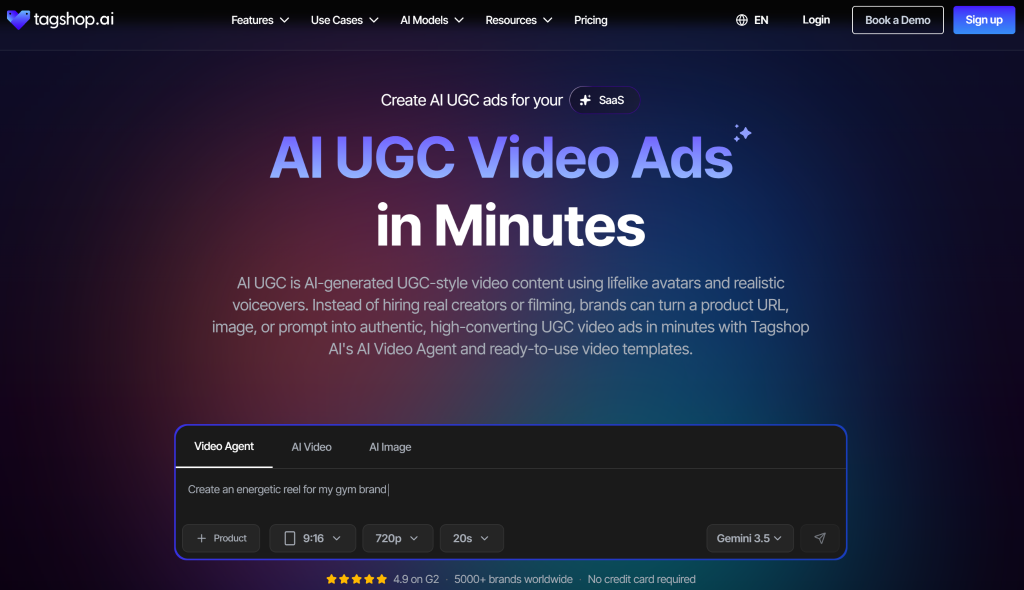
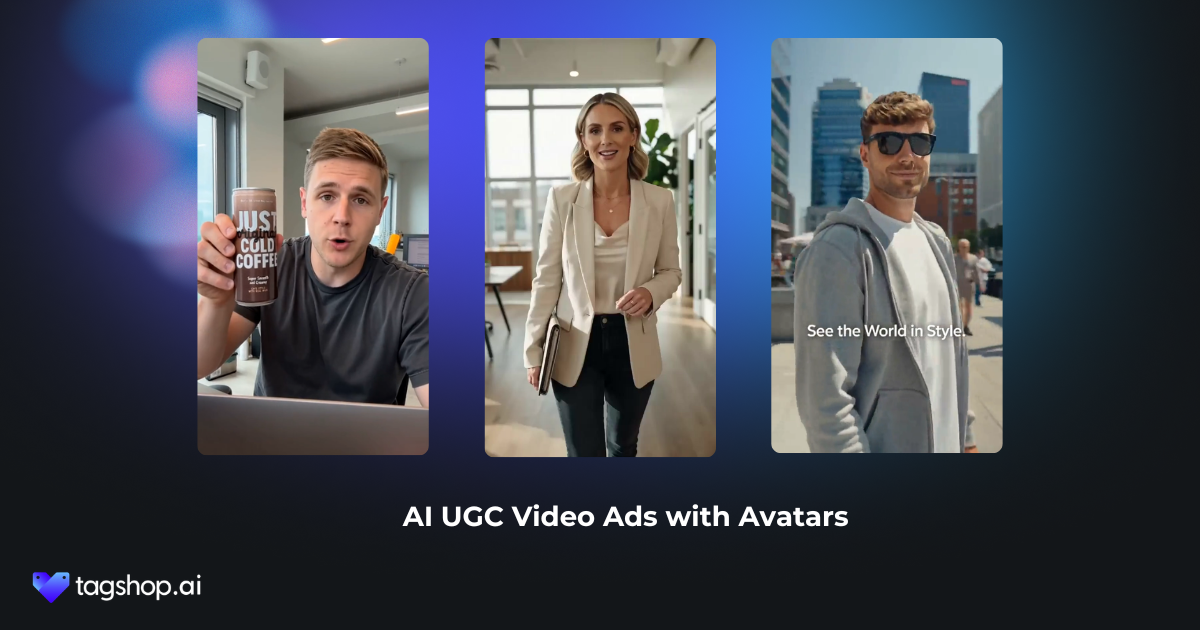
Tagshop AI takes a different bet than the rest. Instead of handing you a finished render and hoping it fits, its Video Agent asks about your audience, talent, and tone, then builds an editable, scene-by-scene storyboard you approve before you spend a single credit. That review step catches weak hooks.
Best for: marketers who want to steer the angle and see the plan before the video renders.
Pricing (2026): free to start, credit-based, starter $14/mo, with the exact credit cost shown before you generate.
Pros
- You edit the storyboard and dialogue up front
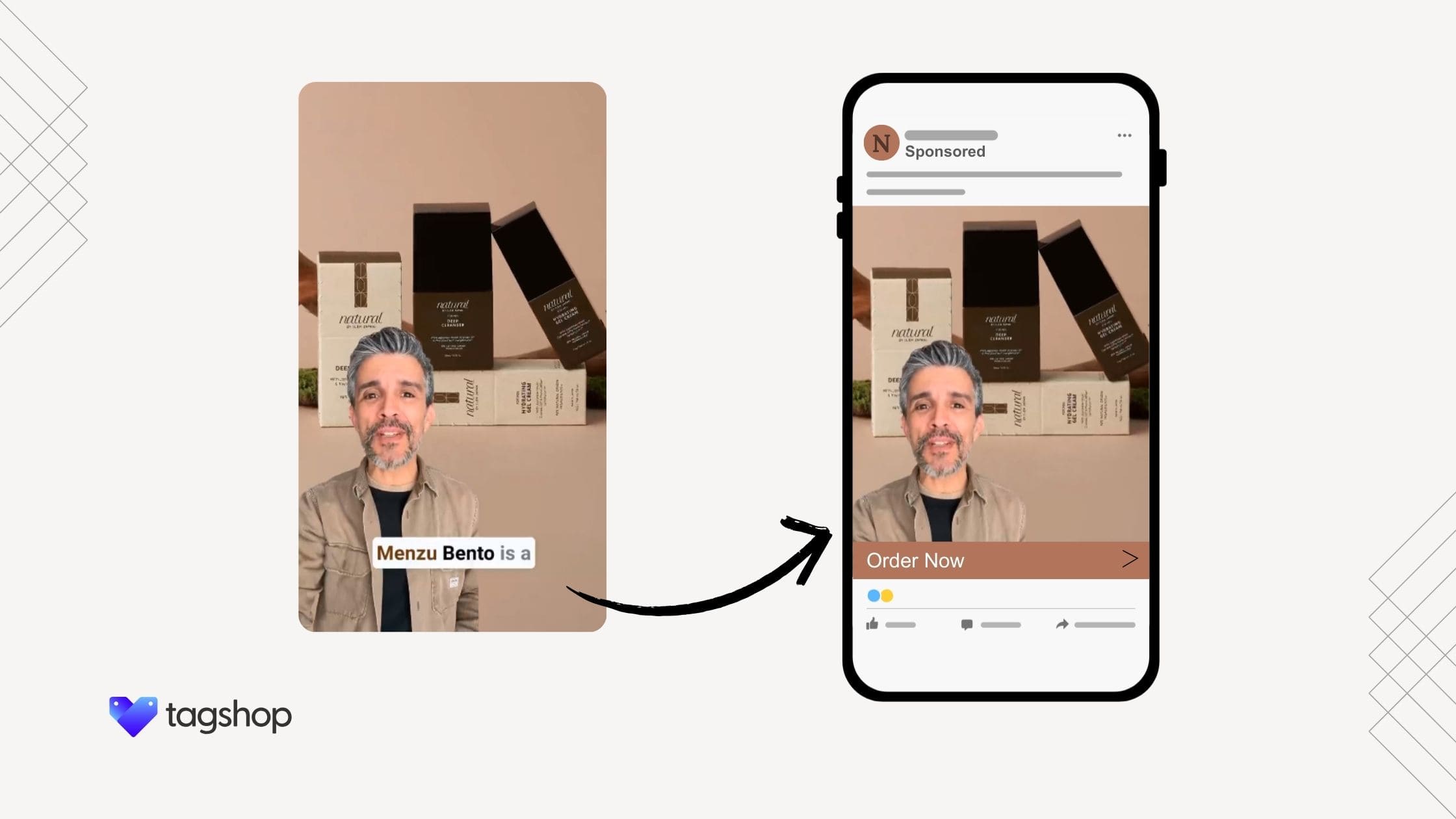
- It pulls images and details straight from a product URL
- Strong fit for ecommerce and fashion.
Cons: The library of prebuilt AI avatars is smaller than other competitors.
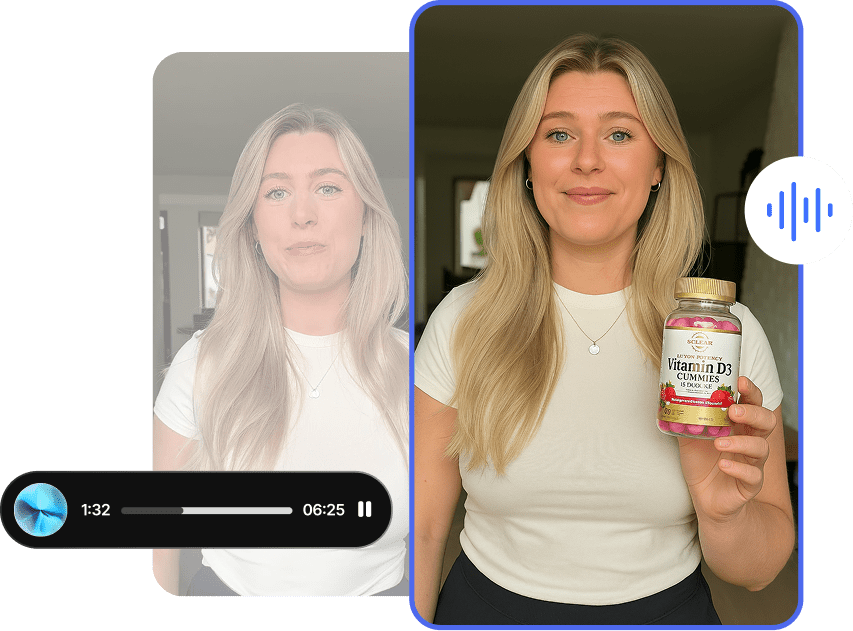
3. Creatify
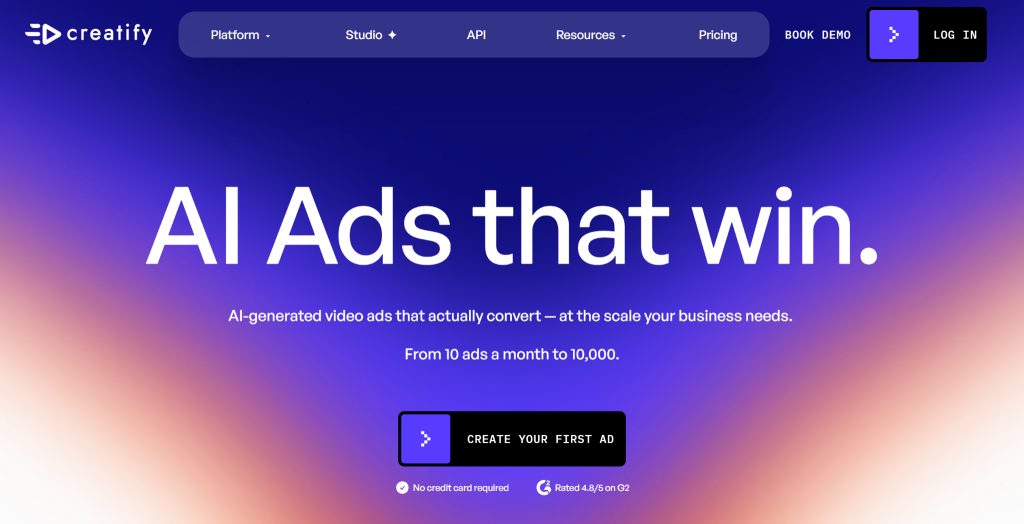
Next, we have Creatify. This UGC tool turns a product URL into a scripted UGC-style video and is one of the more genuinely UGC-feeling avatar tools. Marketers on r/AI_UGC_Marketing note it reads more like real UGC than the stiffer talking-head options.
Best for: quick product-URL-to-video ads with a script baked in.
Pricing (2026): free tier with watermarked credits; paid plans from around $33/mo billed annually (some tiers listed near $19/mo).
Pros
- Fast URL-to-video
- Decent avatar range
- Affordable entry.
Cons
- Avatar quality is hit or miss
- The free tier is limited.
4. HeyGen

HeyGen is the best-known avatar tool and is excellent for spokesperson and talking-head video. For true UGC, it can feel corporate, which several marketers flag as a limitation for performance ads.
Best for: polished avatar spokesperson videos and multilingual content.
Pricing (2026): free plan (3 videos/mo, watermarked); Creator $29/mo, Pro $49/mo, higher business tiers.
Pros
- Huge avatar and language range
- Reliable output
Cons
- leans corporate
- Can feel robotic for casual UGC.
5. Segwise
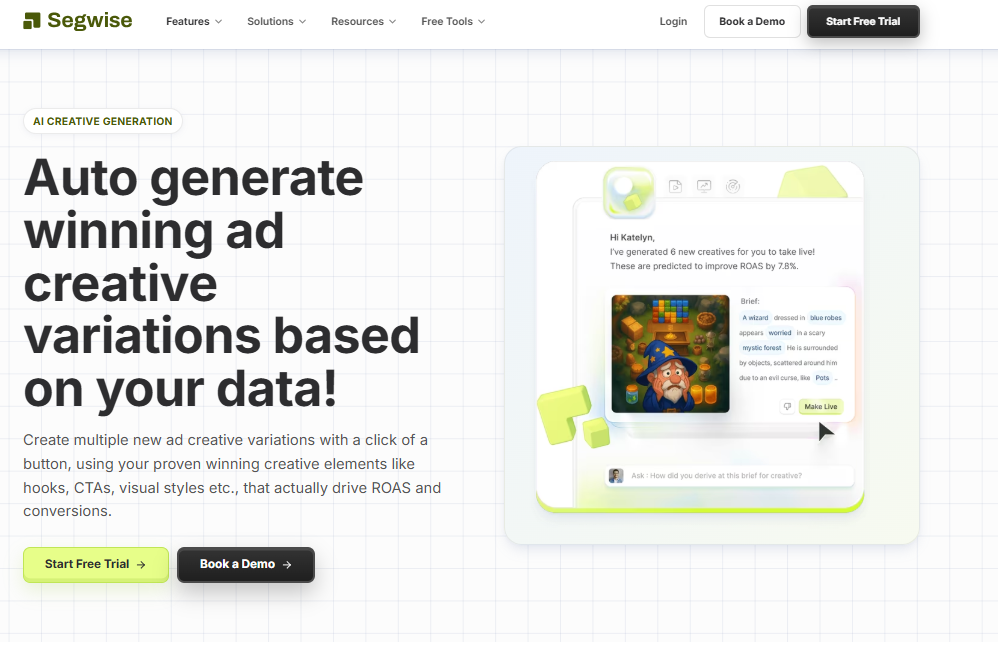
Segwise starts at the other end of the workflow from the generation tools on this list: before making anything new, it tells you which of your existing ads made money. Its multimodal AI tags every element inside each ad you run- hooks, on-screen text, CTAs, characters, visual styles, voiceover, background music- and maps each tag to ROAS, CPI, and custom conversion events across 15+ ad networks and MMPs. Winning patterns then feed into its ad generation agent, which produces new statics, videos, and playable ads, and each generated creative gets tagged and tracked automatically once it goes live. If your AI UGC “feels generic” on final conversion, this is how you find out which variants didn’t.
Best for: Teams producing ad creative at volume who need creative analytics to show which creative elements drive performance instead of views.
Pricing (2026): Free trial available.
Pros:
- Maps individual creative elements (hooks, CTAs, visual styles) to ROAS rather than campaign-level metrics
- No-code setup across 15+ ad networks and MMPs in 10-15 minutes
- Only platform that tags playable ads
- Generated creatives are tracked automatically, so analysis and production stay in one loop
Cons:
- Competitor tracking covers Meta only for now
- Historical data import caps at three months on paid plans
6. MakeUGC
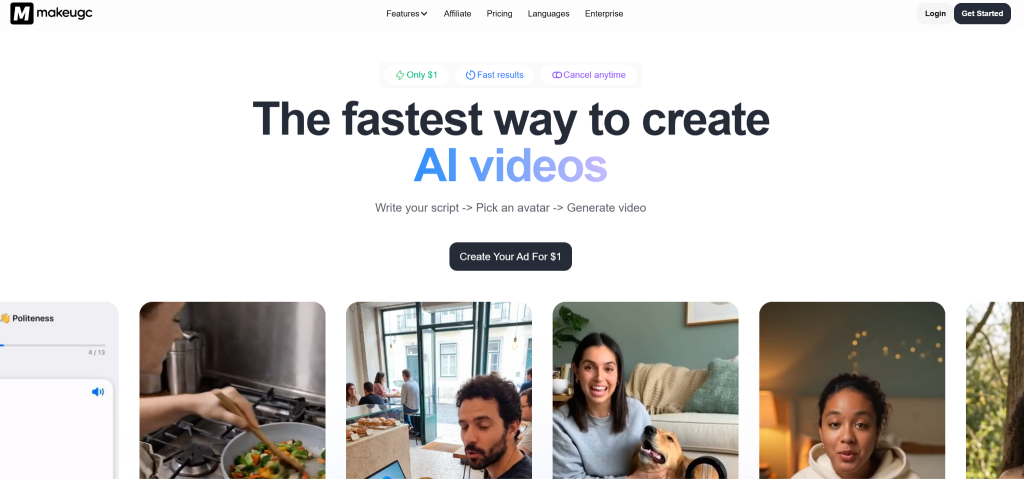
Now we have MakeUGC AI, which leans on scale: 1,000+ AI creators and 50+ languages, aimed at pumping out volume for testing.
Best for: teams that want the largest AI creator library for high-volume testing.
Pricing (2026): paid plans from around $49/mo (Startup, roughly 5 videos) up to credit packs; a 500-credit plan runs about $59/mo.
Pros
- Enormous creator variety
- Many languages
- Built for volume.
Cons
- Per-video cost adds up
- Volume without a strong hook still gets scrolled.
Must Read: MakeUGC Alternatives for AI UGC Ads
7. Higgsfield
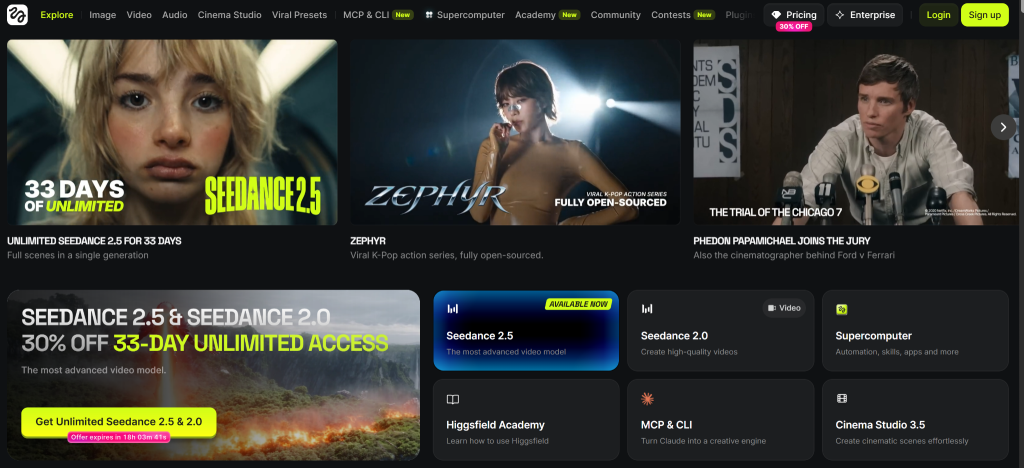
Higgsfield is the pick when you want cinematic control: camera moves, motion, and a more filmic look than the standard talking-head clip. It shows up constantly in AI video comparisons for a reason.
Best for: more cinematic, camera-directed short clips.
Pricing (2026): from around $15/mo (Starter), with Plus near $39 to $49/mo and Ultra around $99 to $129/mo, mostly billed annually.
Pros
- Strong motion and camera control
- Low entry price
- Broad creative range.
Cons
Less of a simple-to-use UGC ad tool, more of a general AI video generator you shape yourself.
8. Zeely AI
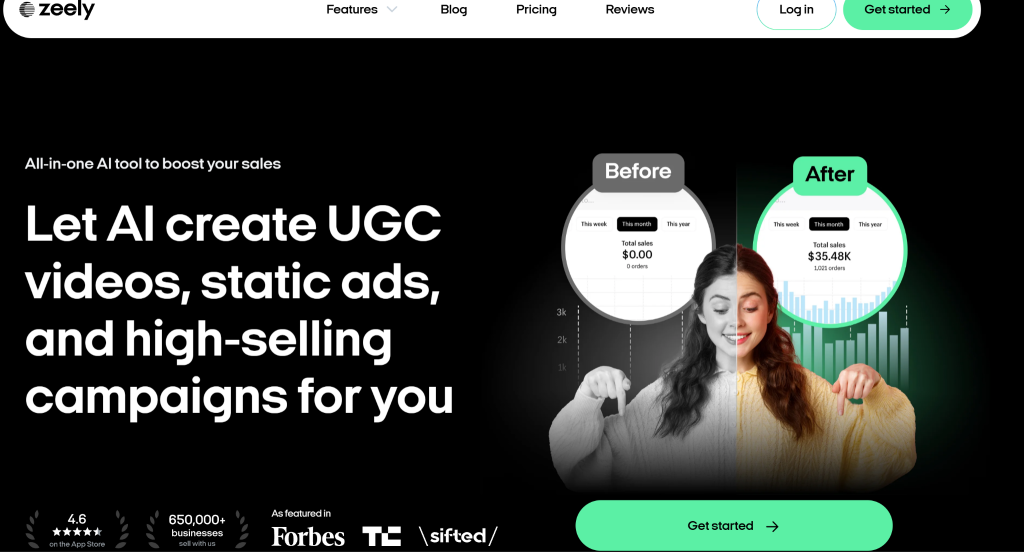
Not like other AI UGC tools, Zeely AI is mobile-first and goes past generation into actually building and running ad campaigns, which suits solo founders working from a phone.
Best for: solopreneurs who want to make and launch ads in one mobile app.
Pricing (2026): from $29.95/mo (Starter), with Plus and Growth tiers climbing toward $89.95 to $149.95/mo.
Pros
- End-to-end from creative to launch
- Mobile-friendly
- quick to start.
Cons: less creative depth than dedicated video tools, and higher tiers get pricey.
Must Read: Zeely Alternatives for UGC-Style Ads
9. Synthesia
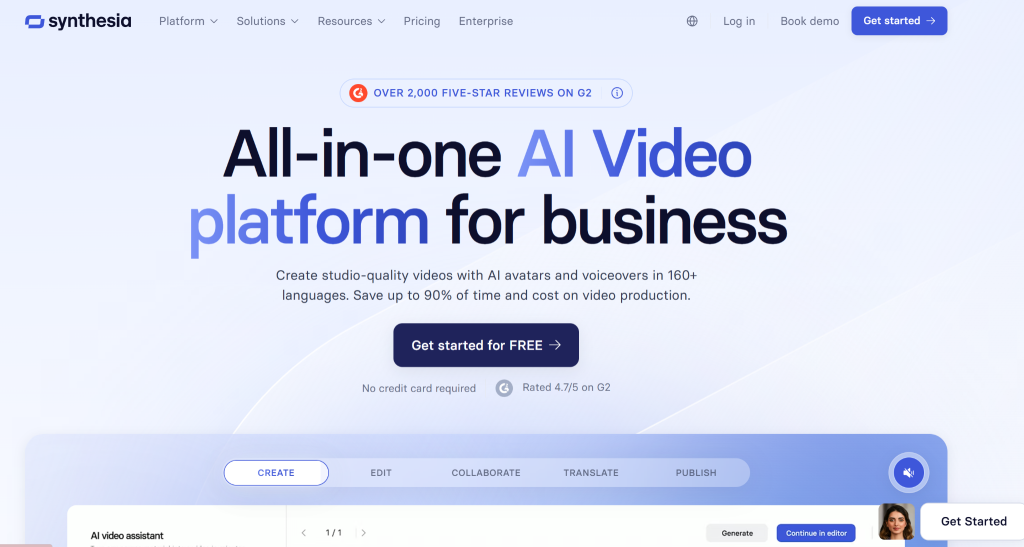
Synthesia is the enterprise standard for avatar video. It is superb for training and explainer content, and only sometimes the right call for casual UGC.
Best for: corporate, training, and explainer video at scale.
Pricing (2026): Starter $29/mo ($264/yr), Creator $89/mo ($804/yr), enterprise custom.
Pros
- Polished avatars
- Huge language support
- Enterprise reliability.
Cons: more boardroom than For You page; UGC is not its native lane.
10. AdCreative.ai
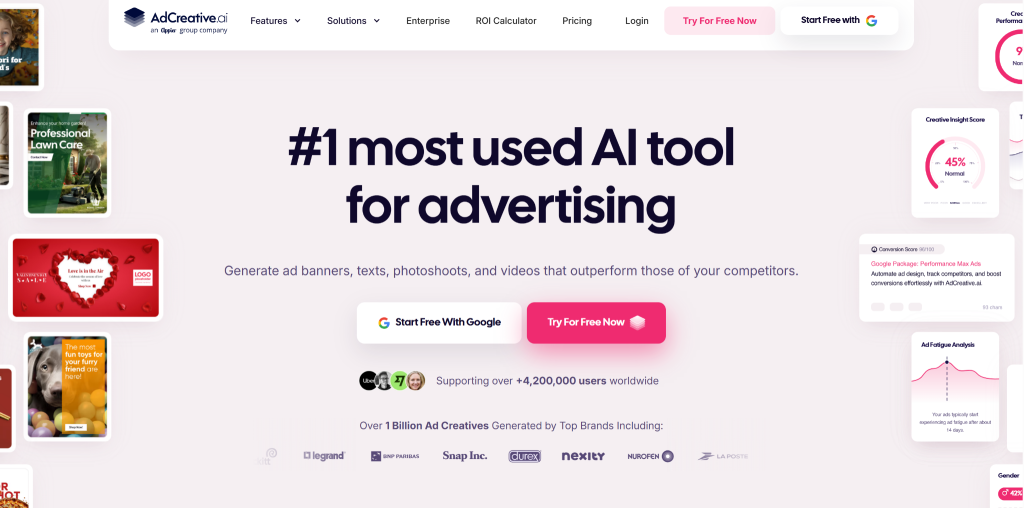
AdCreative.ai started in static ad creative and has expanded into video. It is strongest when you want ad creative and performance scoring alongside your UGC.
Best for: teams that want ad-creative generation and scoring, plus some video.
Pricing (2026): Starter $39/mo, Professional $249/mo, Ultimate $599/mo and up.
Pros
- Strong static-creative engine
- Performance scoring
- ad-focused workflow.
Cons: video is not its core strength, and the higher tiers jump quickly.
11. Captions
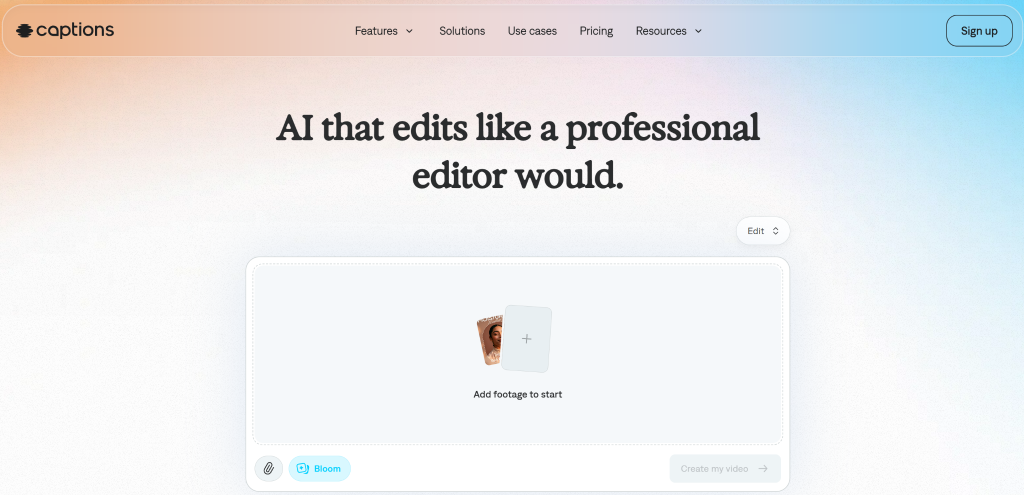
Captions bundles AI actors with a built-in editor, so you can generate and polish in one place. Its AI Ads and Mirage features push it further into UGC-style creative.
Best for: creators who want AI actors plus editing without switching tools. Pricing (2026): free tier; paid from $24.99/mo up through $69.99, $139.99, and $279.99 tiers by credits.
Pros
- All-in-one generate-and-edit workflow
- Strong captioning roots
- Affordable entry.
Cons
- Credit limits bite on the lower plans
- The actor realism is not strong.
The bottom line
The best AI UGC tool depends on how you like to make ads. If you want more say over the creative before it turns into a finished video, Tagshop AI is the pick here.
Its Video Agent asks for your direction, then builds a scene-by-scene storyboard you can review and edit before generating the video. That means you can catch a weak hook, change the dialogue, or rethink the angle before using credits on the final output.
For marketers testing AI UGC ads, that is a useful difference. You are not just choosing a face and waiting to see what comes back. You get to shape the ad before it is made.
And that is why Tagshop AI stands out on this list.
Frequently Asked Questions
There is no single winner; it depends on your goal. Arcads leads on actor realism, Tagshop AI leads on hook control and storyboard review, and HeyGen or Captions are best if you want to start free. Match the tool to your bottleneck rather than chasing one ranking.
HeyGen and Captions are the easiest entry points because both have free tiers and simple workflows. Tagshop AI is also beginner-friendly since its Video Agent walks you through audience and tone before building the video.
Yes. HeyGen, Captions, Creatify, and Tagshop AI all let you start free or on a free tier, usually with watermarks or limited credits. Free plans are enough to test output quality before you pay.
Most sit between $25 and $110 per month to start. Budget picks like Tagshop AI and HeyGen begin under $30/mo, mid-range tools like Creatify and MakeUGC run $33 to $59/mo, and premium options like Arcads start around $110/mo.
Sometimes, and viewers are getting better at it. What usually gives it away is a hook nobody would actually say, not the visuals. A clip built around one real, specific detail reads as native to the feed.
Often close on click-through and watch time, sometimes weaker on final conversion when the creative feels generic. Most teams use AI UGC to test many hooks cheaply, then scale the ones that land.
Tools that build from a product URL are the fastest fit, which puts Tagshop AI and Creatify at the front for ecommerce. Both pull your product images and details automatically and output vertical video ready for Meta and TikTok.
Written by:

Prakash Rawat is a digital marketer at Tagshop AI with 6+ years of experience across SEO, performance marketing, and AI-powered growth tools. He specializes in applying AI-driven strategies to optimize visibility, accelerate scalable growth, and drive adoption of next-generation marketing technologies.
 Add Tagshop.ai as a preferred source in Google Search
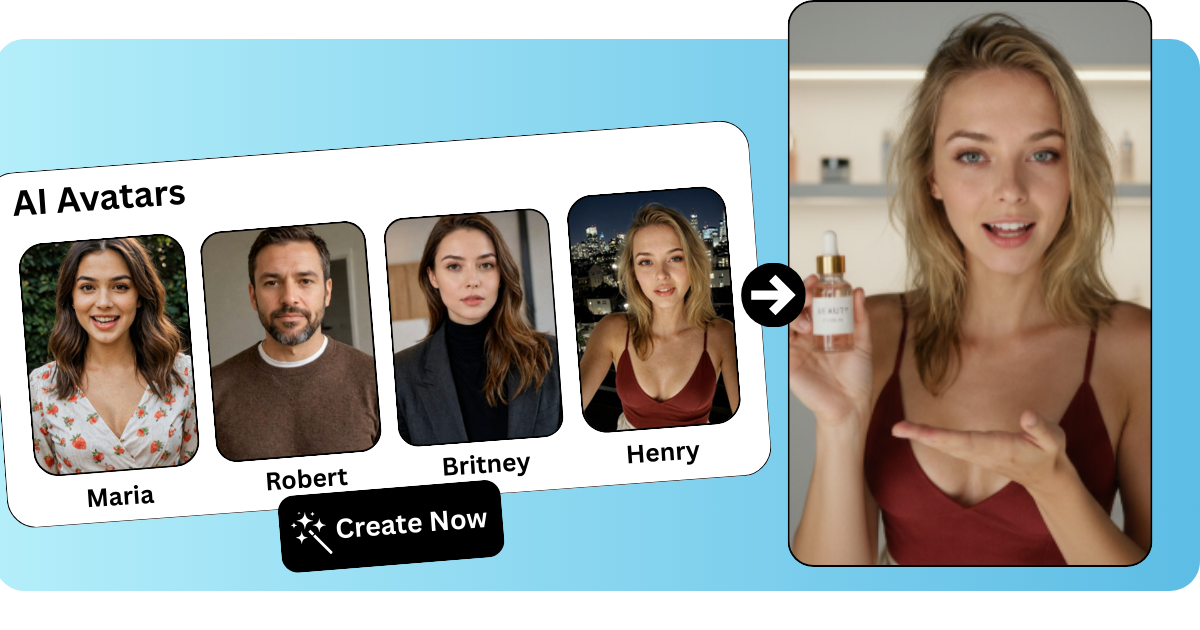




 Introducing

 Wan 3.0 is now live on Tagshop AI