Best AI UGC Video Tools for Startups on a Budget: 2026 Guide
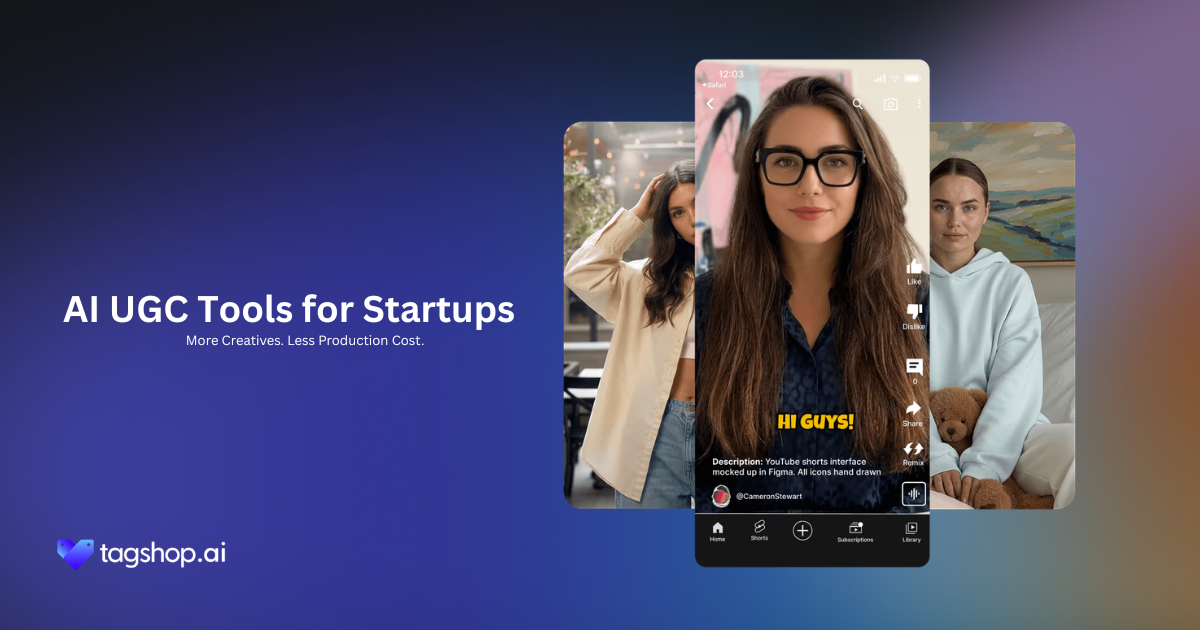







Quick answer: The best AI UGC video tool for a startup on a budget is the one that gives you the lowest cost per usable video with no watermark, not the one with the cheapest sticker. Tagshop AI is the strongest all-around value at $14 a month (billed annually), which comes to about $2.80 per finished video.
Jogg AI and MakeUGC are the best truly free starting points; HeyGen and Synthesia win for talking-head and explainer videos, and Arcads is the one to skip while money is tight because it hides its price behind a signup wall. Below, I break down each tool, with real prices and an honest verdict.
TL;DR
- Best overall value: Tagshop AI, about $14 a month billed annually, roughly $2.80 per finished video, no watermark, built for UGC-style ads.
- Best free starting points: Jogg AI (free plan plus $24 a month) and Vidnoz (generous free tier, paid from about $14.99 a month).
- Best for talking-head and explainer video: HeyGen and Synthesia, both with usable free plans, though neither is built for scroll-stopping and creativity.
- Cheap to trial, pricier to keep: MakeUGC ($1 for the first month, then $59) and Pippit (strong free tier, but paid plans jump to $120 a month).
- The one to skip on a budget: Arcads, because it publishes no price and reviewers report a signup wall around $110 before you can test anything.
- The real startup move: stop optimizing for the cheapest video and optimize for the cheapest winning ad. Cheap AI tools let you test dozens of variations for the price of one agency spot, so you find winners faster.
I Built a Whole Ad Account on a Budget that Wouldn’t Cover One Shoot
When I started running growth for a bootstrapped brand, my entire monthly creative budget was less than what a single UGC creator wanted for one video. That is not an exaggeration. One creator quote came in at $450 for a single clip, and I needed dozens of variations a month to keep our Meta and TikTok ads from going stale.
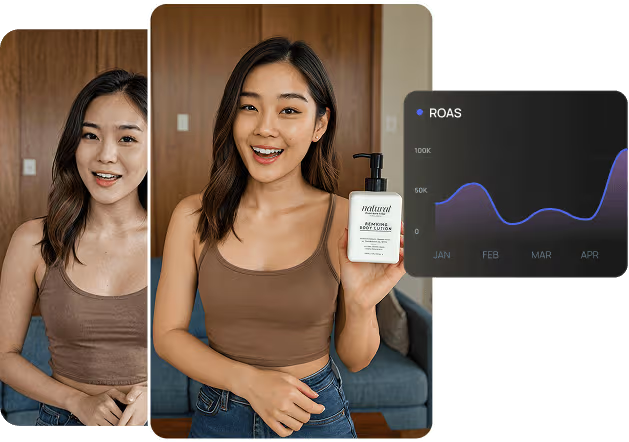
So I did what a lot of founders are doing right now. I went hunting for AI UGC video tools cheap enough to let a scrappy team test at volume. I signed up for the free tiers, paid for the cheap plans out of my own pocket to see what happened at scale, and kept a spreadsheet of what each one actually cost per usable video, not per credit.
This is the result of that hunt, rewritten for you. I am going to walk through each tool one at a time, tell you what it costs, where its free plan actually helps, what it does well, and where it falls apart. You get the honest verdict I wish someone had handed me when my budget was tiny and my deadline was yesterday, minus the fluff and the ranking padding.
What “Budget” Actually Means for AI UGC Video
Before the tools, one reframe that will save you money, because “cheap” is a trap if you measure it wrong.
The number that matters is not the monthly price and it is not the number of credits. It is the cost per finished, usable video, the clip that actually clears your bar and runs as an ad. A $59 plan that makes 20 usable videos is cheaper per result than a $39 plan that makes 8. Credits are the currency. Usable ads are what you are actually buying.
There is a second layer for startups specifically. The real win of cheap AI video is not saving money on one clip. It is being able to test many creatives at once. A traditional agency spot might cost thousands and give you one shot at a winner. The same money across AI tools buys you fifty variations and fifty chances to find the hook that prints. So the best budget tool is the one that lets you test the most usable creative for the least money, then scale what works.
Quick Comparison: Budget AI UGC Tools at a Glance
| Tool | Free option | Cheapest paid plan | Watermark on paid entry | Best for |
| Tagshop AI | Free trial, 20 credits | $14/mo (annual), about $2.80 per video | None | UGC-style ads at volume, best value |
| Jogg AI | Free, 200 credits for 31 days | About $24/mo | None | Cheap all-rounder with a real free plan |
| Vidnoz | Generous free tier, daily credits | About $14.99/mo | None on paid | Testing for free before you spend |
| Creatify | Free, 10 credits | $39/mo | None | Ad features, if you can absorb the price |
| HeyGen | Free, 3 videos/mo | $29/mo ($24 annual) | None | Talking-head and multilingual video |
| Synthesia | Free, 10 min/mo | $29/mo ($18 annual) | None | Explainer and training video |
| Pippit AI | Strong free tier | $120/mo | None on paid | Free product-to-video for e-commerce |
| MakeUGC | None ($1 first month) | $59/mo | None | A cheap, low-risk one-dollar test |
| Arcads | None reported | Not published (about $110 to enter) | Reported | Funded teams wanting actor realism |
How I Judged Each Tool
I scored every tool on six things a startup actually cares about:
- Entry price. The real cost to get started on the cheapest paid plan.
- Free option. Whether the free tier or trial is good enough to test with, and what it holds back (watermarks, limits, locked features).
- Cost per usable video. How the price shakes out per finished clip, where I could calculate it cleanly.
- Ad fit. Whether it is built for creator-style ads or repurposed from another job like corporate training.
- Ease and speed. How fast a small team can go from product link to finished video.
- Hidden costs. Watermarks, credit burn, per-seat fees, annual-only pricing, and the surprises that show up after you pay.
Now the tools, one by one.
Best AI UGC Video Tools for Startups in 2026
1. Tagshop AI: Best Overall Value for Startups
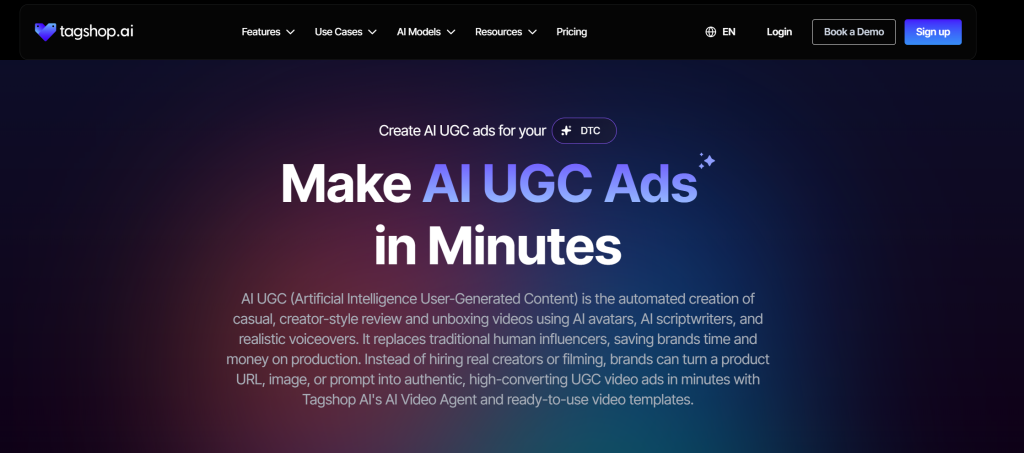
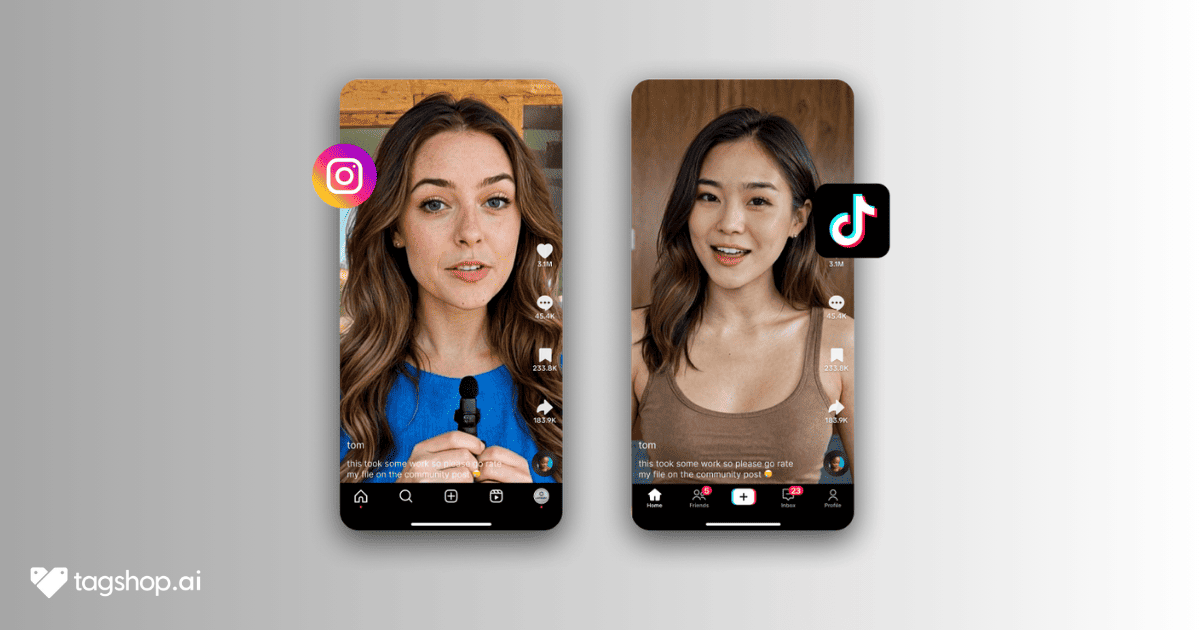
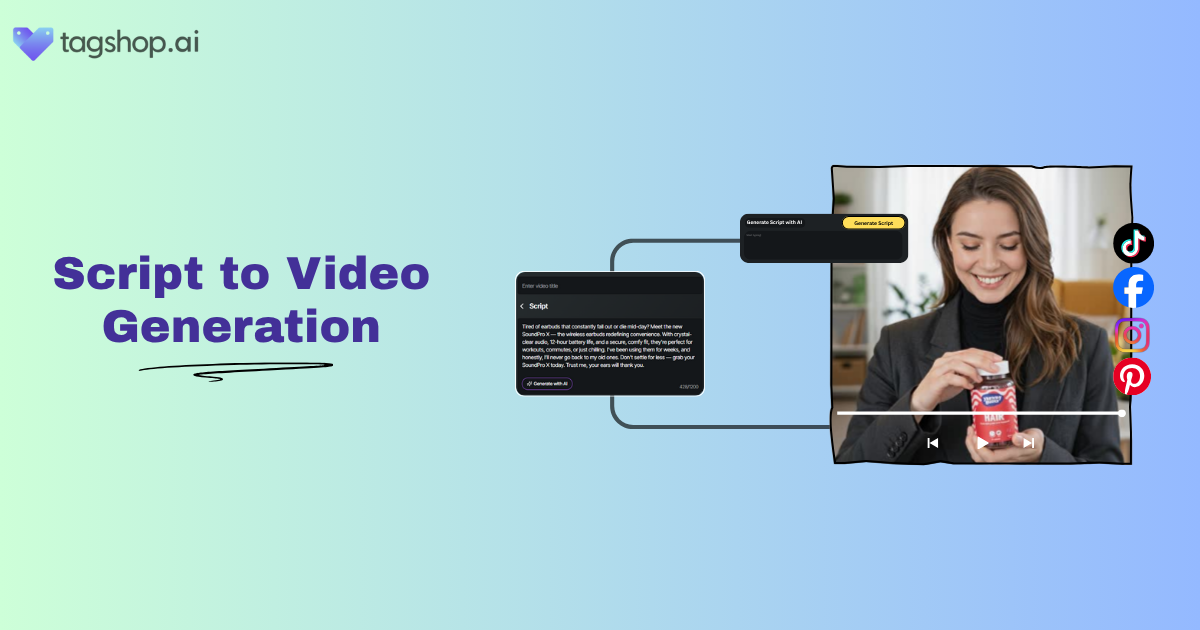
What it is: Tagshop AI is built specifically for UGC-style video ads. You paste a product URL and chat with its AI Video Agent; it generates a whole storyboard and renders a creator-style video ready for TikTok, Reels, and Meta.
Why it leads on value: At $14 a month for up to 60 finished videos a year, the math lands around $2.80 per video, and the credit cost per video is fixed at ten credits, so there is no guessing. That predictability is rare in this category. You also get 360+ avatars, 75-plus languages, and 1080p export on the entry plan, with no watermark, which most competitors reserve for pricier tiers.
Where it shines for a startup: The ad-specific features are the difference. URL-to-video turns a product page into a script in seconds, the AI Video Agent handles script-to-render, and Ad Clone lets you spin fresh variations off a winner. That is exactly the “test many, scale winners” workflow a lean team needs.
Limitations: Rendering can be slower on the free trial than on paid plans, so treat the trial as a quality check, not a production run.
Best for: Bootstrapped D2C brands and solo marketers who need a high volume of ad variations without a watermark or a surprise bill.
Price: Starts at $14 a month billed annually. No watermark, even on the entry plan.
2. Jogg AI: Best Free Plan for an All-Rounder
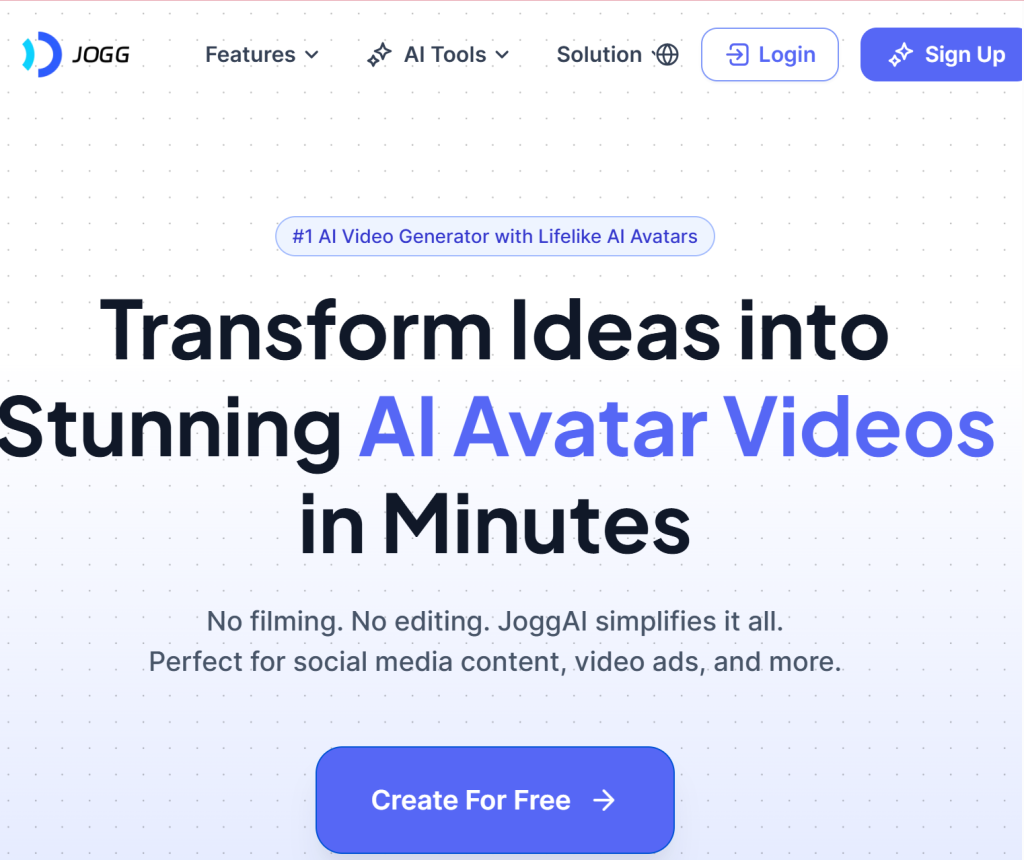
Price: Free plan with 200 credits valid for 31 days and one custom avatar. Paid from about $24 a month billed annually.
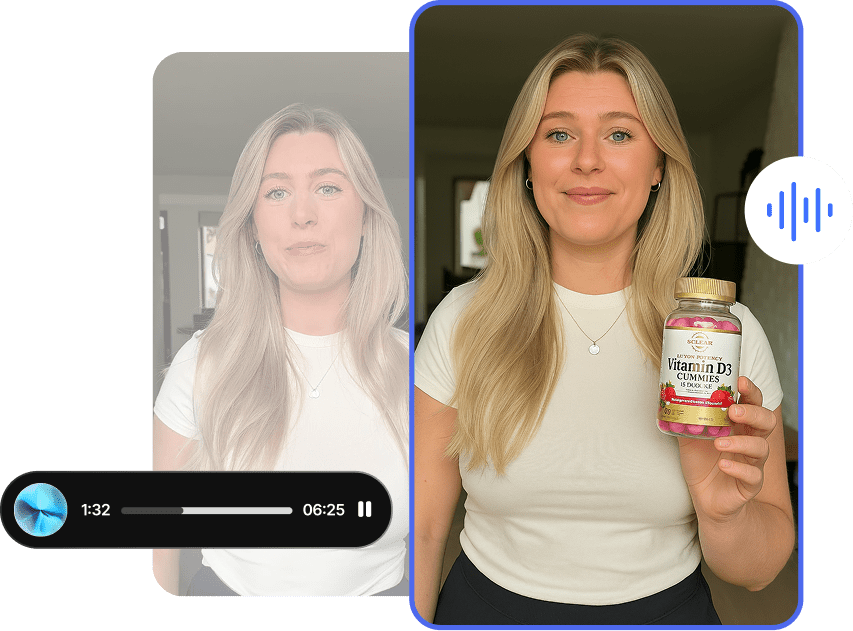
What it is: Jogg turns a product URL or photos into avatar videos and “talking photo” content quickly, with a solid template library and multilingual support.
Why it is good on a budget: The free plan is a real test drive, not a teaser, and $24 a month is one of the friendliest paid entry points in the category. You can generate product images inside the tool and turn them into avatar or talking-head videos, which saves you a second app.
Limitations: Users report occasional sync issues that need a re-render to fix, and you get less fine control over avatar expressions and gestures than some pricier tools. Its default clips also run short, so a full ad often means stitching a few together.
Best for: Founders who want a capable free starting point and a cheap upgrade path once they know AI video works for their product.
3. Vidnoz AI: Best Truly Free Tier
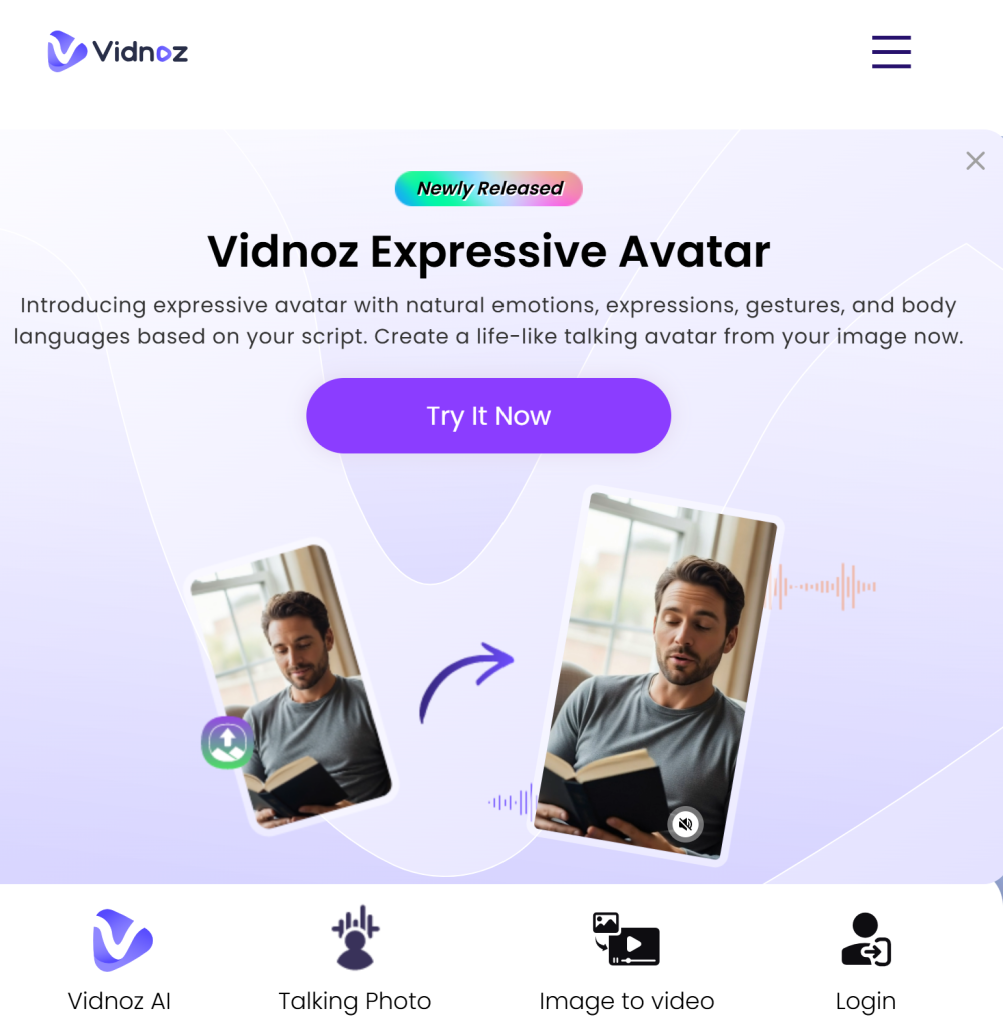
Price: Free plan at $0 with daily credits, 1,800-plus avatars, up to three-minute videos, 720p export, and a watermark. Paid from about $14.99 a month for 1080p with the watermark removed.
What it is: Vidnoz is an avatar and talking-head video tool with an unusually generous free plan, refreshed with daily credits rather than a one-time allotment.
Why it is good on a budget: If you want to make real videos before spending a rupee or a dollar, Vidnoz gives you the most runway. The daily-credit model means you can keep producing on the free tier longer than most, which is ideal for a startup validating the workflow.
Limitations: The free tier caps you at 720p and stamps a watermark, so it is for testing, not launching. Vidnoz leans more toward talking-head and explainer content than scroll-stopping UGC ads, so judge the output against your specific ad style.
Best for: Teams that want to prove the concept for free before committing budget, and anyone who needs a big avatar and voice library cheaply.
4. Creatify: Ad-Focused, But a Pricier Entry
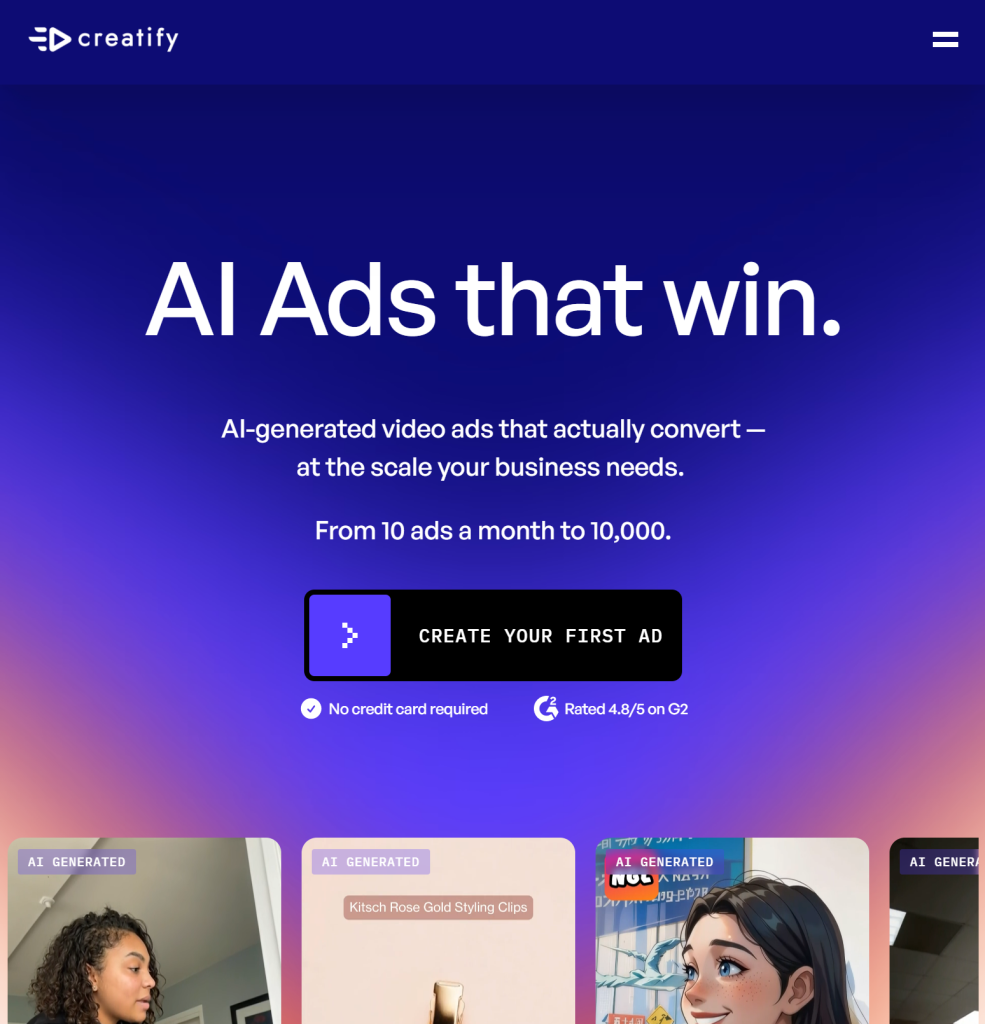
Price: Free plan with 10 credits and a watermark. Starter at $39 a month for 100 credits. Pro at $99 a month.
What it is: Creatify is built for AI ad creation, with a large avatar library, 75-plus languages, an ad launcher, and a batch mode for testing hooks.
Why it is on the list: It is a genuine ad tool with strong ratings (4.8 on G2), and the batch hook testing is useful for performance marketers. The free plan lets you make about two video ads before you hit the wall.
Limitations for a budget: The Starter plan is $39 a month for 100 credits with no published per-video credit rate, so cost per finished video is hard to predict. Verified reviews describe output that sometimes misses the brief (wrong voice, wrong speed, missing scenes) and friction over credits when you regenerate. For a startup counting every dollar, that unpredictability is the concern.
Best for: Slightly better-funded startups that want ad-specific features and are comfortable with a credit system that does not show its per-video cost.
5. HeyGen: Best for Talking-Head Video
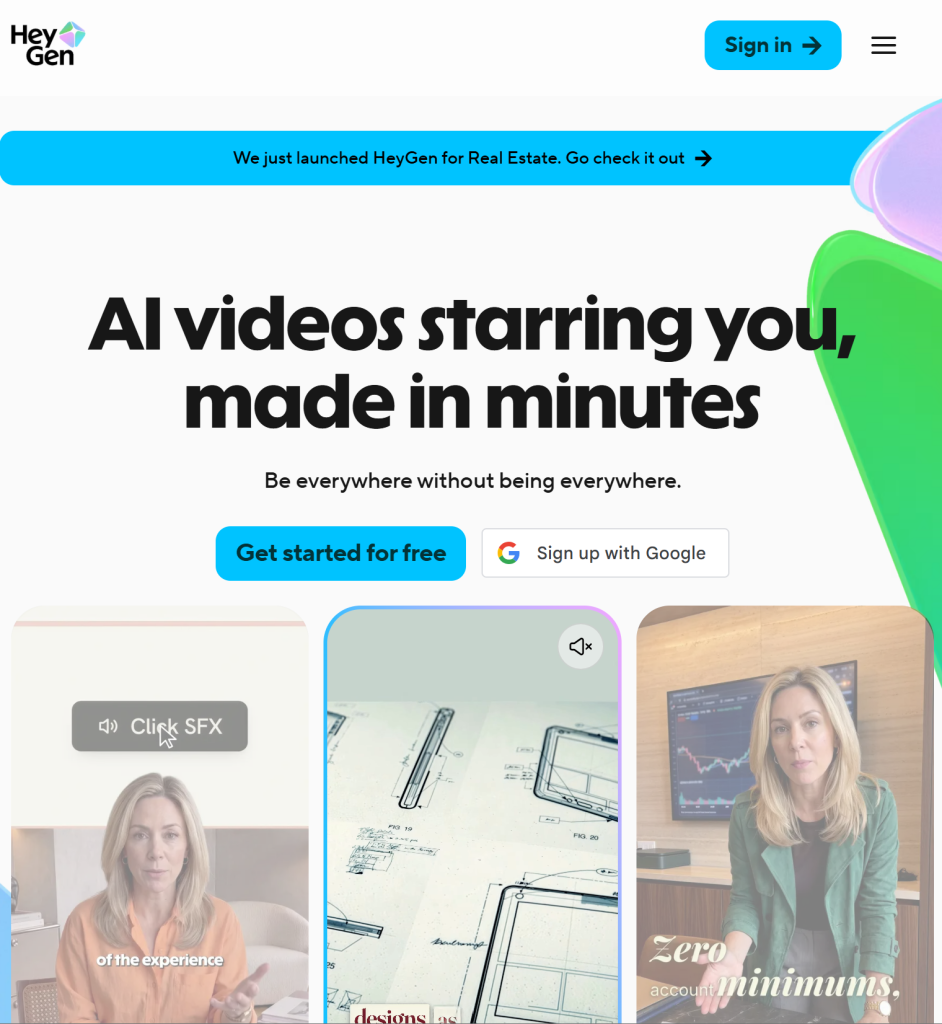
Price: Free plan with 3 videos a month capped at one minute, watermarked. Creator at $29 a month ($24 billed annually) for 600 credits. Pro at $49 a month for 4K.
What it is: HeyGen is one of the strongest avatar and talking-head platforms, with voice cloning, 175-plus languages, and clean output.
Why it is on the list: For a founder who mainly needs a polished spokesperson video, a product explainer, or multilingual talking-head content, HeyGen is excellent and the free plan is enough to judge quality.
Limitations for UGC ads: HeyGen is built for talking heads and corporate video more than for authentic, scroll-stopping UGC ad creative. Its credits map to minutes rather than finished ad videos, which makes cost per ad harder to reason about for performance testing.
Best for: Startups whose priority is explainer and spokesperson video across languages, not high-volume ad testing.
6. Synthesia: Best for Explainer and Training Video
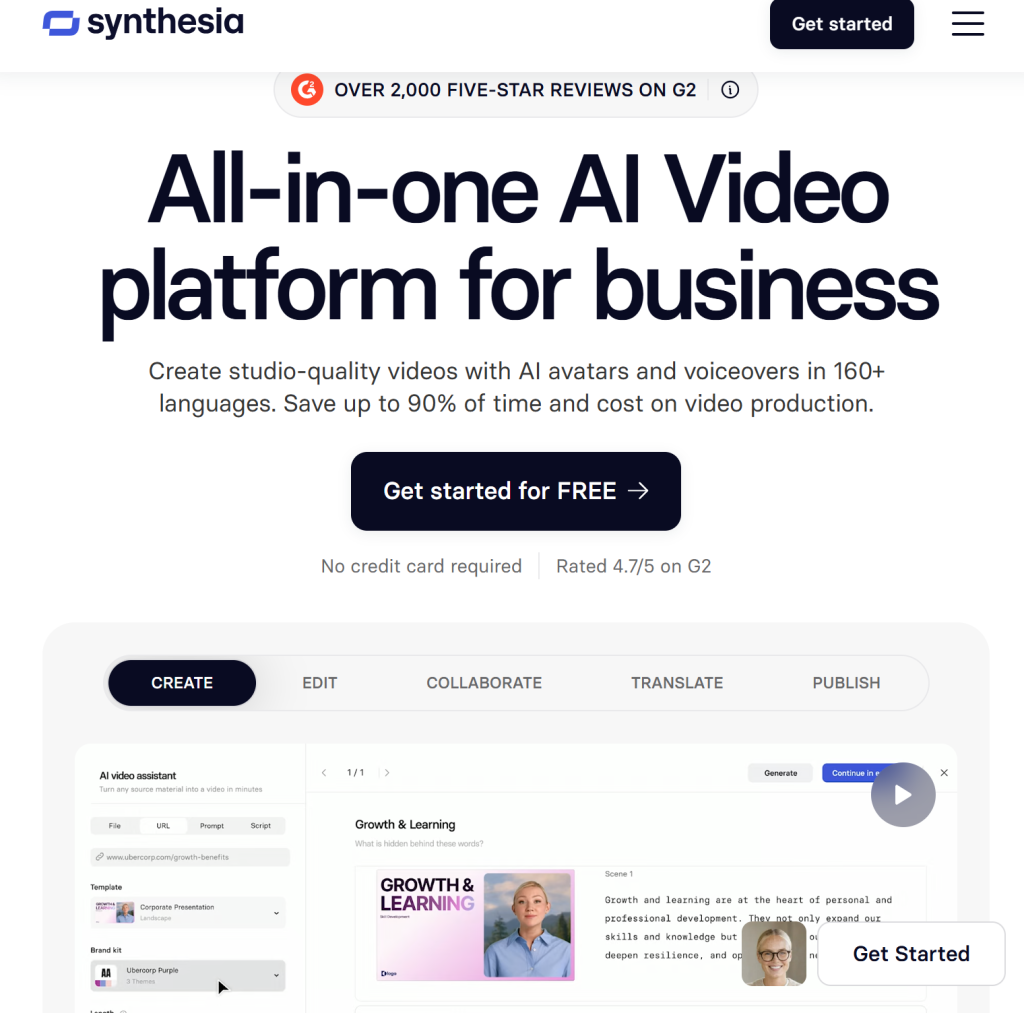
Price: Free plan with 10 minutes of video a month and 9 avatars. Starter at $29 a month ($18 billed annually). Creator at $89 a month.
What it is: Synthesia is the corporate video and training standard, with 125-plus avatars on paid plans, strong multilingual support, and a polished, professional feel.
Why it is on the list: The free plan is a legitimate way to make real explainer content, and the annual Starter price of $18 a month is very cheap for what it does.
Limitations for UGC ads: Synthesia feels corporate, which is a compliment for training video and a problem for UGC ads that need to look organic and unpolished. It is minute-based, not built for churning out ad variations.
Best for: Startups that need clean explainer, onboarding, or internal video on a small budget, rather than performance ad creative.
7. Pippit AI: Great Free Tier, Steep Paid Plans
Price: Free plan at $0 with daily credits and a watermark. Paid plans start at $120 a month, which is a big jump.
What it is: Pippit, from the team behind CapCut, turns product links and assets into short videos with a “video agent,” talking photos, and viral-remix features.
Why it is on the list: The free tier is properly useful for e-commerce founders who want product-to-video content without a card on file, and the ByteDance pedigree shows in the editing polish.
Limitations for a budget: The paid tiers are expensive for a startup, starting at $120 a month, so the value here is almost entirely in the free plan. Once you outgrow the free credits, the price gap to competitors is large.
Best for: E-commerce startups that can live inside the free tier for product videos and do not need heavy paid volume yet.
8. MakeUGC: Cheap to Trial, Pricier to Keep
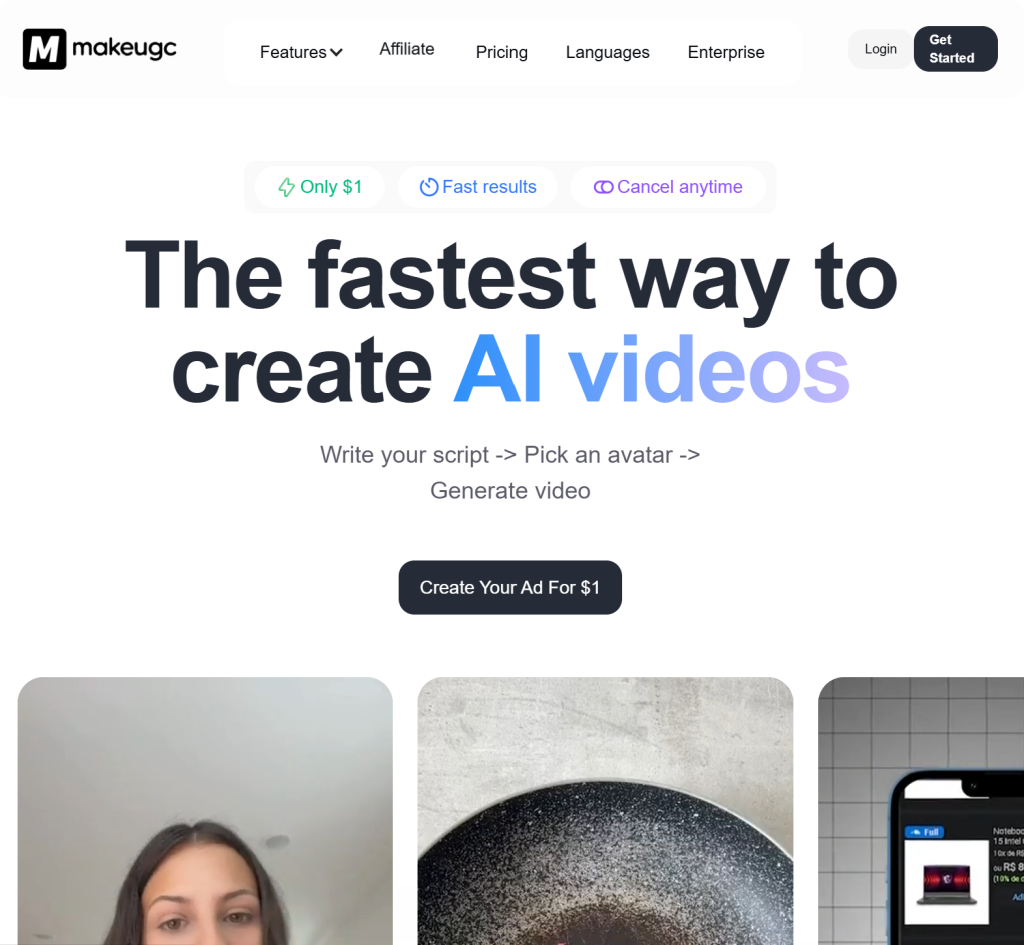
Price: $1 for the first month, then Startup at $59 a month for 500 credits. Growth at $79, Pro at $149.
What it is: MakeUGC is a UGC-ad tool with 1,000-plus avatars and a strong first-month promo that makes it painless to test.
Why it is on the list: The $1 first month is the smartest way to stress-test a paid workflow before committing, which is exactly what a cautious startup should do.
Limitations for a budget: After the promo, $59 a month is one of the higher entry prices here, and the credits-per-video cost is not clearly published, so plan for the pessimistic case once the first month ends.
Best for: Startups that want to run a real, low-risk paid test for a dollar before deciding, then reassess at renewal.
9. Arcads: The One to Skip While Money Is Tight
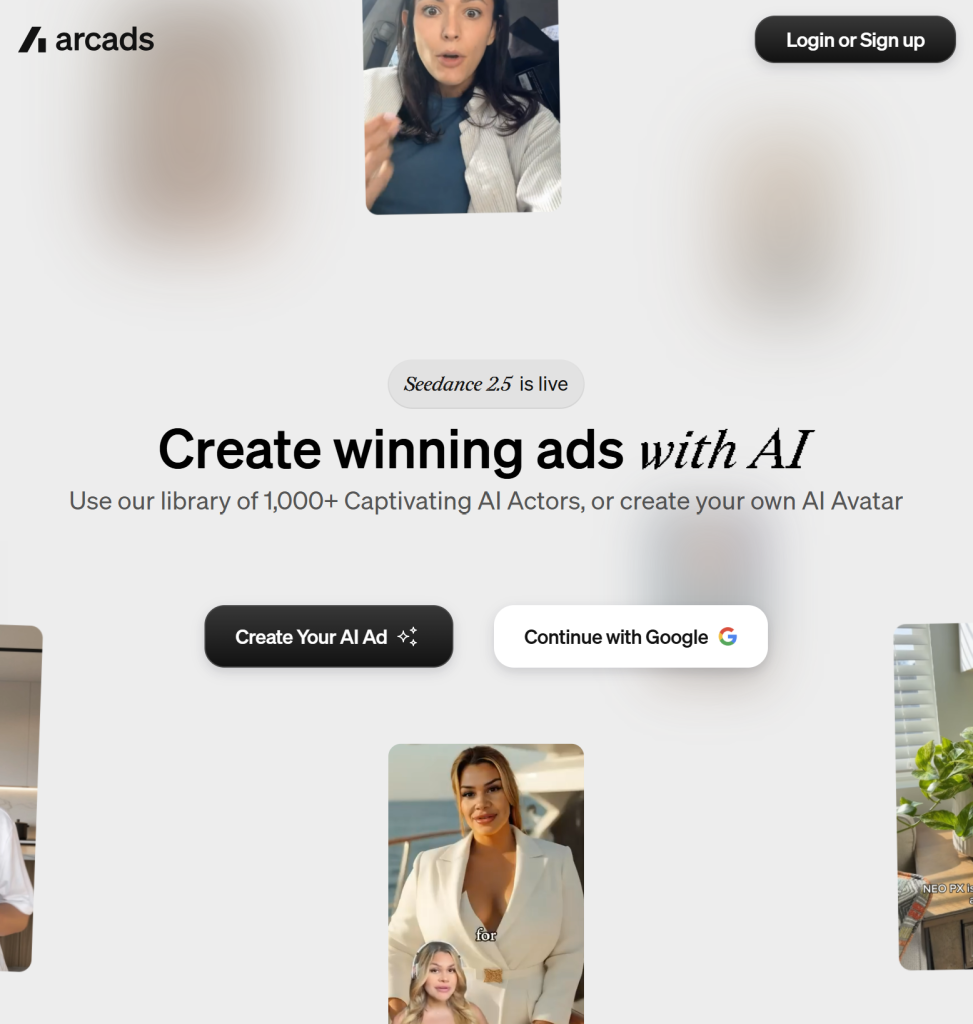
Price: Not published. Reviewers report a signup wall commonly cited around $110 before you can test anything, with core ad features reportedly gated to a pricier tier.
What it is: Arcads is a well-known avatar ad tool with a large actor library, often praised for realism.
Why it is here as a caution: On a budget, the dealbreaker is that there is no public price and, by many accounts, no real free trial. You fill out a questionnaire, then meet a paywall. It also sits at 2.7 out of 5 on Trustpilot across 153 reviews, with recurring complaints about undisclosed costs and refunds going unanswered.
The verdict: Arcads may be worth it later for a funded team chasing top-tier actor realism, but for a startup counting dollars, a tool that will not show you a price until you sign up is the wrong first move.
Best for: Better-funded teams that specifically want Arcads-style actor quality and can absorb the entry cost.
The Smart Budget Play: Spend on Winners, Not Videos
Here is the strategy that actually stretches a startup budget, and it is the one experienced marketers keep repeating.
Stop thinking about cost per video and start thinking about cost per winning creative. One agency spot at several thousand dollars gives you a single shot. The same money spread across a cheap AI tool buys you dozens of variations, which means dozens of chances to find the hook that converts. You find winners faster with volume, and volume is exactly what cheap AI video makes affordable.
The split most smart brands land on in 2026 looks like this: use cheap AI tools for the high-volume testing phase, where you are throwing many hooks at the wall to see what sticks, then reinvest the winnings into either higher-production AI or real human creators to scale the proven winners. You are not choosing AI over humans forever. You are using cheap AI to find the winning idea before you spend real money amplifying it.
For a startup, that approach turns a tiny budget from a limitation into an advantage, because you can test more ideas than a competitor who is still paying per shoot.
What Startups Are Actually Saying on Reddit
I checked my conclusions against what founders and marketers are posting in the wild, and the consensus is refreshingly practical.
On cost, the benchmarks match mine. In an r/AI_UGC_Marketing thread on realistic cost per video ad, marketers peg traditional production at $3,000 to $15,000, human UGC creators at $150 to $800 depending on experience, and AI tools on a subscription at roughly $1 to $5 per video. The most upvoted reply makes the whole argument for you: stop thinking cost per video and think in terms of cost per winning creative, because $5,000 on one agency video versus $500 across AI tools testing 50 variations will find you more winners faster. That is the budget thesis in one comment.
The honest caveats show up too, and you should take them seriously. More than one marketer notes that with many tools “you can tell it’s AI,” and that it works for some products better than others, with fashion and beauty being more forgiving than tech or luxury. Another shared a painful data point on a general tool, saying one decent 10-second TikTok video cost about $80 after failed renders burned credits. The lesson is to test on the free tier first and measure your keep rate before you commit.
The takeaway from people doing this on real budgets is consistent: cheap AI is the right tool for testing volume, you should expect to throw away a chunk of what you generate, and the money you save on production should go into finding and scaling winners.
Key Takeaways
- Judge tools by cost per usable video, not sticker price or credits. A slightly higher plan that produces more usable clips is cheaper per result.
- Tagshop AI is the best overall value at about $14 a month and roughly $2.80 per finished video, with no watermark and ad-specific features.
- Start free with Jogg AI or Vidnoz to validate the workflow before you spend, and use MakeUGC’s $1 first month for a low-risk paid test.
- Match the tool to the job. HeyGen and Synthesia are excellent for talking-head and explainer video, less so for scroll-stopping UGC ads.
- Skip Arcads while money is tight, because it hides its price behind a signup wall and reviewers report no real free trial.
- Spend on winners, not videos. Use cheap AI to test many variations, then scale the ones that convert.
Final Word
A tight budget is not the disadvantage it feels like. Cheap AI UGC tools let a two-person startup test more creative in a week than a big brand used to test in a quarter, and that testing speed is where budget teams actually win. Start on a free plan, measure your cost per usable video carefully, pick the one tool that fits your product, and pour whatever you save into scaling the ads that work. Pick one from this list, make five videos this week, and let the results tell you where to spend next.
Frequently Asked Questions
Tagshop AI is the cheapest transparent option built for UGC ads at about $14 a month billed annually, which works out to roughly $2.80 per finished video with no watermark. Vidnoz and Jogg AI also offer strong free tiers for testing before you pay.
Yes. Vidnoz, Jogg AI, HeyGen, Synthesia, Creatify, and Pippit all offer free plans or trials. They are built for testing the workflow, and most add watermarks or limit resolution and length, so they are for evaluation rather than launching finished campaigns.
Most startups can run a real testing program for $15 to $30 a month on a single tool. The smarter framing is budget per winning creative: use a cheap tool to test many variations, then reinvest in scaling the ones that convert.
For creator-style product ads at volume, Tagshop AI offers the best value with URL-to-video and Ad Clone. Pippit’s free tier is useful for product-to-video content, and Jogg AI is a strong, cheap all-rounder.
They can, especially for fashion, beauty, and consumer products where a slightly unpolished look feels authentic. Marketers report AI ad output that works well on Meta and TikTok, but quality varies by tool and product, so test before you scale.
Free plans typically limit credits, cap resolution, add watermarks, and sometimes restrict commercial use. Use them to judge quality and workflow, then check export and usage rights before you run anything as a paid ad.
Written by:

Neeraj is passionate about reshaping brand storytelling through AI-powered UGC videos. As the Founder he helps brands unlock authentic, creator-style video content that drives results - without the traditional time, cost, or complexity. His approach blends AI innovation with marketing performance to scale engagement efficiently.
 Add Tagshop.ai as a preferred source in Google Search




 Introducing

 Wan 3.0 is now live on Tagshop AI